

 Tweet
Tweet
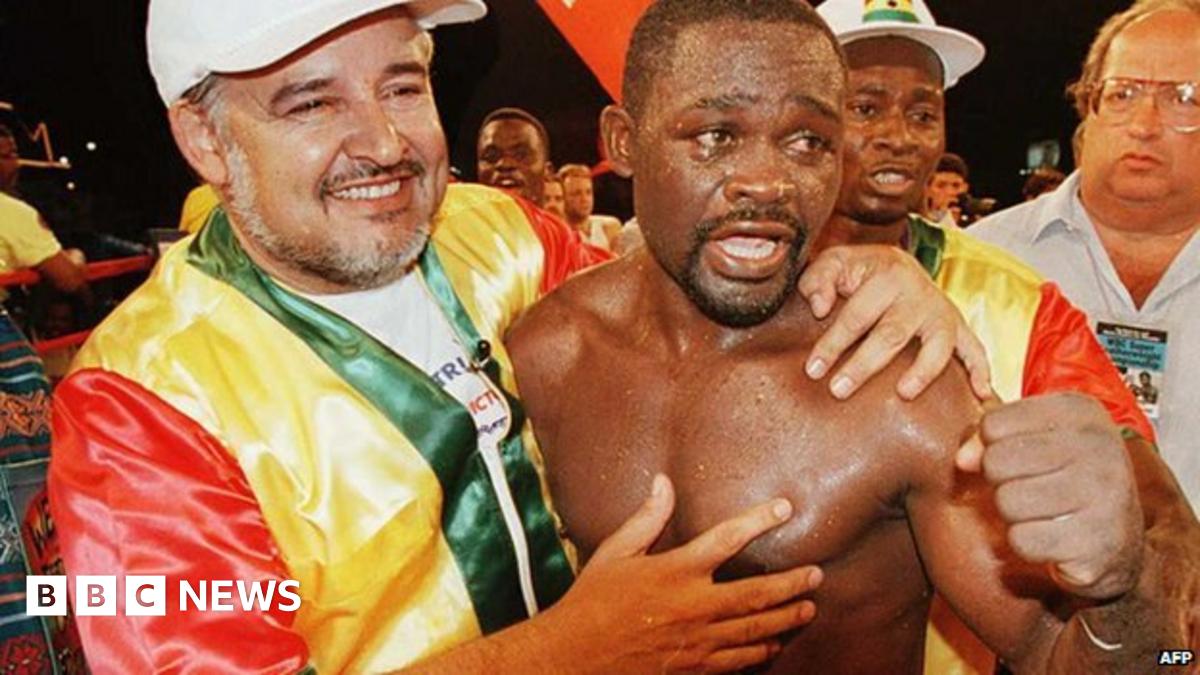
Bukom, a small neighbourhood in the Ghanaian capital, Accra, is busy, noisy and somehow special. For some reason these few blocks have produced some of Africa's finest fighters - among them, five world champion boxers. Why?
There is something strange about Bukom. It's a poor place, but nothing out of the ordinary in this part of the world. The people live crowded together and, in little shacks, under tin roofs, there are men, women and children at work - making and mending. Others sell goods which spill off the wooden tables into the street - motorcycle chains and fishing nets, fried fish and rice.
Azumah "The Professor" Nelson does not live in Bukom anymore. The winner of three world titles in the 1980s and 90s, he became a national hero and he's widely considered to be the greatest boxer ever to have come out of Africa. These days he lives in another part of Accra, in a large house behind high walls with a swimming pool in the compound, a gym and an outside bar. But he remembers his childhood in Bukom.
Azumah Nelson - one of Africa's greatest boxers - grew up in Bukom
"Bukom is like survival of the fittest," he says. "When you are a child you need to find food for yourself, you need to struggle for yourself to get something to eat and get money. It makes you tough.... Sometimes you just fight. Fighting is nothing, it's not any big deal."
Boxing is built into the culture of Bukom. If two men or boys are arguing in the street, people tell them: "Don't argue. Stop talking. Just fight it out."
There are posters on the walls advertising upcoming bouts and others paying tribute to the local champions: Ike "Bazooka" Quartey, David Kotei (they call him DK Poison), the "Professor" of course, Joseph Agbeko, and Joshua Clottey. The fighters are neighbourhood superstars and national heroes.
I stop for a chat with a few old men sitting outside a bar and ask about Clottey. And they point to a young man sitting at the end of the bench. His name is Michael, a boxer himself and the brother of the champion.
There are lots of boxers in the Clottey family. Emmanuel (welterweight), Judas (middleweight) and Joshua Clottey, former IBF welterweight champion.
And as I chat to the people of Bukom, along comes Joshua himself, ambling down the road on the way to the gym. "You have to be strong no matter how young you are", he says. "If you are not strong and you go to that area, they will beat you."
His mother, Memunah Ansah, thinks it might be in their genes. "I'm a dancer and an active woman", she says. "So maybe that's what transferred to the kids."
The next Azumah Nelson?
As well as the fight culture that exists in the neighbourhood, there may well be other reasons to explain the strange success of the boxers of Bukom.
Dr Claire Haworth, from the Institute of Psychiatry, at King's College London, is involved in one of the most important studies into nature and nurture - using twins to investigate the way that our genes and our environment influence the way our lives turn out.
She thinks that from a genetic perspective, there are at least two possibilities.
"One is that there is something special genetically about this population and the other possibility is that the culture and environment that these people are in just draws out the genetic potential."
Traditionally, the men of Bukom were fishermen, navigating the coastal waters in long, wooden canoes. It was, and remains, tough work and it may be that some traits common to fishing and boxing have been concentrated in the population, traits like strength, speed and stamina.
Of course, genetic potential is no guarantee of success and no-one has ever become a world champion boxer without thousands of hours of training.
There are boxing gyms scattered across the neighbourhood - Napoleon Tagoe runs one called Will Power.
Continue reading the main story
“
Start Quote
Behaviour is just as heritable if not sometimes more heritable than physical characteristics”
Claire Haworth
King's College London
It's dark inside the building which is little more than a warehouse at one end of a brick yard. There is a roof of corrugated tin and the windows are without glass. There's a ramshackle boxing ring in the centre of the room and a few punch-bags at one end. In the shadows at the back there are children as young as eight, punching each other hard - to the body and to the head.
Napoleon Tagoe looks and sounds older than his 39 years. A former fighter in the cruiserweight division, he's heavy now and much of the muscle has gone to fat. His speech is slow and slurred and one eye is glazed over with white, the result of a punch, years ago, that took away most of the sight in it.
"I want to produce somebody who'll win a world title for me. I'm number one! I know how to do it," he says.
And Tagoe hopes that man will be Albert Mensah. The 29-year-old is lean and fit and the sweat pours off him as he trains.
Continue reading the main story
Find out more
The Why Factor is broadcast on BBC World Service on Fridays at 18:30 GMT
Listen to The Boxers of Bukom via iPlayer
Listen via The Why Factor download
More from BBC World Service
"I want to be a world champion" says Mensah. "I am training every day. To be a somebody... you have to train. Always training."
For Mensah, determination is the key. And Claire Haworth says that, even in this, genes may play a role: "You would have to have that determination to achieve in such a tough sport and in such a tough environment."
"One possibility is that there are genetic influences on how motivated you are, how determined you are," she says.
"There's an idea that there are genetic influences on what we call 'grit'... One of the most surprising findings in behavioural genetics is that behaviour is just as heritable if not sometimes more heritable than physical characteristics."
Bukom delivers a perfect set of circumstances. Poverty and the motivation to escape it. Role models who prove it's possible and a culture that approves of fighting. There's a genetic heritage that has built strength and speed into the population and an infrastructure that's grown up to help make the most of those genes.
Very few will make a living from boxing. Fewer still will make it to the top. But you do wonder if one of the children in the dark at the back of the Will Power gym might, one day, return to Bukom a hero.
There is something strange about Bukom. It's a poor place, but nothing out of the ordinary in this part of the world. The people live crowded together and, in little shacks, under tin roofs, there are men, women and children at work - making and mending. Others sell goods which spill off the wooden tables into the street - motorcycle chains and fishing nets, fried fish and rice.
Azumah "The Professor" Nelson does not live in Bukom anymore. The winner of three world titles in the 1980s and 90s, he became a national hero and he's widely considered to be the greatest boxer ever to have come out of Africa. These days he lives in another part of Accra, in a large house behind high walls with a swimming pool in the compound, a gym and an outside bar. But he remembers his childhood in Bukom.
Azumah Nelson - one of Africa's greatest boxers - grew up in Bukom
"Bukom is like survival of the fittest," he says. "When you are a child you need to find food for yourself, you need to struggle for yourself to get something to eat and get money. It makes you tough.... Sometimes you just fight. Fighting is nothing, it's not any big deal."
Boxing is built into the culture of Bukom. If two men or boys are arguing in the street, people tell them: "Don't argue. Stop talking. Just fight it out."
There are posters on the walls advertising upcoming bouts and others paying tribute to the local champions: Ike "Bazooka" Quartey, David Kotei (they call him DK Poison), the "Professor" of course, Joseph Agbeko, and Joshua Clottey. The fighters are neighbourhood superstars and national heroes.
I stop for a chat with a few old men sitting outside a bar and ask about Clottey. And they point to a young man sitting at the end of the bench. His name is Michael, a boxer himself and the brother of the champion.
There are lots of boxers in the Clottey family. Emmanuel (welterweight), Judas (middleweight) and Joshua Clottey, former IBF welterweight champion.
And as I chat to the people of Bukom, along comes Joshua himself, ambling down the road on the way to the gym. "You have to be strong no matter how young you are", he says. "If you are not strong and you go to that area, they will beat you."
His mother, Memunah Ansah, thinks it might be in their genes. "I'm a dancer and an active woman", she says. "So maybe that's what transferred to the kids."
The next Azumah Nelson?
As well as the fight culture that exists in the neighbourhood, there may well be other reasons to explain the strange success of the boxers of Bukom.
Dr Claire Haworth, from the Institute of Psychiatry, at King's College London, is involved in one of the most important studies into nature and nurture - using twins to investigate the way that our genes and our environment influence the way our lives turn out.
She thinks that from a genetic perspective, there are at least two possibilities.
"One is that there is something special genetically about this population and the other possibility is that the culture and environment that these people are in just draws out the genetic potential."
Traditionally, the men of Bukom were fishermen, navigating the coastal waters in long, wooden canoes. It was, and remains, tough work and it may be that some traits common to fishing and boxing have been concentrated in the population, traits like strength, speed and stamina.
Of course, genetic potential is no guarantee of success and no-one has ever become a world champion boxer without thousands of hours of training.
There are boxing gyms scattered across the neighbourhood - Napoleon Tagoe runs one called Will Power.
Continue reading the main story
“
Start Quote
Behaviour is just as heritable if not sometimes more heritable than physical characteristics”
Claire Haworth
King's College London
It's dark inside the building which is little more than a warehouse at one end of a brick yard. There is a roof of corrugated tin and the windows are without glass. There's a ramshackle boxing ring in the centre of the room and a few punch-bags at one end. In the shadows at the back there are children as young as eight, punching each other hard - to the body and to the head.
Napoleon Tagoe looks and sounds older than his 39 years. A former fighter in the cruiserweight division, he's heavy now and much of the muscle has gone to fat. His speech is slow and slurred and one eye is glazed over with white, the result of a punch, years ago, that took away most of the sight in it.
"I want to produce somebody who'll win a world title for me. I'm number one! I know how to do it," he says.
And Tagoe hopes that man will be Albert Mensah. The 29-year-old is lean and fit and the sweat pours off him as he trains.
Continue reading the main story
Find out more
The Why Factor is broadcast on BBC World Service on Fridays at 18:30 GMT
Listen to The Boxers of Bukom via iPlayer
Listen via The Why Factor download
More from BBC World Service
"I want to be a world champion" says Mensah. "I am training every day. To be a somebody... you have to train. Always training."
For Mensah, determination is the key. And Claire Haworth says that, even in this, genes may play a role: "You would have to have that determination to achieve in such a tough sport and in such a tough environment."
"One possibility is that there are genetic influences on how motivated you are, how determined you are," she says.
"There's an idea that there are genetic influences on what we call 'grit'... One of the most surprising findings in behavioural genetics is that behaviour is just as heritable if not sometimes more heritable than physical characteristics."
Bukom delivers a perfect set of circumstances. Poverty and the motivation to escape it. Role models who prove it's possible and a culture that approves of fighting. There's a genetic heritage that has built strength and speed into the population and an infrastructure that's grown up to help make the most of those genes.
Very few will make a living from boxing. Fewer still will make it to the top. But you do wonder if one of the children in the dark at the back of the Will Power gym might, one day, return to Bukom a hero.


Comment