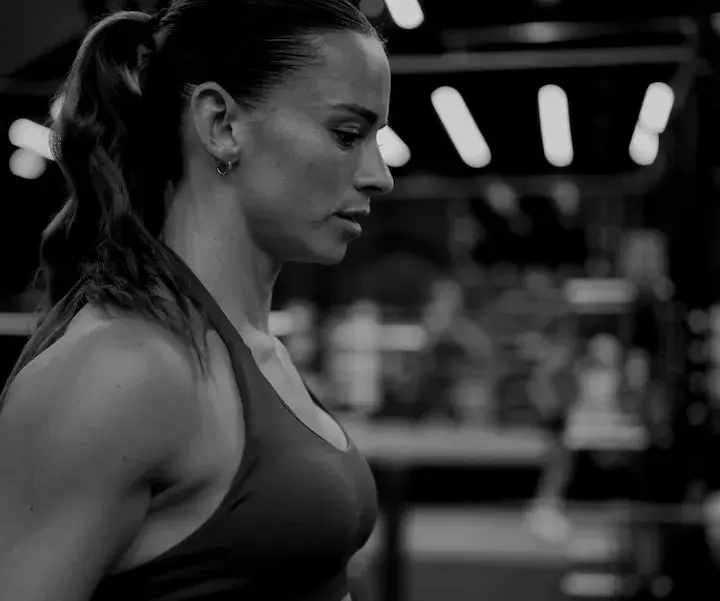
Skye Nicolson plans to move down in weight to move forward with her career

May 19, 2025 • 8:00 AM ET
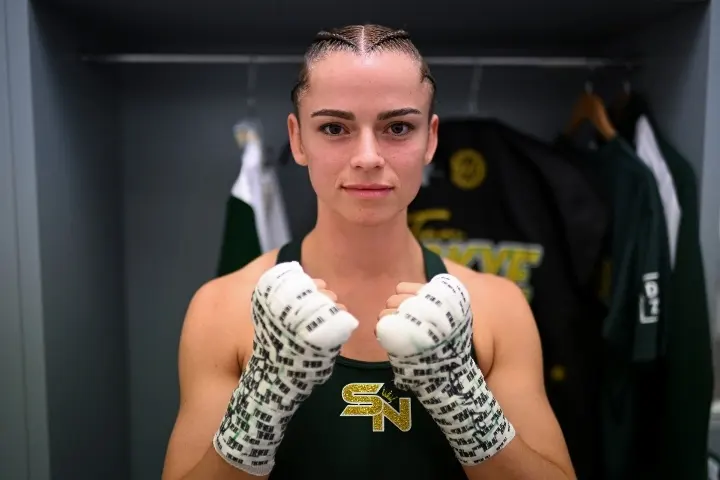
What tends to happen following a boxer’s first defeat is that the boxer in question will make a change or two. They might, for instance, change their approach to how they prepare, or their attitude, or how they operate when not in the gym. Or they might change their trainer, or promoter, or bring in someone who wasn’t there before – like, say, a nutritionist, or a strength and conditioning coach.
Most common, though, in terms of potential changes, pertains to weight class, for this directly links to performance and can immediately offer a boxer a clean slate and a fresh start. Usually, a defeated boxer will choose to move up in weight, because then they can point to the rigours of weight-making as a reason for their loss, yet there are some who buck the trend and decide to go the other way.
Skye Nicolson, a former WBC women’s featherweight champion, is just one example of this. She seemingly has her sights now set on moving down from featherweight rather than going up and is already making plans to facilitate this process in her next fight, tentatively set for the summer.
Nicolson won the WBC featherweight belt with a decision over Sarah Mahfoud in April 2024 and has since made two successful defences of the belt. In her third defence, however, she came unstuck against Tiara Brown, who managed to outwork Nicolson over 10 rounds in Australia, Nicolson’s homeland.
As a result of that loss, Nicolson surrendered not only her WBC title but her unbeaten record, meaning she is now 12-1 (1) as a pro. It also led to a period of soul-searching and an analysis of where she went wrong and what can be improved.
“After that defeat I feel like it’s more likely that I am going to look at that option [moving down in weight],” she told Matchroom Boxing. “We’re hoping to get out in the summer and maybe do the fight at 123 pounds or 124 pounds and explore the idea of doing 122 [super-bantamweight]. So I’m excited for that as well. It’s a new challenge; a new weight division. It’s something to kind of set my mind on.”
The appeal of any switch in weight class, whether up or down, is that a boxer can essentially start again at 0-0. Their history is almost wiped clean, at least in theory, and they will soon convince themselves that they feel different on account of what is often just a four-pound shift one way or the other. Only when they get going, of course, will they then find out whether it was the right decision or not.

Elliot Worsell is a boxing writer whose byline first appeared in Boxing News magazine at the age of 17. He has, in the 20 years since, written for various publications, worked as press officer for two world heavyweight champions and won four first-place BWAA (Boxing Writers Association of America) awards. In addition to his boxing writing, Worsell has written about mixed martial arts for Fighters Only magazine and UFC.com, as well as worked as a publicist for the Ultimate Fighting Championship (UFC). He has also written two non-fiction books, one of which, “Dog Rounds,” was shortlisted at the British Sports Book Awards in 2018.