

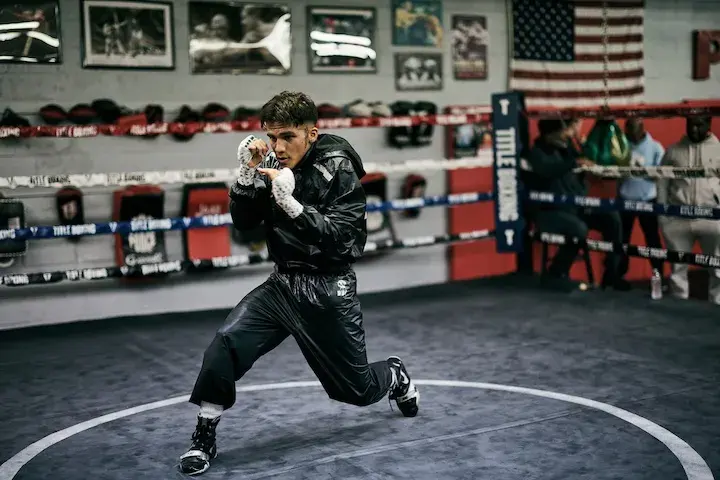
Naoya Inoue isn’t declining but must conquer more pressure than ever against Junto Nakatani

May 2, 2026 • 4:00 AM ET
 ProBox TV
Naoya Inoue-Junto Nakatani is the most exciting fight that’s been made since Tyson Fury-Oleksandr Usyk – maybe since Errol Spence-Terence Crawford.
It’s also a hardcore fight. Put simply, it’s the best fight in the world.
Unusually, it’s also happening at close to the opportune time – the only way it could be any better would be if Nakatani had had another fight at 122lbs and impressed – and the closer it gets, the more it appeals.
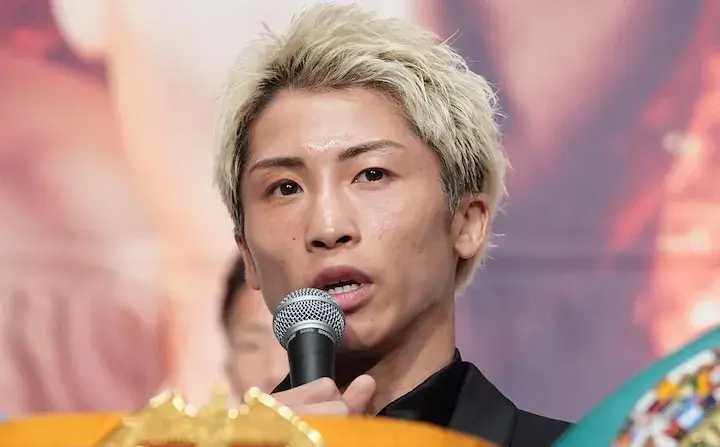
Inoue’s still very close to his absolute best. He’s suffered knockdowns at 122lbs, but he’s repeatedly made adjustments – in many respects he’s still a consistently improving fighter. He may have been more cautious against bigger, recent opponents but, like he showed against Ramon Cardenas in May 2025, when he gets knocked down he will continue to take risks. He doesn’t just try to win – he puts his chin on the line to try to knock his opponents out, and yet does so with a tactical edge, even while not being the same puncher he was at 115lbs.
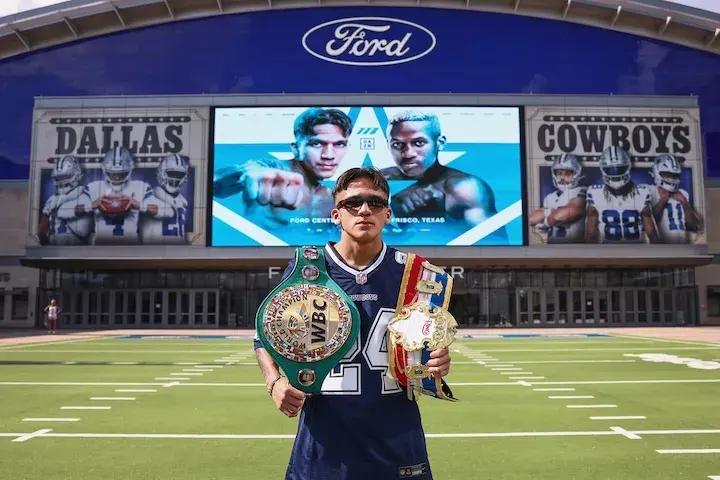
When Nakatani stopped Andrew Moloney in 2023 he produced one of the most savage knockouts I’ve ever seen. His punching power, deceptive lead hand, defence and willingness to pursue knockouts continue to impress me. He appears a diligent student so if he has learned from his past fight – the win over Sebastian Hernandez in December – he may also continue to improve.
He potentially showed a lack of focus against Hernandez, because of the knowledge that Inoue was next, and if that’s what he showed that night then it’s a concern ahead of his biggest test. Inoue is a crossover star in Japan – how could his compatriot Nakatani not have looked up to him in the past? He is certain to be battling, to some degree, imposter’s syndrome. “I’m across the ring from Naoya Inoue, who I’ve been watching for years.”
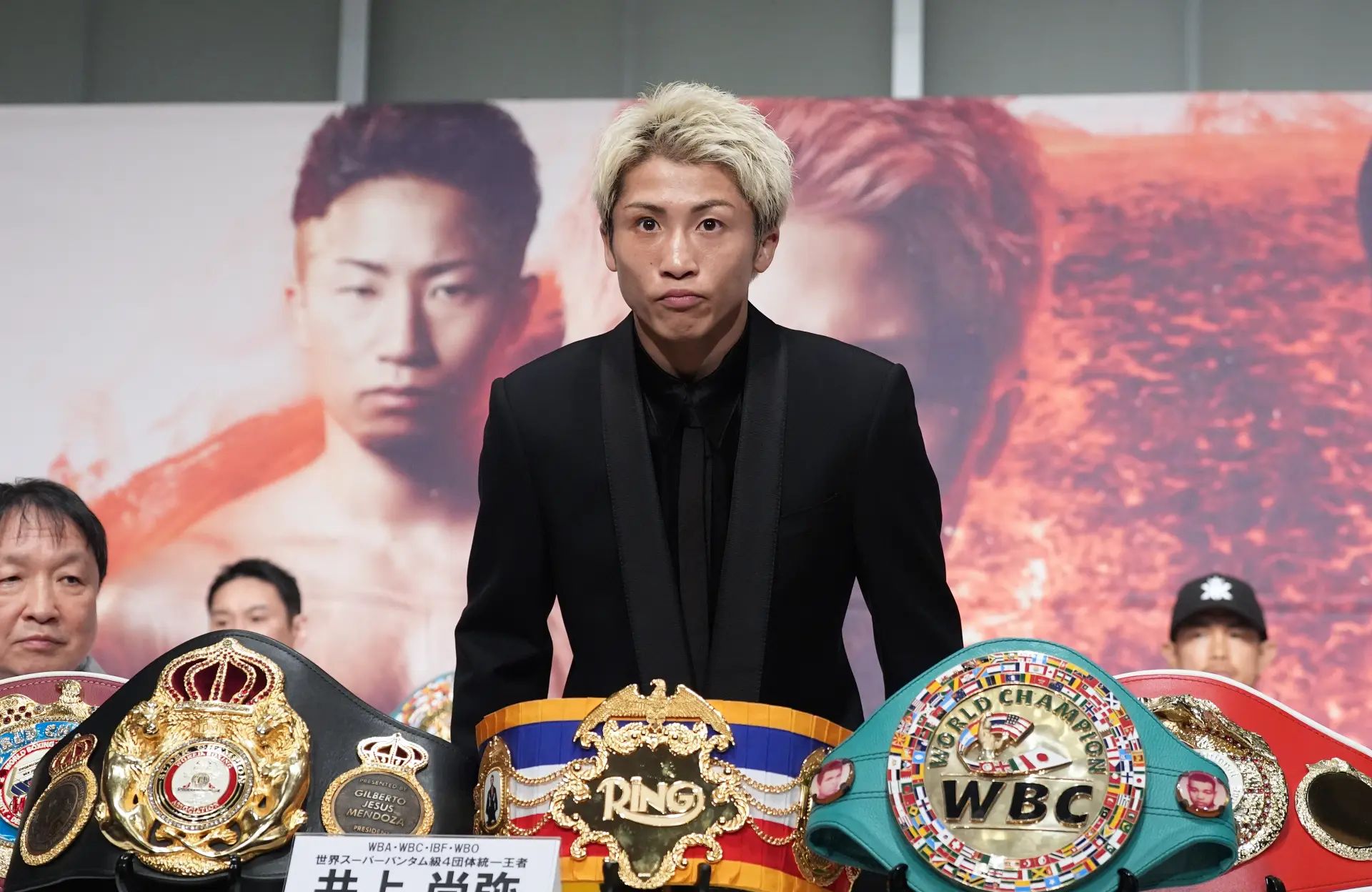
Which isn’t to suggest that the weight of this fight is on anyone other than Inoue. Defeat risks shattering Inoue’s legacy. Being such a dominant fighter for as long as he has been and then losing to another Japanese fighter in the biggest fight in Japanese history is something from which he’d struggle to recover. The pressure’s on Inoue to win.
Inoue has an extremely dynamic offence. He has explosive, smooth footwork in all directions; his fundamentals are perfect; he can punch with both hands; he can secure knockouts to the head and body, and when he’s at his best he leads with a punishing jab. Fundamentally, he’s one of the most complete fighters I’ve ever seen. He’s also sufficiently calculated that he’s capable of focusing and adjusting and being disciplined when he most needs to be – which might even be his biggest strength of all.
His only weakness is the emotional streak that means he risks getting clipped to knock his opponents out first – as he showed against both Luis Nery and Ramon Cardenas. Gunslingers, after all, get shot.
Nakatani’s long and tall, and yet he fights from a low stance. He’s a hybrid of a Japanese-western fighter – he’s fluid and he’s athletic, in the way that he bends and gets low like an east-coast fighter, and complements that with the power, discipline and warrior spirit of a Japanese fighter. He knows how to convincingly fight as a southpaw and has a particularly deceptive and varied lead head, which he uses to blind opponents from his powerful rear hand.
If he has weaknesses they’re a lack of experience in the very biggest fights and at 122lbs, where he will need to resist Inoue’s physicality. And yet if he’s more physically mature than he was against Hernandez, as someone naturally bigger than Inoue the physical advantages could yet be his.
Nakatani needs to keep the fight at a distance, because of how effective Inoue is at closing distances and how explosive he is in combinations. If he can keep Inoue, so effective a body puncher, at middle-and-long range, he can potentially frustrate Inoue and make him risk diving in. If they fight at close range, Inoue’s shorter arms and the length of Nakatani’s torso will work in Inoue’s favour.
Inoue therefore has to close the range between them deceptively, without Nakatani quite realising the distance, by fighting with his lead hand against the southpaw until he’s in a position to make an explosive step and let his hands go – all without recklessly risking absorbing Nakatani’s powerful counters.
The opening rounds can be expected to be very tight. They’ll battle for position and posture without throwing punches in big volumes, and Inoue may well get frustrated against the discipline I expect from Nakatani, who’s capable of keeping Inoue at range and of slowing the pace.
From the middle rounds Inoue will start to increase the pressure and be more consistent, and set a pace that Nakatani will struggle to meet. It’s then that the momentum will shift.
When in the later rounds Inoue applies further pressure, and gets behind that punishing jab of his, he will pull in front. By the final bell in Tokyo, it will be clear who’s won. Saturday’s fight may well be Inoue’s last at 122lbs.
*
In Las Vegas, I expect Gilberto “Zurdo” Ramirez to give David Benavidez real trouble early on. His southpaw stance; his long jab; the way he changes levels will trouble the tall Benavidez. Benavidez is a slow starter, but I thereafter expect him to take over with his hand speed and intensity and to force Ramirez to spend increasing time on the ropes, where he will absorb consistent punishment and therefore lose via decision.