Is the boxing pay-per-view party dying?
 Main Events/LeRoy Neiman
June 8, 2002. If you’re a serious boxing fan, you know immediately, without Googling or ChatGPT-ing or BoxRec-ing, what that date is. June 8, 2002 = Lennox Lewis vs. Mike Tyson, still the highest-grossing heavyweight boxing pay-per-view of all-time.
That date also marks by far the biggest pay-per-view party I’ve ever attended.
It had all the right ingredients: a wide-open Saturday prior to summer vacation season; me in my mid-20s, that age when your friends are effectively your family and hardly anyone is married yet and nobody has kids; the heavyweight title, a selling point the most mainstream of sports fans needs in order to care about boxing; the most famous and fascinating fighter on the planet in one corner; and a controversy-caked buildup complete with a leg bite and Tyson’s most unhinged public meltdown ever, which created clips amplified everywhere from SportsCenter to The Howard Stern Show.
Add that all up, and it gave us about 50 people assembled for an afternoon of grilling burgers, tapping a keg, playing lawn games, and, once the sun began to descend, watching fights. I popped in a tape of the first Micky Ward-Arturo Gatti fight, from three weeks prior, to melt a few brains before the PPV began. In the co-feature, many of the attendees watched Manny Pacquiao in action for the first time. Then came the main event, complete with a $5-a-square box pool of sorts — the lucky SOB who pulled “Lewis KO 8” won the whole pot.
Since the advent of pay-per-view, the pay-per-view party has been an essential element of the fight-fan experience. Whether it’s 50 people and a keg or four buddies and a six-pack, boxing watching became particularly communal in this era because there was a monetary price to see an event and the cost per set of eyeballs decreased with every attendee — whether directly, with everyone chipping in, or indirectly, with the host building up goodwill and I-owe-ya-ones.
But in recent years, the business model has evolved and the sport has inched further from the mainstream, in ways that have me wondering: Is the PPV party on the verge of getting TKO’d?
If Lewis-Tyson were happening today, the party couldn’t possibly be as big — and not just because of factors specific to me and my generation like wives and kids. Lewis-Tyson might be on Netflix now, and everyone you know is already paying for that so they don’t need to go somewhere else to watch it. Or it might be part of the DAZN Ultimate subscription, and most hardcore boxing fans you know are already paying for that so it feels like a waste to gas-guzzle your way to someone else’s couch. And if, say, 50% of your buddies had at least a casual interest in boxing a quarter-century ago, maybe only 40% of them do now, such is the state of the sport.
For all these reasons, the party is a lot smaller for a fight like Lewis-Tyson in 2026. If there’s even a party at all.
“Fundamentally, the business model is very different now,” said Mark Boccardi, an executive from 2003-’25 for iNDEMAND and PPV.com. “The basic pay-per-view model is, every event is like a going-out-of-business sale. The lead-up, the marketing, the promotion, it's all about sell, sell, sell, sell, sell — then the event happens, and you wait a few months, and you crank the machine up and you do it again. That peak-and-valley cycle is really what exemplified the pay-per-view business for as long as it has existed.
“The newest DAZN model has different goals. They are much more focused on the subscription part of the business. They want to get as many subscribers as possible and then keep them for as long as they can. Subscriptions have been the holy grail for a lot of direct-to-consumer businesses for decades, and it's obviously now become part of the media landscape.”
Just over a year ago, on November 7, 2025, DAZN introduced its Ultimate Tier for subscriptions, priced annually at $449.99, compared to $249.99 for the Standard sub. Before Ultimate came along, you paid your $250 for 12 months of non-PPV fights, then added another $50 or $75 or whatever the price point may have been for each PPV. With Ultimate, the extra $200 buys you every PPV, making it a more cost-effective option if you expect to order at least three of their PPV events in a year.
Monthly or yearly subscriptions have long been a part of boxing — you needed to pay for HBO and Showtime at the time of Lewis vs. Tyson to properly follow the sport — but the option to lock in a year’s worth of PPVs all at once is new. At least for boxing.
Pro wrestling was way out in front on this one, with the WWE Network launching in 2014 and giving fans every pay-per-view for what was at the time one absurdly low price.
“That was the first big marker to the industry that there was a new way of doing business, and it was revolutionary at the time,” Boccardi said. “It affected the pay-per-view business. And it was foreshadowing what was to come.”
But boxing was “the lifeblood of the pay-per-view business since pay-per-view’s inception,” as Boccardi termed it, and a couple of outlier events papered over the changes to come, with Floyd Mayweather vs. Pacquiao in 2015 and Mayweather vs. Conor McGregor in 2017 generating the two highest buy-rates in PPV history. That confluence of events may have delayed any acknowledgement that the PPV model was growing outdated and the WWE Network model could apply to boxing.
When DAZN first launched in the U.S. in 2018, its advertisements hailed it as the end of pay-per-view. By 2022, the streaming network had gone in the other direction, adding its own pay-per-views. But in 2025, the hybrid option called Ultimate entered the equation.
“We think that there's benefit to people who are diehard boxing fans, and I think that there is an audience of people who may not have historically been boxing fans who now will be able to follow the sport much more seamlessly,” said Britton Hardin, DAZN’s head of boxing for North America, who explained that the time was right to introduce this tier as the streamer got closer and closer to working with enough promoters to corner the market. (At this point, the only major holdouts are Jake Paul’s Most Valuable Promotions and the intertwined duo of Zuffa Boxing and Riyadh Season.)
“So it was really in an effort,” Hardin continued, “to recognize the value of what we think we've been able to accomplish and to put together a pricing proposition that recognizes that.”
And it’s a pricing proposition that would seem to make a lot of sense on the DAZN end, if you consider the way pay-per-view parties impact the math.
Boccardi noted that past research showed that, on average, there were six people watching for every PPV purchased. So, say that was $75 generated by six people total — $15 per person. If all six are serious boxing fans now paying what comes out to $37.50 a month for the Ultimate plan, that’s much better for DAZN’s bottom line. And, really, only three of the six need to be at that level of boxing fandom for the revenue to be higher.
Obviously, DAZN is a company seeking to be profitable, but Hardin emphasized that there’s more to the executives’ thinking than just maximizing those profits.
“We’ve certainly seen consumer behaviors evolve across various sports and entertainment,” he said. “We’re really creating an ecosystem that provides boxing fans a level of consistency and accessibility that historically hasn't been there in our sport. I think that just understanding the trends of consumption habits, we needed to change with the times.”
And with that change in accessibility comes a theoretical change in viewing preferences. If I have DAZN Ultimate and my friend who lives 45 minutes away also has DAZN Ultimate, and we used to take turns hosting PPVs, the motivation for one of us to drive to the other now is greatly diminished.
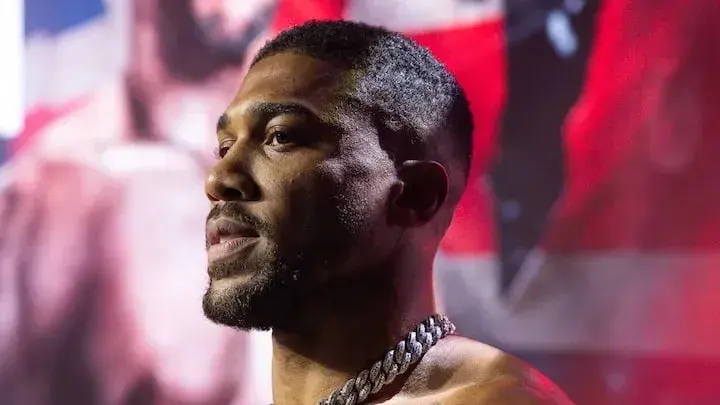
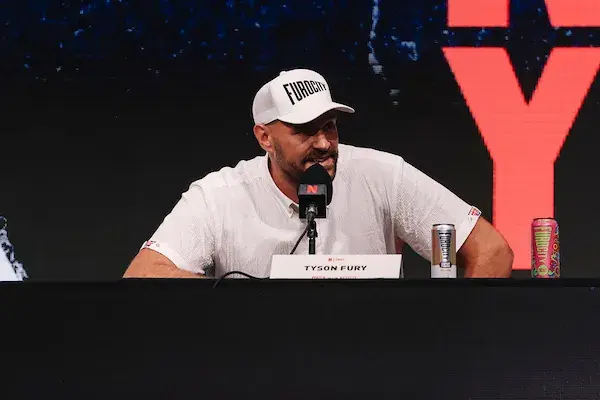
If the PPV party is on the wane, though, DAZN’s latest subscription option is by no means the only the factor. There’s the reality that several of the biggest boxing events of the last couple of years — and the biggest remaining event on the 2026 calendar, Tyson Fury vs. Anthony Joshua — have been landing on Netflix. There’s the fact that more major fights are taking place in either the UK or Riyadh and are airing in the afternoon in the U.S., timing that has historically greatly depressed American buys for a PPV. It’s also worth considering the impact of social media, which has made it so that even if you’re watching by yourself, you have communities with which you can engage about the fights in real time, rendering the solo couch venture a little less lonely.
And above all, there’s boxing constantly tiptoeing deeper into niche sport status. If you text your co-worker who’s at best a casual fan to invite him over for fight night, how many names move the needle for him now? Fewer than did 10 years ago or 20 years ago, assuredly.
Nick Indeglio is a middle school principal, a part-time pro wrestler, and a life-long boxing and wrestling fan (and a fan of MMA as well) who has been ordering nearly every big PPV for as long as he can remember and has hosted far too many PPV parties to count. He’s also been a friend of mine since high school, and it was at his parents’ house, among a crowd of about 15 people, that I watched my first-ever boxing pay-per-view, a rather mainstream fight in June of 1997 that ended with one boxer biting the other’s ears.
In Indeglio’s world, in which his big watch parties are undoubtedly rarer than they used to be, DAZN Ultimate is nowhere near as big a factor as the lack of fights that can generate enough interest to warrant a party.
“Boxing is becoming more and more obscure,” Indeglio said. “There's still a ton of great boxing today, but the general interest isn’t there. A strong heavyweight division always drove the interest for bigger gatherings, and now, even a fight like Fury against Joshua — which I know isn’t on pay-per-view, but even if it were, they’ve both lost a few times, there are no major titles at stake, it feels like it’s past the point where the people I know will care enough to get together to watch it.”
For what it’s worth, Indeglio is a fan of the DAZN Ultimate approach — “it’s fair and it’s attractive and it’s all in one place, they’re not trying to screw the fans,” he said — but for him, as the guy who likes to host fight nights for those friends who wouldn’t necessarily ever order PPVs themselves, it all comes down to the magnitude of the event. (He found the same thing to be true when WWE Network first launched. The biggest events of the year, like WrestleMania and SummerSlam, merited a party. The minor pay-per-views? Everyone with WWE Network stayed home.)
“I don't think the appetite for a major boxing event is diminished. I do think that we need to be intentional about how we create them,” DAZN’s Hardin said. “I always say that when boxing gets it right, there's no sport like it. Nothing is like a good fight night, one where you have 50-50 action, you don’t know who’s going to win and it’s high stakes. And I think the social aspect of getting people together for those fights is incredibly important for the sport.”
Super Bowl parties are proof that the magnitude of the event often does inspire social assembly more than cost-related concerns do. And with streaming subscriptions shifting those cost-related concerns for boxing fans, Boccardi foresees the impact on watch-party prevalence being divided into two buckets based on the enormity of the event.
“With combat sports, if you have a big enough event, people are still going to get together and watch as a group. I think it's in the DNA of the sport that people like to watch it together. They like to watch it communally,” Boccardi said. “But, if it's a mid-level type of event, the watch parties around those are going to decline. You won’t see as much change with the marquee events. It’s at that middle level and lower level that people will just say, ‘I’m paying for it anyway, I’ll just stay home and watch it.’”
So you might say the onus is on the sport to provide more of those marquee events if the pay-per-view party is going to endure. And even if those big parties cut into short-term profitability for the promoters and the networks, they undeniably go a long way toward creating new fans.
Ironically, a shift away from the “going out of business sale” mentality that drove PPV promotion and toward the sustainability and reliability of the subscription model will chip away at the social mechanics that can actually help with sustainability and reliability for the sport as a whole.
Boxing doesn’t need to generate keg sales to survive as a sport. But you at least want to see it inspiring six-pack sales. There’s just something that feels right about the sight of fighters touching gloves being accompanied by the sound of fans clinking bottles.
- Manny Pacquiao
- Mike Tyson
- Micky Ward
- Tyson Fury
- Anthony Joshua
- Conor McGregor
- Jake Paul
- Lennox Lewis
- Zuffa Boxing
- Most Valuable Promotions

Eric Raskin is a veteran boxing journalist with nearly 30 years of experience covering the sport for such outlets as BoxingScene, The Good Fight, ESPN, Grantland, Playboy, and The Ring (where he served as managing editor for seven years). He also co-hosted The HBO Boxing Podcast, Showtime Boxing with Raskin & Mulvaney, The Interim Champion Boxing Podcast with Raskin & Mulvaney, and Ring Theory. He has won four first-place writing awards from the BWAA, for his work with The Ring, Grantland, HBO, and BoxingScene. Outside boxing, he is the senior editor of CasinoReports and the author of 2014’s The Moneymaker Effect. He can be reached on X, BlueSky, or LinkedIn, or via email at RaskinBoxing@yahoo.com.