


Canelo-GGG: Not a Smashing Success on PPV; Not a Bust, Either

Sep 29, 2017 • 3:35 AM ET

By Keith Idec
It took less than two minutes Wednesday for much of the Twitter world to declare Canelo Alvarez-Gennady Golovkin, the fight that took nearly two years to happen, a complete commercial failure.
The criticism was so strong among some fans, you would’ve thought that the Los Angeles Times’ Lance Pugmire reported that their middleweight championship showdown drew 300,000 pay-per-view buys, not 1.3 million. Oscar De La Hoya, Alvarez’s promoter, went as far as to have his publicists issue a statement Thursday that refuted the reliable, respected Pugmire’s pay-per-view figure.
Golden Boy Promotions’ statement claims that the pay-per-view buy rate for Canelo-Golovkin will be “well north” of 1.3 million once all cable, satellite and Internet distributors submit their final figures from the September 16 event at T-Mobile Arena in Las Vegas.
Delaying an announcement on buys is an increasingly common practice following pay-per-view fights. Promoters and television executives understandably want to publicize the highest number possible, and sometimes it takes a few extra weeks to get complete reports from every tiny cable system HBO and Showtime use to distribute these fights.
It’s why we still don’t have an official figure from Showtime Sports on Mayweather-McGregor, which took place more than a month ago at T-Mobile Arena.
Who knows? Maybe they’ll somehow squeeze another 200,000 buys out of those companies late to report their Canelo-Golovkin figures and bring the total to 1.5 million.
That still wouldn’t change the opinions of those who’ve deemed 1.3 million buys an indisputable failure for what was billed as the “real” pay-per-view fight for boxing fans in 2017. Regardless, the buy rate reported thus far is neither the smashing success De La Hoya predicted, nor the complete flop others would have you believe.
De La Hoya didn’t help his cause by projecting that Canelo-Golovkin could come “close to 3 million” buys. That’s why most promoters and savvy television executives like former HBO Pay-Per-View boss Mark Taffet and Showtime’s Stephen Espinoza don’t publicly predict buy rates.
That way, you’re not left to dispute why an event that’ll generate more than $100 million in pay-per-view revenue isn’t a “failure.” Even two million buys would’ve been an overly ambitious prediction based on Alvarez’s non-Mayweather pay-per-view production and Golovkin’s track record as the ‘A’ side of two previous pay-per-view events.
Besides his majority-decision defeat to Mayweather four years ago, only one of Alvarez’s pay-per-view events exceeded 1 million buys. That was his domination of Mexican rival Julio Cesar Chavez Jr. on May 6 at T-Mobile Arena.
We never received an official figure for Canelo-Chavez. All De La Hoya said in its aftermath was that it did “at least” 1 million buys.
Nevertheless, while De La Hoya himself set the pay-per-view expectations entirely too high for Canelo-Golovkin, rendering a fight that didn’t involve Mayweather a business bust at 1.3 million buys isn’t fair, either.
In fact, only nine non-heavyweight fights have done more buys than Canelo-Golovkin since boxing began using pay-per-view as a regular platform in 1991. Each of those nine fights included either Mayweather, Manny Pacquiao and/or De La Hoya.
Those fights include:
Mayweather-Pacquiao (May 2015): 4.6 million
Mayweather-McGregor (August 2017): 4.4 million (unofficial)
Mayweather-De La Hoya (May 2007): 2.4 million
Mayweather-Alvarez (September 2013): 2.2 million
Mayweather-Cotto (May 2012): 1.5 million
De La Hoya-Trinidad (September 1999): 1.4 million
Mayweather-Mosley (May 2010): 1.4 million
Pacquiao-Marquez III (November 2011): 1.4 million
Pacquiao-Mosley (May 2011): 1.34 million
Placed in that historical context, Canelo-Golovkin compares favorably to De La Hoya-Trinidad, undoubtedly one of the biggest fights of the late 20th century.
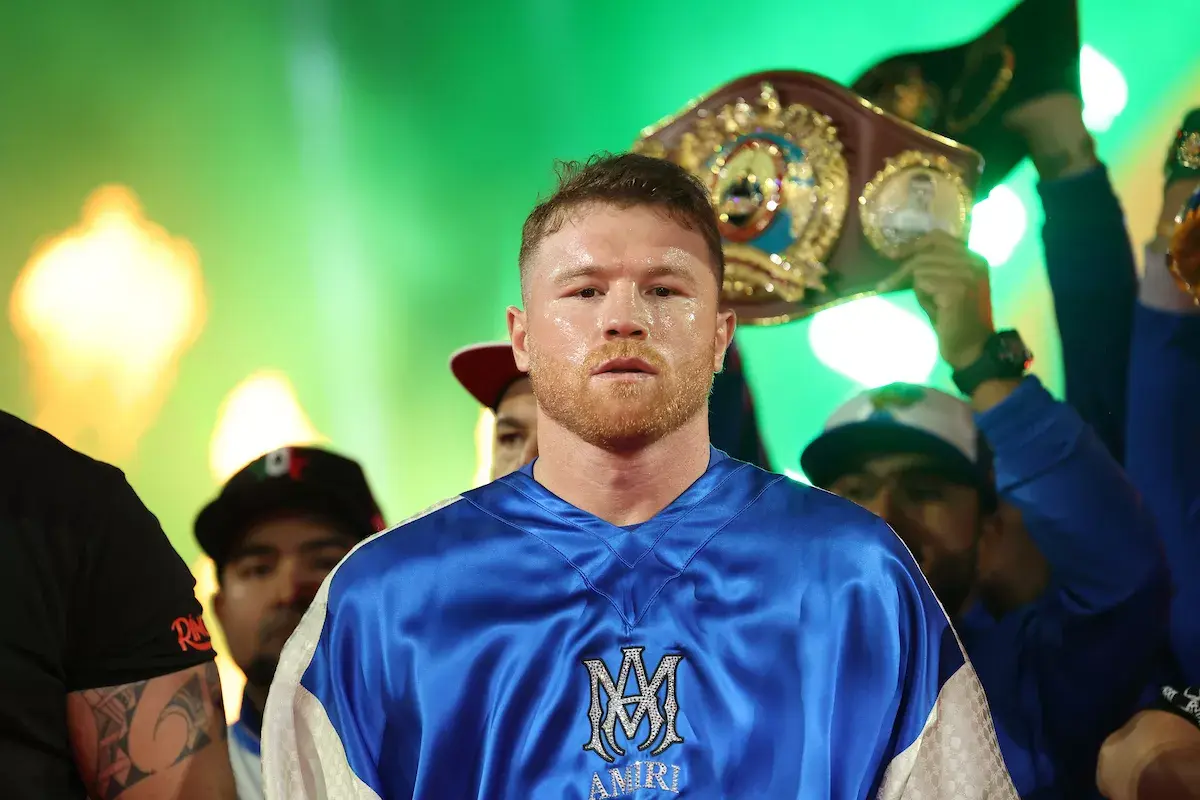
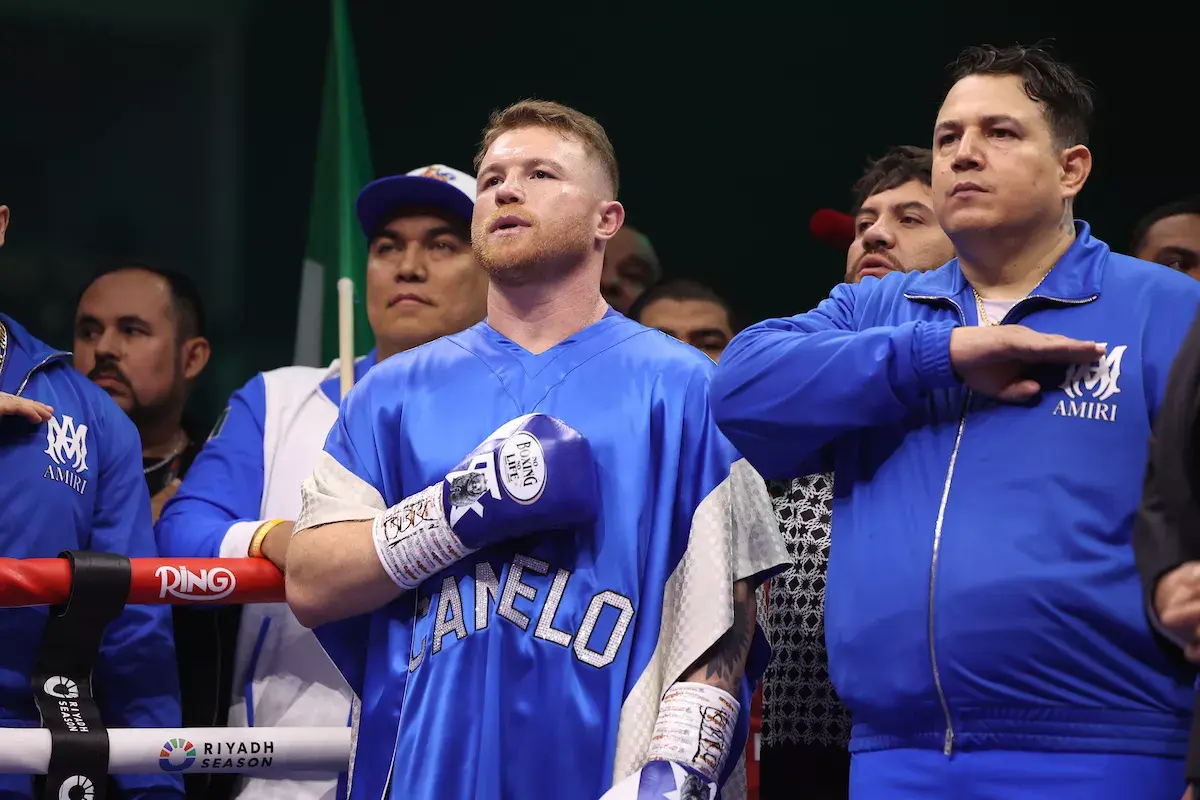
The debatable draw between Mexico’s Alvarez (49-1-2, 34 KOs) and Kazakhstan’s Golovkin (37-0-1, 33 KOs) obviously doesn’t stack up to Mayweather-Pacquiao or Mayweather-McGregor. Those two fights are anomalies, though, not anything to which even the biggest boxing pay-per-view events should be compared.
After five frustrating years, frothing fight fans finally got what they wanted in Mayweather-Pacquiao. And Mayweather-McGregor, while condemned as a mismatch that shouldn’t have been sanctioned as more than an exhibition, was an unprecedented spectacle – a boxer against a mixed martial artist – that lured consumers from the rabid fan base of another combat sport and gained more mainstream steam than even experts expected.
It’s impossible to quantify, but it stands to reason that Mayweather-McGregor negatively impacted the pay-per-view business done by Canelo-Golovkin as well.
At least some cost-conscious consumers chose between Mayweather-McGregor, which cost $100 to watch in HD, and Canelo-Golovkin, which cost $80 to view in HD.
For some, both pay-per-view events occurred within the same cable or satellite billing cycle. Even if it didn’t, others simply weren’t willing to pay $180 to watch boxing within a three-week span.
As the first of the two shows, Mayweather-McGregor surely benefited from those economic constraints.
Like Mayweather-McGregor, Canelo-Golovkin also was adversely affected by piracy, a growing problem for promoters and networks due to the emergence of Facebook Live. More than ever, frugal, resourceful fans are finding ways to stream pay-per-view fights for free.
Again, it’s impossible to identify exactly how many buys piracy cost Canelo-Golovkin. It’s also impossible to ignore the impact piracy has on pay-per-view revenue.
Piracy proponents argue that there are too many pay-per-view events in this greed-driven industry. They’ll tell you, too, that $100 and even $80 is entirely too much to charge to watch four fights in a night – three of which they wouldn’t pay $10 to watch, forget $100.
They rightfully want more high-profile fights on free TV, like Keith Thurman-Danny Garcia, and far fewer on pay-per-view. If the buy rates for two seemingly intriguing Andre Ward-Sergey Kovalev fights – less than 300,000 combined – taught us anything, it’s that.
From a promoter’s perspective, pay-per-view is the only way to make many of these fights feasible financially. Budget-restricted television executives adhere to the same premise.
Whatever your perspective, Canelo-Golovkin was one of the few fights buyers and sellers seemed to agree belonged on pay-per-view in 2017. At least 1.3 million consumers were willing to pay for it.
That’s not nearly as many as even De La Hoya himself thought would buy Canelo-Golovkin. That hardly amounts to a complete flop, either.
Much like the controversial result of the Canelo-Golovkin fight itself, its pay-per-view production just wasn’t quite what we expected.
Keith Idec is a senior writer/columnist for BoxingScene.com. He can be reached on Twitter @Idecboxing.