

Hall of Fame announcement: The surprises, the snubs, the sentimentality

Dec 5, 2025 • 3:36 PM ET
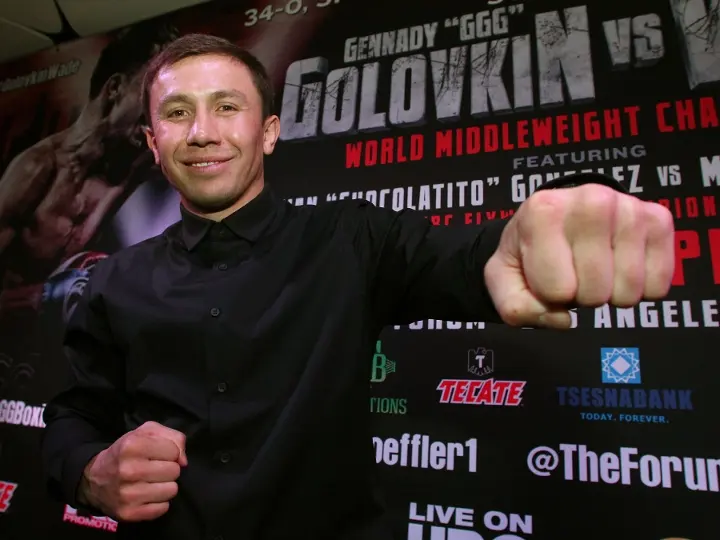
Noted scholar Ryan Garcia may not like it, but Gennady Golovkin is a Hall of Famer. The International Boxing Hall of Fame announced today that GGG will be the unofficial headliner of the class of 2026 – just as everyone (probably even Garcia, deep down) knew he would be.
Golovkin going in was a formality. The rest of the names in the press release? That’s where the real analysis lies, as there wasn’t a sure-shot to be found anywhere else on any of the ballots.
That’s not to say any of the new inductees are undeserving. It’s just that none of them could possibly have been confident that the call from the Hall was coming until the phone rang.
Here are three takeaways that stood out to me among the non-GGG elements of the voting results:
1. Antonio Tarver, Nigel Benn breakthroughs come at surprising times
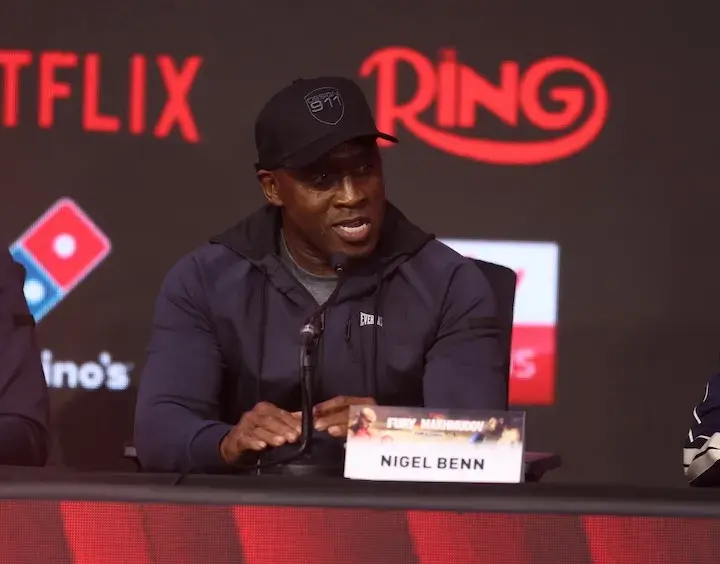
Tarver and Benn, the other two “Modern” category male fighters in addition to Golovkin, have been on the ballot – possibly coming close to induction – for quite a few years. Tarver last fought in 2015 and was nominated for the first time in 2019. Benn goes back considerably further than that, having last fought in 1996 and having languished on the ballot every year since 2014.
There were certain years along the way when they had no chance – like immediately after the waiting period was shortened from five years to three years, creating an instant logjam with the likes of Floyd Mayweather Jnr, Andre Ward, Wladimir Klitschko and Miguel Cotto all showing up at once.
But there were other opportunities for “The Magic Man” or “The Dark Destroyer” to make the cut, and it is a bit unusual that they did so on this particular ballot, when each was threatened by a newly added candidate with a similar resume.
For a decade or so, it was hard to pick between Benn and his old rival Chris Eubank, and it seemed that difficulty, along with an overlap in their voting constituencies, was working against them.
This year, another rival from the same era, Steve Collins, made his overdue ballot debut, which you would have thought would strip additional votes from Benn. But instead, voters apparently separated Benn from both Eubank and Collins and got the man from Essex over the hump.
As for Tarver, he didn’t share the ballot with any direct rivals, but alphabetically, his name appeared in a cluster right above Meldrick Taylor and Fernando Vargas, fellow former U.S. Olympians who were popular, whose names still resonate and who had mixed results in their biggest fights.
This year, Vernon Forrest showed up on the ballot for the first time, and as I wrote in October, the candidate he most reminded me of was Tarver. Forrest is another US Olympian, and like Tarver, he is best known for upsetting a Hall of Fame-bound pound-for-pound king, with a resume that is otherwise a bit thin by the IBHOF’s standards.
Again, I’m not saying either Benn or Tarver didn’t deserve to break through this year. I’m just surprised by the timing, as both men were more precariously positioned than ever to get lost in the crowd.
2. Sumya Anani, snubbed again
As I’ve said and written many times, I don’t think there are enough female fighters with Hall of Fame-level resumes to support inducting two in the “Women’s Modern” category every year. That may change when the Katie Taylor/Amanda Serrano/Claressa Shields generation retires, but for now, the barrier to entry is just too damned low.
But if the IBHOF insists on putting at least two modern women in every year, it is utterly mystifying to me that Sumya Anani still hasn’t been one of them after seven years of this process.
No shade toward this year’s inductees, Naoko Fujioka and Jackie Nava, but their inductions bring the total to 15 enshrined in the category, about half of whom had no business getting in before Anani.
We can all agree that Christy Martin is the most important women’s boxer of this modern era, the one who knocked down the door, and so it was proper when she was part of the first induction class. And between the years of 1990 and 2002, Martin lost exactly one time: to Anani, in 1998, without controversy.
If that was the only achievement on Anani’s resume, it would be enough in a two-women-every-year system. But she also holds wins over Hall of Famer Jane Couch, Lisa Holewyne, Fredia Gibbs, Belinda Laracuente and Andrea DeShong. Anani’s record is an outstanding 25-3-1 (10 KOs), and two of her three losses came in her final two fights, when Anani was in her mid-30s and apparently fading fast.
That she keeps getting passed over in this particular category makes no sense to me.
In the Modern Men’s category, there’s nobody I would consider a snub except maybe Pongsaklek Wonjongkam – the easiest name for me to check off this year other than Golovkin. And the “Non-Participant” and “Observer” categories are so deep with candidates from so many different lanes that it’s hard to label anyone a snub (although CompuBox co-founder Bob Canobbio and BoxRec founder John Sheppard are starting to get snub-ish, considering the ways in which they reshaped coverage of the sport).
But Anani? The woman who dethroned Christy Martin? That’s a snub. And the snubbing had better end before that women’s ballot starts filling with the standout names of the current era.
3. I have some theories about the ‘Observer’ category
Before I dig into my theories, let me preface this by congratulating all of the inductees in all of the categories and spelling out that, whether they got my votes or not, nobody getting a plaque in Canastota next June strikes me as unworthy.
But I do have a couple of theories that apply to the two men who got the votes as Observers: Alex Wallau and Kevin Iole.
First, I say this as someone who voted for Wallau each of the past two years: Sentimentality likely played a role. Accuse me of poor taste for typing these words if you choose, but Wallau died in the middle of the voting period, and I can’t imagine that didn’t swing a few ballots his way.
Hall of Fame voters are (allegedly) human and are capable of sentimentality, and it’s possible the emotions of the moment influenced the outcome here. (The real shame is that Wallau’s induction didn’t come a year earlier, when he would have been around to enjoy it.)
As for Iole, it doesn’t surprise that most years, one of these two spots goes to a writer. In the 2020s, this now makes seven writers in seven induction classes: Randy Gordon last year, Wally Matthews the previous year, Ron Borges two classes before that, George Kimball the prior year, and both Bernard Fernandez and Thomas Hauser in 2020.
I don’t know the exact identities of all of the voters, but I do know many (most?) of them are members of the Boxing Writers Association of America, and writers supporting their own, voting for fellow writers, makes a whole lot of sense.
Hey, as a writer who ain’t such a young whippersnapper anymore and dreams of someday being in that position in which Iole finds himself today, I very much do not object to this trend. The more writers, the better, I say.
And if that means the likes of Canobbio and Sheppard have to wait a while longer, so be it. Their worthiness does not supersede a boxing writer’s selfishness.
Eric Raskin is a veteran boxing journalist with nearly 30 years of experience covering the sport for such outlets as BoxingScene, ESPN, Grantland, Playboy, and The Ring (where he served as managing editor for seven years). He also co-hosted The HBO Boxing Podcast, Showtime Boxing with Raskin & Mulvaney, The Interim Champion Boxing Podcast with Raskin & Mulvaney, and Ring Theory. He has won three first-place writing awards from the BWAA, for his work with The Ring, Grantland, and HBO. Outside boxing, he is the senior editor of CasinoReports and the author of 2014’s The Moneymaker Effect. He can be reached on X, BlueSky, or LinkedIn, or via email at RaskinBoxing@yahoo.com.
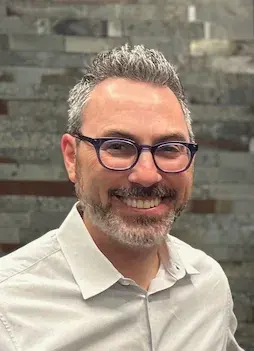
Eric Raskin is a veteran boxing journalist with nearly 30 years of experience covering the sport for such outlets as BoxingScene, The Good Fight, ESPN, Grantland, Playboy, and The Ring (where he served as managing editor for seven years). He also co-hosted The HBO Boxing Podcast, Showtime Boxing with Raskin & Mulvaney, The Interim Champion Boxing Podcast with Raskin & Mulvaney, and Ring Theory. He has won four first-place writing awards from the BWAA, for his work with The Ring, Grantland, HBO, and BoxingScene. Outside boxing, he is the senior editor of CasinoReports and the author of 2014’s The Moneymaker Effect. He can be reached on X, BlueSky, or LinkedIn, or via email at RaskinBoxing@yahoo.com.