Tyson Fury rules out retirement, might sign '10-fight deal'
•Read more

 Esther Lin / Most Valuable Promotions
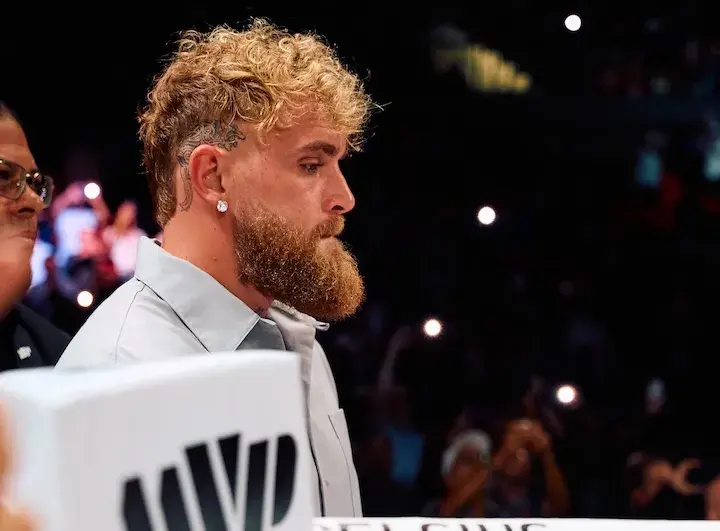
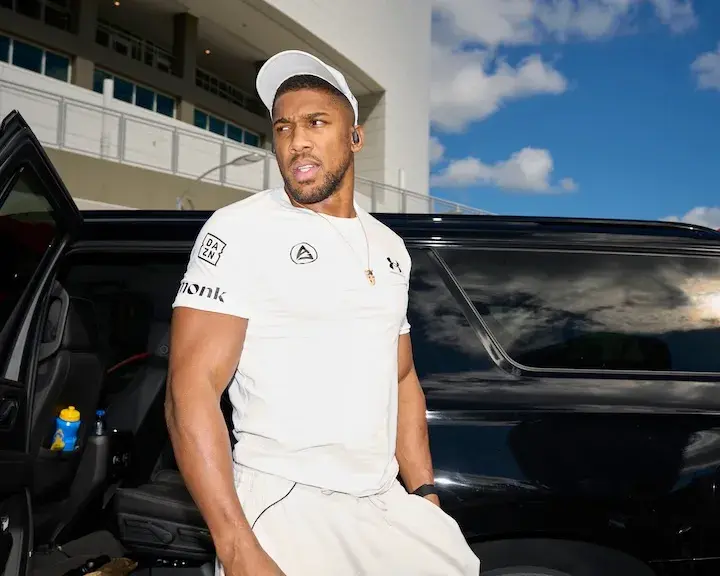
Although he finds himself in a no-win situation this Friday, it could be argued that a win has never been more important for Anthony Joshua in his 12-year professional career.
Win, as he should, and as he must, and Joshua will be greeted by shrugs, for all he will have done is beaten Jake Paul or: what is expected of him, what he was supposed to do, his favour to the world. Lose, on the other hand, and everything changes. Lose to Jake Paul and Joshua’s entire legacy will be redefined overnight and all past successes will serve only to highlight the extent of his fall from grace.
Winning, then, is essential on Friday. Even if declared a no-win situation, the win itself is imperative. It won’t crack the top 20 wins in Joshua’s career, no, but should he lose to Jake Paul, that would represent the worst loss of his career – number one. In fact, Joshua winning on Friday is considered such an inevitability that people aren’t thinking about whether he wins or not against Paul, but instead how he wins – how quickly, how easily, how cruelly.
That, for Joshua, is ironically what could make the process of securing the win – this quick, easy, cruel win – potentially tricky when the time comes. After all, if there’s one thing a fighter dislikes it is a no-win situation; that is, a situation in which winning is believed to be so simple it is taken for granted. Moreover, history would indicate that whenever we expect a specific outcome in a boxing ring, we leave ourselves open to having those expectations dashed and being proved wrong.
If boxing does anything well, it does that well: it shocks, it upends, it reminds both us and the fighters to never get too cocky or comfortable. We have, by way of proof, a whole catalogue of upsets and dramatic knockouts, so we should know by now, all of us. We should know not to get ahead of ourselves or believe we have it all figured out. We should expect the unexpected. Always.
Besides, no matter the odds, it is seldom as easy as it sounds, winning a fight. Even mismatches require winning – finding the right punch, picking the right moment – and even experienced world champions, like Joshua, must devise a way to win a fight and execute their game plan without messing up.
In other words, just because a fighter like Joshua carries an edge in size, power, strength and experience over an opponent like Jake Paul, and just because he has twice won versions of the world heavyweight title, does not mean their fight on Friday is won before he has entered the ring and taken aim. No, once all the laughter has died down, now he must do it. He must go out there and do what we expect him to do and he must do it as well and as quickly and as cruelly as we expect him to do it. If there is to be any talk of a script, and there has been, the script is that. The script is a happy ending for Joshua and for boxing.
And yet, in scenarios like this, there is no precedent for Joshua and therefore no awareness of what it takes to not only destroy an overmatched opponent but make a mockery/example of them in the process. Even his 2024 fight against Francis Ngannou, another novice, felt different than this one. Against Ngannou there was at least a sense of danger on account of Ngannou’s past performance against Tyson Fury – a close 10-round decision loss – which ensured Joshua treated Ngannou seriously and approached him the same way he would have approached the various world title challengers he had faced over the years. It was perhaps for that reason that the Londoner looked so sharp and so devastating against Ngannou. No messing, Joshua was fearful rather than complacent that night in Riyadh, and it showed. In round two, he measured Ngannou for his right hand and then delivered the knockout blow and a dose of reality to both Ngannou and those who picked the UFC (Ultimate Fighting Championship) champion to win.
If anything, a better comparison, when thinking of Joshua vs. Paul, is the other boxing match Ngannou had around that time: against Tyson Fury in 2023. On that occasion Ngannou was very much an unknown quantity in boxing terms and had only his reputation as a heavyweight champion in the UFC upon which to call. He had a certain toughness, we knew that much, but a lot of what was being said about Ngannou back then had less to do with his boxing ability and more to do with a kind of punch power that carried greater weight in mixed martial arts – where technically correct punchers are few and far between – than in the world of professional boxing. He was, going in, deemed a game but raw novice. He was someone whose limitations would allow Fury, a master boxer, to dance around him, toy with him, and then put him out of his misery whenever he felt like it.
Only that never happened, did it? Instead, on the night Ngannou presented an awkward proposition for Fury and made Fury uncomfortable almost immediately. He was, you see, uncommonly tough – physically, mentally – and had no respect for the moves Fury made, the faces he pulled, and the punches he threw. Soon, in fact, one got the distinct impression that Ngannou’s ignorance had become a weapon and that he had been through a whole lot worse. He was, it seemed, encouraged to know he could take Fury’s punches and keep walking forward. He thought of the experience as rather fun.
Fury, meanwhile, appeared spooked by the image of Ngannou chugging forward, unflustered, undeterred. He knew early on that he didn’t possess the power to keep him off and he also found it increasingly difficult to read Ngannou’s attacks, which were launched unexpectedly and with a novice’s conviction.
It was as though at times Ngannou performed to his own syncopated, off-kilter rhythm and Fury, whose style depended on him riding a similar rhythm, could do little about it. He couldn’t get to grips with Ngannou’s timing – when Ngannou would throw or indeed what he would throw – and Ngannou’s lack of education, although we assumed it detrimental, looked to be working in his favour. The more success Ngannou had, and the more rounds that passed, the more one could see that Fury was panicking, wondering both how to keep Ngannou off and how to explain himself when the fight finished and Ngannou was praised for going the distance in a “mismatch”.
Ngannou, in theory, should never have been able to win a round against a technician like Fury, much less drop him, yet on the night he did both. How? Because he believed he could do it, that’s how. He also benefited greatly from the fact that Fury, the one with all the pressure and responsibility, had a preconceived notion of how this thing would go only to discover, quickly, that his forecast was wide of the mark. Discovering that when in the ring with a large Cameroonian heavyweight with uncommon toughness and bricks for fists would have come as quite the shock for Fury, no question. The only thing worse, for Fury, was knowing that everybody watching would have felt a similar shock and would have now started doubting him the way he was doubting himself.
**
Sometimes there are fights and performances that are just inexplicable and make zero sense. One such fight, in 2005, saw the WBA light-welterweight champion Vivian Harris defend his belt against Colombian Carlos Maussa, a long-limbed, human wind puppet who appeared unable to throw a straight punch, never mind a correct one. It was, on paper, another of boxing’s great mismatches, with the image of the two squaring off enough to amuse. In one corner you had Harris, his punches stiff, straight, accurate and hard, while in the other you had Maussa, no defence and no idea, his arms hollow, his body starved of muscles.
Common sense suggested that there would only be one way for a fight like Harris vs. Maussa to unfold, and yet, round by round, it soon became clear that Harris’ inability to understand what it was he was fighting that night in Atlantic City caused some kind of mental collapse. One moment he couldn’t miss – landing every shot on Maussa with ease – and the next he was tired and doubtful, not entirely sure what it was he was hitting, or what he had to do to now finish things.
By round seven, the round in which the fight would end, Harris, the champion, cut an exhausted figure overwhelmed by the gangly, gormless, Gollum-like apparition swaying in front of him. He had, by then, hit Maussa with every shot he could think to throw, but still Maussa was there, gurning, winding up his arms, trying; living proof that occasionally the boxer who does everything wrong can become so unpredictable that the boxer who does everything right simply malfunctions in their presence. But how? thought Harris, struggling to breathe. Yes, how? thought everybody else, struggling beneath the weight of their own ignorance.
A year before Maussa became world champion, I sat ringside and watched David Haye, a 23-year-old cruiserweight, land every shot his imagination and right hand could muster on the head of a 40-year-old Carl Thompson at Wembley Arena for three rounds only to conspire to lose the fight in round five. That, again, was another example of two fighters appearing so far apart, technically and physically, to make the pre-fight prediction easy and the fight itself a foregone conclusion. However, by round four, something between the two cruiserweights had shifted and now all that stuff didn’t matter. Now it didn’t matter if Haye had been beating Thompson up round after round and was quicker, stronger, and younger. It didn’t matter that Thompson was hurt, unsteady, and so slow he seemed unable to think what punch to throw, let alone throw it. It didn’t even matter that Haye was the pre-fight favourite and that Thompson had been hand-picked on account of his advancing years and his supposed wear and tear.
All that mattered, come round four, was that Thompson remained upright and full of belief. “Yeah, he caught me with some decent shots and they hurt, but I still had it in my mind: I’m going to win this fight,” Thompson told me last year. “I always believed I could beat David because he had never fought anyone like me. I thought he would get a rude awakening and soon realise how hard it was in there. And he did. He ran out of puff. I was, by some miracle, able to take his punches and that was his downfall. He just didn’t know what to do after that.”
It was true. Haye had prepared for a fight, just not a fight like that. The fight for which the unbeaten Londoner had spent 10 weeks preparing was a quick one, an easy one, a cruel one. Call it a mismatch. Most did. He was, according to the script, meant to go in there, beat up one of his old heroes, and announce himself as the future of British boxing by winning a fight seen as nothing more than a changing of the guard.
So certain was Haye of that particular outcome, he prepared accordingly. He booked a hotel in Bournemouth, an English coastal resort, and for several weeks made a semi-regular habit of training in the hotel’s ballroom. The rest of the time he enjoyed himself and had fun. He did what was required to stop an old man in a few rounds and he trusted both his natural talent and the process.
It was then only on the night, when he encountered something different from what he expected, that he knew stones had been left unturned. On the night he landed each of the punches he had been preparing to land on Thompson, yet was shocked to discover that the effect of the punches was quite different from how he had pictured it when throwing them in a ballroom. Now, with Thompson still alive and kicking, he had to win the fight in a new way. But how? For anything other than a quick blowout Haye was ill-equipped.
In the aftermath, Haye, the beaten man, could only bear to watch the final two rounds of the fight. He always avoided watching the first three. “The first few rounds were terrible, even if I was winning them,” he explained to me at the time. “That’s when all the damage was done. I’d rather see myself get beaten up and stopped than watch me act like an idiot for the first three [rounds] and still win them. Those first three rounds were almost too easy. I got drunk on my own success.”
For Haye, there was no shame in losing to Carl Thompson, a former world champion. The shame, if it existed, stemmed only from the manner of the defeat and how (a) unexpected it was, and (b) how preventable it was. He maintained that the fight should have been easy and maybe, on reflection, the pain of knowing that hurt him more than the pain of later defeats. Against Thompson, you see, Haye had fallen into the complacency trap. He believed his own hype. He felt that the only way to thrive in a no-win situation was to win the fight in such a dramatic and convincing fashion that the nature of the victory would override the fact that many considered the fight itself to be a mismatch.
Then, alas, he learned his lesson the hard way. He learned that it is easier said than done knocking someone out, especially if that someone is Carl Thompson. He also learned that nothing is done until it is done and that no fight is won on paper, in theory, or in seaside strip clubs. “I don’t know if I’ll ever be able to watch the first few rounds,” Haye said in 2004.
Should Anthony Joshua, 28-4 (25), go on to lose to Jake Paul on Friday night, he will need to do more than just ignore the trauma, that’s for sure. He will have to run from it, get out of town, wear a disguise. He will also come to discover how difficult that is to do in 2025.
Luckily for Joshua, Jake Paul, 12-1 (7 KOs), is not Francis Ngannou or Carlos Maussa, and he is certainly not Carl Thompson. He shares things in common with each of those men in the context of Friday’s fight, but make no mistake: a fighting ignorance is not the same as a more general ignorance. A fighting ignorance will take you into parts of a fight few expected you to reach, whereas a more general ignorance gets you into fights you should have perhaps avoided in the first place.
Elliot Worsell is a boxing writer whose byline first appeared in Boxing News magazine at the age of 17. He has, in the 20 years since, written for various publications, worked as press officer for two world heavyweight champions and won four first-place BWAA (Boxing Writers Association of America) awards. In addition to his boxing writing, Worsell has written about mixed martial arts for Fighters Only magazine and UFC.com, as well as worked as a publicist for the Ultimate Fighting Championship (UFC). He has also written two non-fiction books, one of which, “Dog Rounds,” was shortlisted at the British Sports Book Awards in 2018.
 HOT0:12Dubiel Sánchez Round 1 Knockout Of Oliver Quintana19K views
 HOT1:09Would you like to see Pacquiao make his UK debut against Cordina? #Boxing5K views
 HOT1:07Does Vergil need to stop Thurman faster than Fundora did to make a statement? #boxing4.3K views
 HOT1:22Should Canelo-Mbilli go ahead as planned, or should the event be postponed? #boxing5.8K views
 HOT1:17Should the event proceed under the current circumstances? 👇 #boxing3K views
 HOT0:59Is Shakur justified in demanding more, or has he priced himself out of a major fight? #boxing8.3K views
 HOT1:12Kevin Anton Defeats Freudis Rojas Jr And Retains WBC Title5.5K views
 HOT0:30Kevin Anton Unloads On Freudis Rojas Jr In Round 105.7K views
 HOT1:16Should Canelo-Mbilli proceed as planned, or should fighter safety take priority? 👇 #boxing9.5K views
 TRENDING1:00Could Tim Tszyu make history, or does Lara have another upset in him? 👇🇦🇺 #boxing4.4K views
 NEW0:49Is it time for Gonzalez to get his world title opportunity? #boxing276 views
 NEW2:22Bryan Flores vs Jonathan Navarro Highlights331 views