

 Tweet
Tweet
ONE-ON-ONE WITH VERNON FORREST'S BROTHER ALPHONSO
By Doveed Linder
Forrest murdered two years ago today
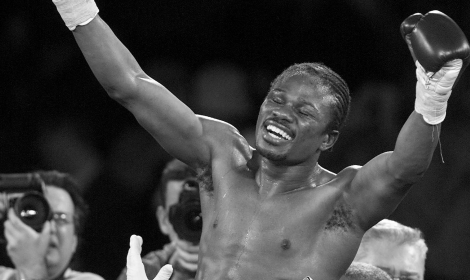
On July 25, 2009, the boxing world lost a great fighter and a tremendous human being when former two-division champion Vernon “The Viper” Forrest (41-3, 29 KOs) was killed in an attempted robbery. Two years ago to the day, Vernon’s brother Alphonso Forrest discusses Vernon’s early years as a boxer, his fights with Shane Mosley, the time Vernon spent working with disabled children, his fights with Ricardo Mayorga, and the kind of person Vernon was outside the ring.
DL: How did your brother Vernon first get involved with the sport of boxing?
AF: Vernon was always a little scrappy kid. Fighting always came naturally to him. As far as boxing goes, I would say he started between eight and nine years old. But he was always scrappin’ in the neighborhood with his buddies and stuff like that. When he started going to the gym, he got his butt kicked a couple of times. And he came home and he was mad. But he went back the next day. Bennie Heard was boxing at the time. And Bennie Heard was a champion in the amateuers. I think he was Golden Gloves at the time. But there was something about Bennie that attracted Vernon to the sport of boxing and made him realize that he could make a go at it. Bennie Heard was Vernon’s idol.
DL: I’ve heard interviews where Vernon talked about the sacrifices he made as a teenager. It sounded like he resisted running wild like the other kids and I believe he even mentioned that he didn’t attend his high school prom because his focus was on boxing.
AF: That is all correct. When Vernon started boxing, as an adolescent, you start phasing from a young teenager and you go on to your manhood. And I think between the ages of twelve to fifteen, Vernon saw something in boxing that was going to take him places. And he really started dedicating himself.
DL: Back in the amateur days, I think the fight that most fans are familiar with is Vernon’s victory over Shane Mosley. What do you recall about that fight?
AF: I remember when he prepared for that fight and he said he was going to fight this kid named Shane Mosley. He was supposed to be the baddest guy out there. And he said, “I’m gonna kick his butt.” And I said, “Well, go out and do your best. Just keep it safe.” We always wished him a safe return to the family. But at the time, I didn’t know much about Shane Mosley. But when Vernon beat him, he advanced in the Olympic trials. Shane ended up turning pro and I saw him on TV and I said, “Wow! This kid is bad! Vernon beat this guy?!” So later on, they ended up hooking up again in the pros. And I remember my whole family went to New York to watch. I didn’t go, but I had a house full of people. And when Vernon caught him with that right hand, the fight was over with. I told everybody in the house that Shane Mosley would not beat him from this point on. Once Vernon connected with that punch, it was over.
DL: What stands out in your mind about the early years of Vernon’s pro career?
AF: I went to a few fights in Atlantic City. I would travel up the road with him and go see him fight. And he was choppin’ guys down like trees. Roger Mayweather was Vernon’s first trainer. Roger showed Vernon a whole lot of things. Vernon had a whole lot of respect for the Mayweathers. A whole lot of respect for them guys. He once told me that he would never fight Floyd, because he loved his uncles and he loved little Floyd. Floyd and Vernon were good friends.
DL: When Vernon defeated Shane Mosley in January of 2002, he reached a goal by becoming recognized as one of the best fighters in the world. Tell me about that time in his life.
AF: At the time, Vernon had a fiancé. So he was grounded. He was in Atlanta at the time and we spent some time up there and we were just relaxing and spending time with the family. And a couple of boxers came up there. He got a lot of phone calls from the media. But he was just relaxing. He was glad that it was over with. He finally did what he set out to do and that was be a world champion. And he said that from this point on, he was going to make money and take care of his family and just enjoy the sport.
DL: Around the time of Vernon’s second fight with Shane Mosley, it became widely known that he spent a lot of his time working with disabled children and devoting his life to helping others.
AF: It came out then, but Vernon had started doing that around ’96. Vernon would volunteer and do that as a way to do something positive when he was on his down time from training. He didn’t want to just hang out and do nothing. He always wanted to do something positive for society. So he just started doing that as a charity. And one time he put his money up and he bought a house with about seven or eight bedrooms and put those children up, one for each bedroom. And he would stay there with his fiancé. And my mom would come up and help out, I would come up and help out… We just rotated around and everybody would help out.
DL: When Vernon faced Ricardo Mayorga, it seemed like he took those losses very close to heart. He seemed hurt by what happened.
AF: The first fight, he knew that he made a mistake. He tried to brawl with a brawler. Vernon’s not a brawler, he’s a skillful fighter. He’s got skills and boxing abilities. But he fought the wrong fight and he got caught. And he felt like he let his whole team down, because he didn’t stick to the plan. The second time, he thought he won the decision. But the judges were looking at aggressiveness. And Vernon’s style didn’t match Mayorga’s style. But he took it pretty hard. Those fights right there brought Vernon down to reality and made him humble again.
DL: Vernon did get back to winning fights after he faced Mayorga and he avenged his only other loss, which came against Sergio Mora. How long do you think he would have continued boxing?
AF: I think Vernon would be retired by now. I think there were about three or four other fights that he would have had. There were fights that he wanted to make that he would talk about. I would have loved to see him and Paul Williams fight. Paul would have given him a lot of different angles and put a lot of punches out there. But Vernon had that right hand and that uppercut and I think it would have been a great fight.
DL: The boxing public is very familiar with Vernon Forrest the fighter. Tell me a little about Vernon Forrest the person.
AF: He was a great person. He would help anybody. When we had problems in the family, Vernon was the first one to stand up. And when they had the hurricane in New Orleans, Vernon brought some families and set them up in Atlanta to get them started in a new life. He did that out of his own pocket. Vernon was a man who knew there was a God. Vernon was a man who prayed. He never stepped on anybody’s foot and caused problems. I remember going to a boxing event in Atlantic City back in the early 90s. And we ran into this old man and I saw Vernon talking to this guy before we left. They were laughing and cutting up. And I was like, “How do you remember all these people and his name and his wife’s name and all that?” But Vernon was the type of guy where if he met you, he would remember your name, your face… He remembered everything about you. And every time he met somebody, he just had all this love and respect for them. We would go to a boxing event and he knew the referees, the promoters... He knew all the boxers coming up and he would give them pointers. It almost brings tears to my eyes, because he just cared about people so much. I don’t understand how somebody could hurt a man with such prestige, somebody who’s so likable. It’s going to play itself out in court, exactly what went on and what transpired the night my brother was killed. But my brother would give you the shirt off his back. He would do anything for you.
DL: Is there anything you would like to say in closing?
AF: I would like to thank all the people who stood by my mother, Sam Watson, Charles Watson, Al Haymon, and Dan Goosen. They took care of my mom and gave her everything she needed. Those guys are some good people. My mom loved them. Our family loves boxing. And I would like to advise all the young fellas coming up to do something positive outside of boxing and make a contribution to life in a positive way. I think Vernon had a lot more to do after boxing and we’ll never know what his mindset was. But he was going to stay in boxing. He was going to be a promoter, he was going to be a trainer… He was going to be a lifer in boxing.
From Boxing talk
By Doveed Linder
Forrest murdered two years ago today
On July 25, 2009, the boxing world lost a great fighter and a tremendous human being when former two-division champion Vernon “The Viper” Forrest (41-3, 29 KOs) was killed in an attempted robbery. Two years ago to the day, Vernon’s brother Alphonso Forrest discusses Vernon’s early years as a boxer, his fights with Shane Mosley, the time Vernon spent working with disabled children, his fights with Ricardo Mayorga, and the kind of person Vernon was outside the ring.
DL: How did your brother Vernon first get involved with the sport of boxing?
AF: Vernon was always a little scrappy kid. Fighting always came naturally to him. As far as boxing goes, I would say he started between eight and nine years old. But he was always scrappin’ in the neighborhood with his buddies and stuff like that. When he started going to the gym, he got his butt kicked a couple of times. And he came home and he was mad. But he went back the next day. Bennie Heard was boxing at the time. And Bennie Heard was a champion in the amateuers. I think he was Golden Gloves at the time. But there was something about Bennie that attracted Vernon to the sport of boxing and made him realize that he could make a go at it. Bennie Heard was Vernon’s idol.
DL: I’ve heard interviews where Vernon talked about the sacrifices he made as a teenager. It sounded like he resisted running wild like the other kids and I believe he even mentioned that he didn’t attend his high school prom because his focus was on boxing.
AF: That is all correct. When Vernon started boxing, as an adolescent, you start phasing from a young teenager and you go on to your manhood. And I think between the ages of twelve to fifteen, Vernon saw something in boxing that was going to take him places. And he really started dedicating himself.
DL: Back in the amateur days, I think the fight that most fans are familiar with is Vernon’s victory over Shane Mosley. What do you recall about that fight?
AF: I remember when he prepared for that fight and he said he was going to fight this kid named Shane Mosley. He was supposed to be the baddest guy out there. And he said, “I’m gonna kick his butt.” And I said, “Well, go out and do your best. Just keep it safe.” We always wished him a safe return to the family. But at the time, I didn’t know much about Shane Mosley. But when Vernon beat him, he advanced in the Olympic trials. Shane ended up turning pro and I saw him on TV and I said, “Wow! This kid is bad! Vernon beat this guy?!” So later on, they ended up hooking up again in the pros. And I remember my whole family went to New York to watch. I didn’t go, but I had a house full of people. And when Vernon caught him with that right hand, the fight was over with. I told everybody in the house that Shane Mosley would not beat him from this point on. Once Vernon connected with that punch, it was over.
DL: What stands out in your mind about the early years of Vernon’s pro career?
AF: I went to a few fights in Atlantic City. I would travel up the road with him and go see him fight. And he was choppin’ guys down like trees. Roger Mayweather was Vernon’s first trainer. Roger showed Vernon a whole lot of things. Vernon had a whole lot of respect for the Mayweathers. A whole lot of respect for them guys. He once told me that he would never fight Floyd, because he loved his uncles and he loved little Floyd. Floyd and Vernon were good friends.
DL: When Vernon defeated Shane Mosley in January of 2002, he reached a goal by becoming recognized as one of the best fighters in the world. Tell me about that time in his life.
AF: At the time, Vernon had a fiancé. So he was grounded. He was in Atlanta at the time and we spent some time up there and we were just relaxing and spending time with the family. And a couple of boxers came up there. He got a lot of phone calls from the media. But he was just relaxing. He was glad that it was over with. He finally did what he set out to do and that was be a world champion. And he said that from this point on, he was going to make money and take care of his family and just enjoy the sport.
DL: Around the time of Vernon’s second fight with Shane Mosley, it became widely known that he spent a lot of his time working with disabled children and devoting his life to helping others.
AF: It came out then, but Vernon had started doing that around ’96. Vernon would volunteer and do that as a way to do something positive when he was on his down time from training. He didn’t want to just hang out and do nothing. He always wanted to do something positive for society. So he just started doing that as a charity. And one time he put his money up and he bought a house with about seven or eight bedrooms and put those children up, one for each bedroom. And he would stay there with his fiancé. And my mom would come up and help out, I would come up and help out… We just rotated around and everybody would help out.
DL: When Vernon faced Ricardo Mayorga, it seemed like he took those losses very close to heart. He seemed hurt by what happened.
AF: The first fight, he knew that he made a mistake. He tried to brawl with a brawler. Vernon’s not a brawler, he’s a skillful fighter. He’s got skills and boxing abilities. But he fought the wrong fight and he got caught. And he felt like he let his whole team down, because he didn’t stick to the plan. The second time, he thought he won the decision. But the judges were looking at aggressiveness. And Vernon’s style didn’t match Mayorga’s style. But he took it pretty hard. Those fights right there brought Vernon down to reality and made him humble again.
DL: Vernon did get back to winning fights after he faced Mayorga and he avenged his only other loss, which came against Sergio Mora. How long do you think he would have continued boxing?
AF: I think Vernon would be retired by now. I think there were about three or four other fights that he would have had. There were fights that he wanted to make that he would talk about. I would have loved to see him and Paul Williams fight. Paul would have given him a lot of different angles and put a lot of punches out there. But Vernon had that right hand and that uppercut and I think it would have been a great fight.
DL: The boxing public is very familiar with Vernon Forrest the fighter. Tell me a little about Vernon Forrest the person.
AF: He was a great person. He would help anybody. When we had problems in the family, Vernon was the first one to stand up. And when they had the hurricane in New Orleans, Vernon brought some families and set them up in Atlanta to get them started in a new life. He did that out of his own pocket. Vernon was a man who knew there was a God. Vernon was a man who prayed. He never stepped on anybody’s foot and caused problems. I remember going to a boxing event in Atlantic City back in the early 90s. And we ran into this old man and I saw Vernon talking to this guy before we left. They were laughing and cutting up. And I was like, “How do you remember all these people and his name and his wife’s name and all that?” But Vernon was the type of guy where if he met you, he would remember your name, your face… He remembered everything about you. And every time he met somebody, he just had all this love and respect for them. We would go to a boxing event and he knew the referees, the promoters... He knew all the boxers coming up and he would give them pointers. It almost brings tears to my eyes, because he just cared about people so much. I don’t understand how somebody could hurt a man with such prestige, somebody who’s so likable. It’s going to play itself out in court, exactly what went on and what transpired the night my brother was killed. But my brother would give you the shirt off his back. He would do anything for you.
DL: Is there anything you would like to say in closing?
AF: I would like to thank all the people who stood by my mother, Sam Watson, Charles Watson, Al Haymon, and Dan Goosen. They took care of my mom and gave her everything she needed. Those guys are some good people. My mom loved them. Our family loves boxing. And I would like to advise all the young fellas coming up to do something positive outside of boxing and make a contribution to life in a positive way. I think Vernon had a lot more to do after boxing and we’ll never know what his mindset was. But he was going to stay in boxing. He was going to be a promoter, he was going to be a trainer… He was going to be a lifer in boxing.
From Boxing talk



Comment