

 Tweet
Tweet
 Growth hormone is not detectable by urine test only by blood test
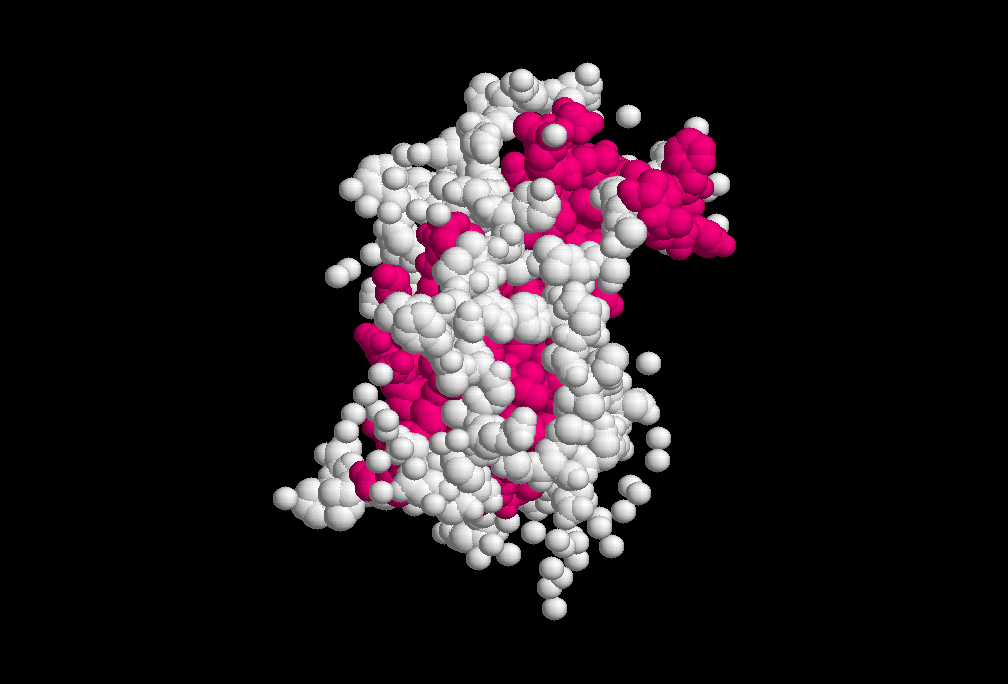
"In its role as an anabolic agent, HGH has been used by competitors in sports since the 1970s, and it has been banned by the IOC and NCAA. Traditional urine analysis could not detect doping with HGH, so the ban was unenforceable until the early 2000s when blood tests that could distinguish between natural and artificial hGH were starting to be developed. Blood tests conducted by WADA at the 2004 Olympic Games in Athens, Greece primarily targeted HGH.[2]"
Benefits
[edit] Appearance
[edit] Lean body mass
The primary way HGH assists an athlete’s appearance is by reducing the amount of subcutaneous (meaning underneath the skin) fat an athlete has.[4] One study found that taking HGH led to a significant increase in lean body mass, but the change was primarily for the short term.[2] Although muscle is a primary component of lean body mass, in the instance of HGH, the ****e is not muscular. The increase in lean body mass is attributed to a simultaneous decrease in fat related tissue[3] higher fluid retention, and an increase of connective tissue[5] as opposed to muscle hypertrophy.[2] No increase in muscle strength was observed in laboratory testing.[3] This makes an athlete’s muscles more visible but does not lead to an increase of the strength-producing contractile tissue and therefore HGH does not enhance muscular strength capabilities.[5] As concluded by experiments performed at Washington University in St. Louis, HGH can increase the size of muscles, but not muscle strength.[5] So while HGH can modify an athlete’s appearance, it will not boost his athletic capabilities.[2]
[edit] Muscle mass
Researchers are still debating whether the more noticeable muscles are larger in size as well. It should be clarified, though, that muscle mass is not the same as muscle strength.[5] Some say that human growth hormone will build muscle mass through raised insulin-like growth factors levels leading to heightened protein synthesis without any side effects[6] while other researchers argue that there have been no such findings on young healthy adults.[4] The second argument is more supported by research discoveries that HGH affects muscle protein synthesis no differently than a placebo does.[1]
[edit] Injury Resistance
The biggest benefit an athlete gets from using HGH is its anabolic effects on the connective tissue within muscles.[4] These effects “may promote resistance to injury or faster repair [but] would make the muscle no more capable of force generation”.[4] HGH can make an athlete better equipped to avoid or recover from a sports injury.[5] ). With the release of the Mitchell Report on December 13, 2007, 86 players were revealed to have taken steroids while playing in the Major Leagues. In the report, it stated "Players who use Human Growth Hormone apparently believe that it assists their ability to recover from injuries and fatigue"[7]


Comment