

 Tweet
Tweet
As our understanding of nutrition and well-being continues to improve, the potential for human growth will continue to boom. With superior knowledge clamping down on seemingly void factors like climate, sleep patterns and pollution exposure, the body now responds better to nutrients and exercise. Throughout the decades, sporting figures have helped us to bookmark these patented changes in anatomy as Football players, Baseball players, Basketball players and Boxers have gradually increased in height and weight.
In Boxing, new terminology was created for the 21st century behemoth that refuses to have a spring in its step. Coming in at 240lbs+ and standing around 6, 5, today’s ‘modern super-heavyweight’ is still a flawed concept were the large fighter does not mentally or physically prepare properly for a championship bout.
Vitali Klitsckho is a fighter of decent ability; lean and quite athletic with an eroding style of spearing the target while creaking away, yet the lack of substance in his opponents has blown the abilities of his own to unrealistic proportions. Vitali has commanded an unrivalled winning percentage on the scorecards, but again this is largely due to the inadequacies of an ever-ailing division.
The one and only man he faced of all-time merit is Lennox Lewis. A fight history will condemn him for losing; that to a poorly conditioned champion.
When you’re carrying that much weight, fitness is paramount. The height/weight ratio needs to be in check to allow one to successfully co-ordinate their arms, shift their weight and utilize that large frame.
Contradictive to these ever-improving measures we take, the boxers who many fans considered ‘prototypes’ to today’s goliaths trumped them in their belief of an active schedule; instilling sharpness and a controlled weight.
Fred Fulton is best known for getting blasted by a hungry Jack Dempsey within the first 20 seconds of the opening round. Up till that point though, Fred had built up a reputation of being the best man out there, as Jess Willard did his best to fail at either end of money and location suggestions.
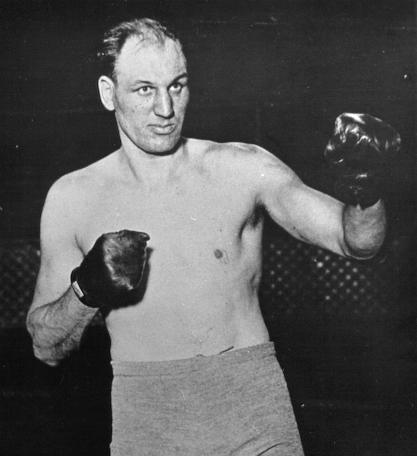
Fred Fulton was every inch the modern super-heavyweight we would much prefer in today’s ring. He was over 6, 4, had an 80” reach, and trim, always coming in around 215lbs. There was no modern protein supplement for Fulton to try at the peak of his powers, but in his trimmed-down state he was far less susceptible to gassing at the half-way mark.
Fulton sported that ‘stripped down’ build that all self-respecting professionals had back then. The high-wind training schedule consisted of long runs and plenty of sparring. There was no slouching or taking it easy in between contests.
Fulton’s path to the title was permanently derailed after Harry Wills, another big puncher, did away with the Minnesotans breakable chin. However, before he was untimely dispatched he had created his own reign of terror on decent men like Tom Cowler, Dan ‘Porky’ Flynn, Charlie Weinert and a still lively Sam Langford.
Wladimir Klitschko would not have been allowed to exist either if there was a Jack Dempsey or Harry Wills running about the division, so how much stake do you put in calling him champion?
Before the great Jack Johnson became champion he had to face a man known as the ‘Colorado Giant’. Denver Ed Smith was another gangly character plagued with brittle whiskers, but in contrast to Fultons jab n’ hammer approach he opted to stick n’ move with speed, which he was credited with doing very well.
Martin’s style suffered under the rule set as it allowed the rougher characters of the ring to manipulate his cleaner brand of boxing; under today’s cautious supervision he would likely be quite successful in out-speeding the majority of contenders.
At the reverse end of the spectrum you have Jess Willard; great durability with a simplified style. Despite the select monikers that many fans feel compelled to give Jess he does not deserve the bad rap he gets for plodding around against Moran or getting wrecked by Dempsey because he did not want to fight anymore.
Once the farm boy had made it his already minute desire to fight was non existent, but when focused to topple Jack Johnson saw the big man unveil an impressive grasp of boxing.

Willard was as big as sometimes being labeled over 6, 6 and against Johnson he was peaked at 230lbs. Under the broiling Cuban sun he demonstrated noticeable speed, a piston jab and jackhammer right hand. His outside work was at a decent level as he showed composure, patience and toughness in melting away Johnson’s presence.
It’s one of the old clichés, but put in the Jess Willard who fought Jack Johnson against anyone, and the ‘caveman’ or ‘circus joke’ would give them a real challenge.
The term ‘modern’ was linked with the super-heavyweights for their supposed new invention of throwing combinations as if the men who fought previously short-circuited once they tried on more than two punches. The misconception with the way in which the opposing heavyweights operated has more to do with the fight length and glove size than it does with technical know-how, if you will.
With shorter fight lengths, better padded gloves and referees that can be abused as pit stops, fighters do not have to worry about over-committing themselves as the rounds go by.
That being said, the rule does not always hold water. Fred Fulton’s battles with Tom Cowler were slugfests, and the described punch variety including jabs, right crosses, left hooks and uppercuts does not lend to the theory of supposed low punch outputs and limited arsenals.
In an era that is often frowned upon and considered ‘stiff’ by newer fans the likes of Denver Ed Martin was already applying that nifty footwork, lateral weaves and many of the slick maneuvers they may find synonymous with a consummate boxer; a style that Muhammad Ali would later reproduce to an awed audience.
Generally, this trend of getting bigger is in motion, but there is such a thing as too big. Fighters who have skirted around and topped the 7ft mark have been cursed with a body too big to have enough sharpness and awareness to translate into an effective fighter.
‘Big’ Ben Wray, a man who stood 7, 2 was far too lanky a fighter with too much target. He is best known for getting sparked out by Jack Dempsey in an exhibition match. Julius Long, who still fights, stands at 7, 1 and has also been unsuccessful with his over grown boxing physique.
It looked as if boxing might have been onto something in the form of one Nikolay Valuev, a 7, 0 Russian known as the ‘Beast form the East’. Valuev is not as typically vulnerable as are other men of his size, but the problems in movement and delivery remain. He has managed to get by on the novelty of his name, grizzly appearance and some help from the judges, but despite his impressive bulk, it’s ugly to watch in motion.
Evander Holyfields recent bout with Valuev stands as a prime example of what’s wrong with our flagship division. Holyfield, a fighter who has long gone past his sell by date gave everything the giant Russian could handle and then some only to be turned away by the judges to keep the round-robin going; Holyfield now seeks a rematch…
A brave, or is it money hungry, David Haye will attempt to take down one of the two competent giants, but with a lack of experience against bigger men and a questionable resistance to big punches this savior we all still search for will probably not come in the form of the likable ‘Haymaker’.
If we’re staying big then we need to be good. There seems to be no urgency or desire to perform well. You can almost see the giants of today count their bills as they passively stroll through the rounds, safety first; always safety first. Where’s the fun in that? Where’s the grit, the passion and the excitement gone?

“To win without risk is to triumph without glory”, what would Wladimir Klitschko answer to that if somebody told him? He should be charged for bad conduct in the ring.
It’s horrible to think that the Heavyweight championship (or is it championships?) has become an office job rather than an honor. If there is light at the end of a tunnel that is officially the worst era of heavyweights ever then today’s beefed-up zombies could do with looking back at their fallen colleagues and remember what how hard some tried to get were they undeservedly stand.
In Boxing, new terminology was created for the 21st century behemoth that refuses to have a spring in its step. Coming in at 240lbs+ and standing around 6, 5, today’s ‘modern super-heavyweight’ is still a flawed concept were the large fighter does not mentally or physically prepare properly for a championship bout.
Vitali Klitsckho is a fighter of decent ability; lean and quite athletic with an eroding style of spearing the target while creaking away, yet the lack of substance in his opponents has blown the abilities of his own to unrealistic proportions. Vitali has commanded an unrivalled winning percentage on the scorecards, but again this is largely due to the inadequacies of an ever-ailing division.
The one and only man he faced of all-time merit is Lennox Lewis. A fight history will condemn him for losing; that to a poorly conditioned champion.
When you’re carrying that much weight, fitness is paramount. The height/weight ratio needs to be in check to allow one to successfully co-ordinate their arms, shift their weight and utilize that large frame.
Contradictive to these ever-improving measures we take, the boxers who many fans considered ‘prototypes’ to today’s goliaths trumped them in their belief of an active schedule; instilling sharpness and a controlled weight.
Fred Fulton is best known for getting blasted by a hungry Jack Dempsey within the first 20 seconds of the opening round. Up till that point though, Fred had built up a reputation of being the best man out there, as Jess Willard did his best to fail at either end of money and location suggestions.
Fred Fulton was every inch the modern super-heavyweight we would much prefer in today’s ring. He was over 6, 4, had an 80” reach, and trim, always coming in around 215lbs. There was no modern protein supplement for Fulton to try at the peak of his powers, but in his trimmed-down state he was far less susceptible to gassing at the half-way mark.
Fulton sported that ‘stripped down’ build that all self-respecting professionals had back then. The high-wind training schedule consisted of long runs and plenty of sparring. There was no slouching or taking it easy in between contests.
Fulton’s path to the title was permanently derailed after Harry Wills, another big puncher, did away with the Minnesotans breakable chin. However, before he was untimely dispatched he had created his own reign of terror on decent men like Tom Cowler, Dan ‘Porky’ Flynn, Charlie Weinert and a still lively Sam Langford.
Wladimir Klitschko would not have been allowed to exist either if there was a Jack Dempsey or Harry Wills running about the division, so how much stake do you put in calling him champion?
Before the great Jack Johnson became champion he had to face a man known as the ‘Colorado Giant’. Denver Ed Smith was another gangly character plagued with brittle whiskers, but in contrast to Fultons jab n’ hammer approach he opted to stick n’ move with speed, which he was credited with doing very well.
Martin’s style suffered under the rule set as it allowed the rougher characters of the ring to manipulate his cleaner brand of boxing; under today’s cautious supervision he would likely be quite successful in out-speeding the majority of contenders.
At the reverse end of the spectrum you have Jess Willard; great durability with a simplified style. Despite the select monikers that many fans feel compelled to give Jess he does not deserve the bad rap he gets for plodding around against Moran or getting wrecked by Dempsey because he did not want to fight anymore.
Once the farm boy had made it his already minute desire to fight was non existent, but when focused to topple Jack Johnson saw the big man unveil an impressive grasp of boxing.
Willard was as big as sometimes being labeled over 6, 6 and against Johnson he was peaked at 230lbs. Under the broiling Cuban sun he demonstrated noticeable speed, a piston jab and jackhammer right hand. His outside work was at a decent level as he showed composure, patience and toughness in melting away Johnson’s presence.
It’s one of the old clichés, but put in the Jess Willard who fought Jack Johnson against anyone, and the ‘caveman’ or ‘circus joke’ would give them a real challenge.
The term ‘modern’ was linked with the super-heavyweights for their supposed new invention of throwing combinations as if the men who fought previously short-circuited once they tried on more than two punches. The misconception with the way in which the opposing heavyweights operated has more to do with the fight length and glove size than it does with technical know-how, if you will.
With shorter fight lengths, better padded gloves and referees that can be abused as pit stops, fighters do not have to worry about over-committing themselves as the rounds go by.
That being said, the rule does not always hold water. Fred Fulton’s battles with Tom Cowler were slugfests, and the described punch variety including jabs, right crosses, left hooks and uppercuts does not lend to the theory of supposed low punch outputs and limited arsenals.
In an era that is often frowned upon and considered ‘stiff’ by newer fans the likes of Denver Ed Martin was already applying that nifty footwork, lateral weaves and many of the slick maneuvers they may find synonymous with a consummate boxer; a style that Muhammad Ali would later reproduce to an awed audience.
Generally, this trend of getting bigger is in motion, but there is such a thing as too big. Fighters who have skirted around and topped the 7ft mark have been cursed with a body too big to have enough sharpness and awareness to translate into an effective fighter.
‘Big’ Ben Wray, a man who stood 7, 2 was far too lanky a fighter with too much target. He is best known for getting sparked out by Jack Dempsey in an exhibition match. Julius Long, who still fights, stands at 7, 1 and has also been unsuccessful with his over grown boxing physique.
It looked as if boxing might have been onto something in the form of one Nikolay Valuev, a 7, 0 Russian known as the ‘Beast form the East’. Valuev is not as typically vulnerable as are other men of his size, but the problems in movement and delivery remain. He has managed to get by on the novelty of his name, grizzly appearance and some help from the judges, but despite his impressive bulk, it’s ugly to watch in motion.
Evander Holyfields recent bout with Valuev stands as a prime example of what’s wrong with our flagship division. Holyfield, a fighter who has long gone past his sell by date gave everything the giant Russian could handle and then some only to be turned away by the judges to keep the round-robin going; Holyfield now seeks a rematch…
A brave, or is it money hungry, David Haye will attempt to take down one of the two competent giants, but with a lack of experience against bigger men and a questionable resistance to big punches this savior we all still search for will probably not come in the form of the likable ‘Haymaker’.
If we’re staying big then we need to be good. There seems to be no urgency or desire to perform well. You can almost see the giants of today count their bills as they passively stroll through the rounds, safety first; always safety first. Where’s the fun in that? Where’s the grit, the passion and the excitement gone?
“To win without risk is to triumph without glory”, what would Wladimir Klitschko answer to that if somebody told him? He should be charged for bad conduct in the ring.
It’s horrible to think that the Heavyweight championship (or is it championships?) has become an office job rather than an honor. If there is light at the end of a tunnel that is officially the worst era of heavyweights ever then today’s beefed-up zombies could do with looking back at their fallen colleagues and remember what how hard some tried to get were they undeservedly stand.