


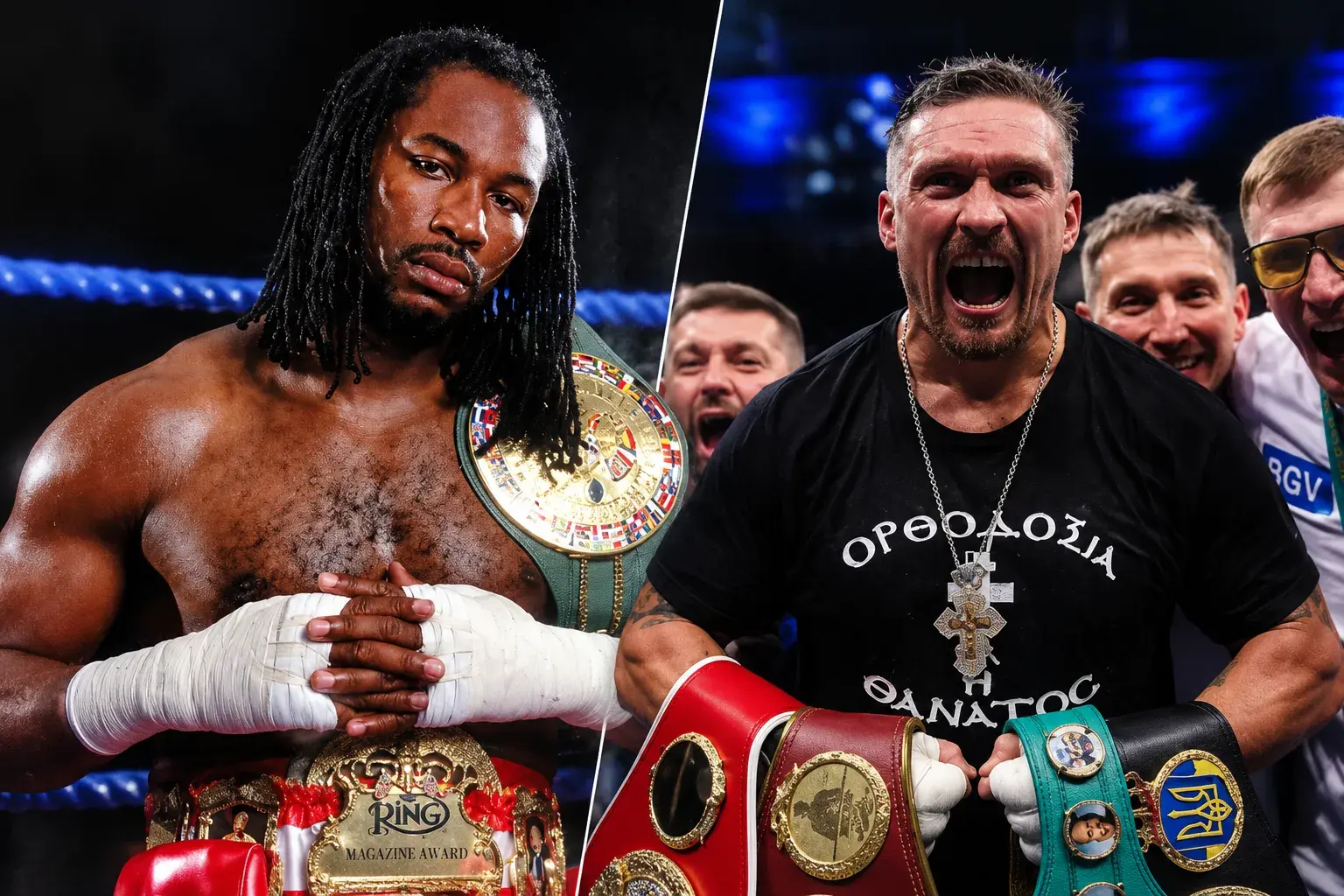
The Beltline: Which fight cancellations have annoyed or disappointed most?

Apr 24, 2026 • 1:00 PM ET
 Sky Sports
Having this week traveled to Paris for a fight that will no longer happen, it is perhaps obvious why I would be keen to recall other cancellations and fights destined to never materialize. If nothing else, the exercise makes me feel a little bit better about being stung once again by boxing’s unpredictable nature and occasionally cruel hand. If nothing else, it is a way to pass the time here in the French capital.
Firstly, it is worth pointing out that few are as well-versed in disappointment as those who follow boxing. In fact, it becomes after a while a prerequisite of being involved in the sport, with one soon finding that the more experience one has with disappointment, the greater the tolerance for it becomes. That means that when a fight sadly falls apart, either due to injury or, increasingly, a positive performance-enhancing drug test, the surprise element is nowhere near as great as the frustration. At best, one might shrug their shoulders or roll their eyes. But rarely do those eyes ever bulge in shock, at least if you have been around for a while.
Take this week’s cancellation of Lawrence Okolie vs. Tony Yoka, for example. That, coming as it did on the day I traveled to Paris to cover the fight, should have been a far greater shock than it actually was. Granted, the timing of it was a surprise – a point of irritation, more to the point – but the news of a fighter, any fighter, failing a pre-fight performance-enhancing drug test fails to stir any kind of feeling at all these days. It is, it seems, as common as a fighter breaking their hand in sparring or suffering a cut. It is, unfortunately, par for the course in a sport as clean and controlled as a house party.
Truth be told, Okolie vs. Yoka wasn’t even in the top three most annoying cancellations I have experienced. The fight itself, although strangely intriguing, was never deemed a must-see and therefore the sudden inability to see it didn’t quite hurt the way it would have had the fight been of a greater magnitude.
I remember, in 2013, another heavyweight fight which was also cancelled late in the day and that, for me, was a source of much bigger disappointment. That one, scheduled for September of that year, featured Brits Tyson Fury and David Haye and was cancelled just seven days before it was due to take place in Manchester, England. Haye, we learned, had been cut in his very last sparring session on the Friday by the gloves of Filip Hrgovic and that was that, the fight was off. The next morning, having only just woken up, I received a call from Haye’s events manager, Jon Hill, who informed me, Haye’s press officer at the time, of what had happened the previous night at his gym in Vauxhall, London. It was then my responsibility to tell the rest of the world via a press release. Lucky me.
Another cancellation that grated was when George Groves was set to challenge WBC super middleweight titleholder Badou Jack in August 2015 only for the fight to be pushed back a few weeks and instead go ahead in September. That, on the face of it, was not a big deal, but the problem – my problem – was that I had already booked an extended holiday in Las Vegas around the original date, which, all being well, would encompass fight week and also coincide with my birthday. In total, I would be in Las Vegas for 12 days – yes, 12 days – and nobody told me why that was a dumb idea until I came to the realization myself. In those 12 days I lost not my money but my mind. (Compared to that, six days in Paris with no fight to watch is the stuff of dreams.)
The next cancellation that lives with me, and this is perhaps the weirdest, occurred in April 2007, when light heavyweights Tony Oakey and Peter Oboh were set to contest the British title in an undercard fight at Wembley Arena. One slight issue, though: Oboh, having had a disagreement with Frank Maloney, the promoter, regarding his money, decided he wasn’t going to fight after all. Instead of gloving up, Oboh left his changing room and went home, which in turn left Maloney needing to explain to the waiting audience why his two light-heavyweights would not be walking to the ring when they were supposed to be walking to the ring. Quite bizarre, it was as far as pullouts go, the latest I have experienced while in attendance, that’s for sure.
To end on a somewhat brighter note, remember when Kirk Johnson pulled out of a fight against Lennox Lewis in June 2003? More importantly, do you remember what happened as a result of Johnson’s pullout? Of course you do. In one of boxing’s true silver-lining moments, Johnson’s pullout caused a reshuffle of that Staples Center card and suddenly now Vitali Klitschko, due to fight Cedric Boswell on the undercard, was bumped up to challenge Lewis in the main event. This, at the time, was a bold move on the part of everyone involved: the promotion, Lewis, Klitschko. It was a fight many felt was inevitable, one destined to happen, and yet here it was brought forward at a time of great emergency. Both fighters could, without opposition or criticism, have easily said “no” and allowed nature to take its course. But it was to their credit that they sorted business when the stars aligned and the sport was desperate for something good to happen. Better yet, by the time the fight was over, nobody had any doubt that it was the right move to make. Just as everybody involved received praise beforehand, nothing changed on that front in the aftermath. Reputations were enhanced and legacies were only strengthened.
It's rare, but as Lewis-Klitschko proves, sometimes a fight falling apart can be for the best. Even this weekend it could be said that it is better for Okolie vs. Yoka not to happen than to happen, particularly given all that we now know. Also, you’re in Paris, I tell myself. Of all the things you could be doing on a Saturday night in the city of love, why spend that time watching two blokes have a fistfight.
- Vitali Klitschko
- David Haye
- George Groves
- Tyson Fury
- Badou Jack
- Lennox Lewis
- Lawrence Okolie vs. Tony Yoka
Elliot Worsell is a boxing writer whose byline first appeared in Boxing News magazine at the age of 17. He has, in the 20 years since, written for various publications, worked as press officer for two world heavyweight champions and won four first-place BWAA (Boxing Writers Association of America) awards. In addition to his boxing writing, Worsell has written about mixed martial arts for Fighters Only magazine and UFC.com, as well as worked as a publicist for the Ultimate Fighting Championship (UFC). He has also written two non-fiction books, one of which, “Dog Rounds,” was shortlisted at the British Sports Book Awards in 2018.