

The Beltline: Kristian Prenga and the thrill of learning something new every day

May 1, 2026 • 12:00 PM ET
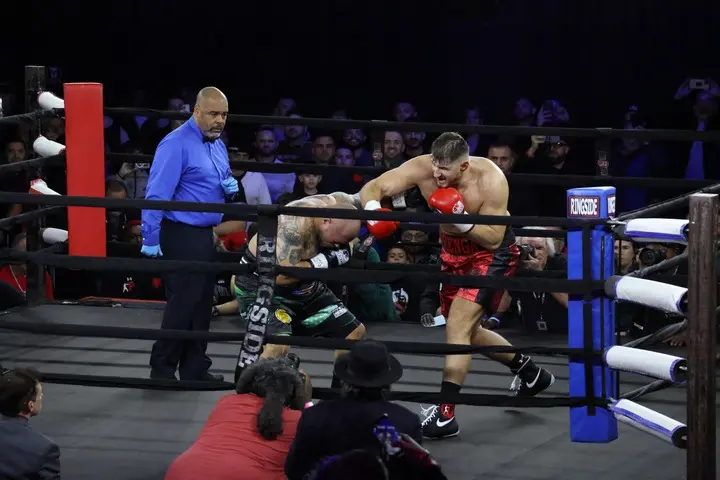
No matter how long you have been involved in boxing, there will always be reminders of both your ignorance and your blind spots. In fact, the longer you stick around in the sport, the more you bear witness to its evolution and the greater risk there is of you getting left behind, feeling out of touch.
Last week, for instance, when learning that Lawrence Okolie had tested positive for the performance-enhancing drug GHRP-2, I was reminded once again of how little I know about that dark corner of the sport. As usual, all I could do to combat my ignorance was google the drug – a synthetic hormone, by all accounts – and accept that there will forever be a limit to one’s knowledge.
It’s not just the drug stuff, either. I feel similarly lost whenever a new belt is introduced (looking at you, WBC diamond belt), or a new weight class is introduced (looking at you, bridgerweight), or some new major player arrives on the business side of things (looking at you, Spencer Brown). This applies to up-and-coming fighters, too. You can’t know them all, regardless of how many of them you watch and how much research you are prepared to do in pursuit of that goal. After all, there are simply too many. Too many divisions. Too many names. Too many nicknames.
Then, on a Monday, you read a name like Kristian Prenga and you receive it no differently than how you received the phrase GHRP-2 six days prior. It is a concept every bit as alien and confusing. It not only jolts you the exact same way, but it requires the same amount of research to decipher what it represents.
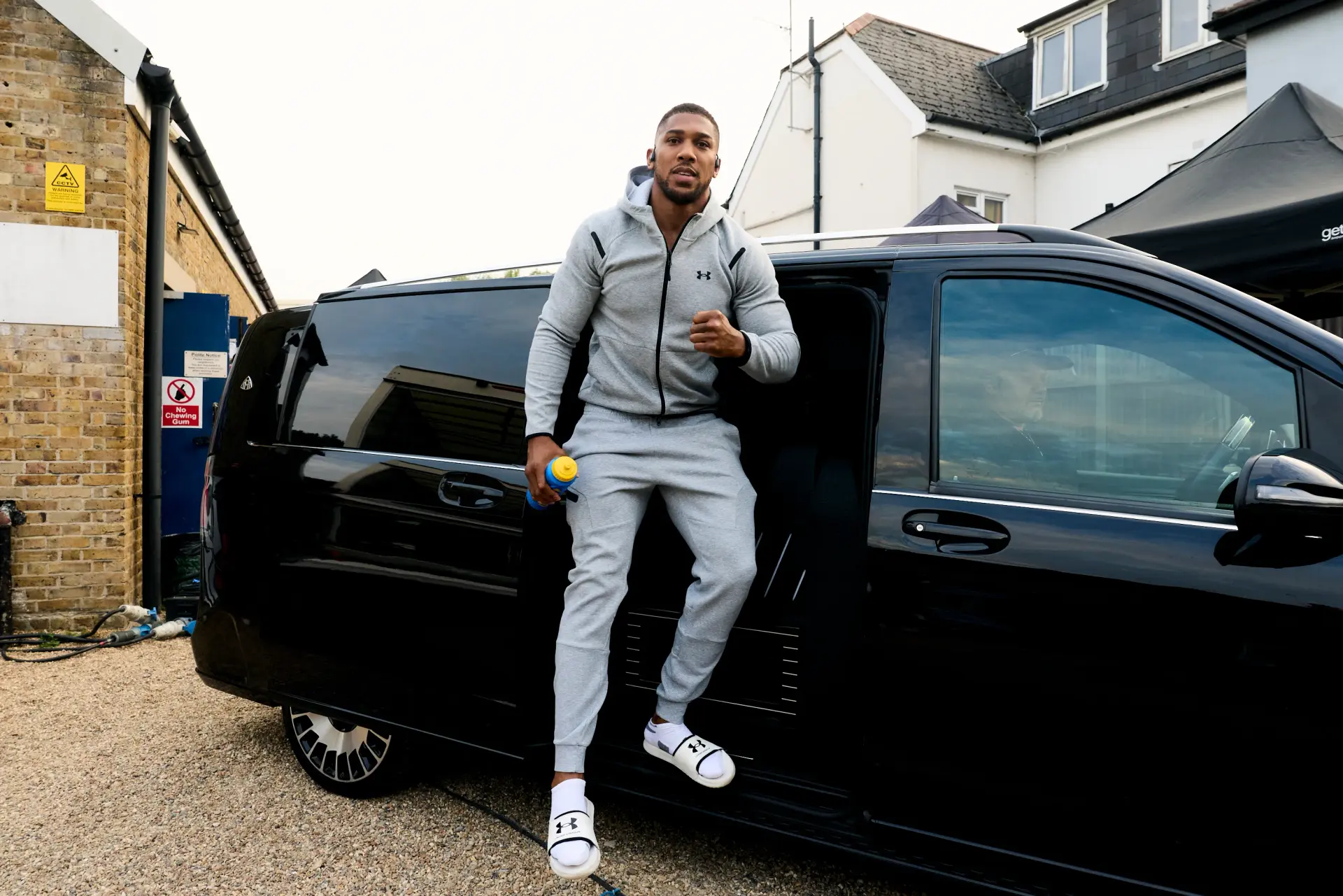
Of course, had Kristian Prenga just been some random fighter in some random fight, the need to unlock any meaning would have been less pressing and the panic less severe. But Kristian Prenga, you discovered, was going to be the next opponent of Anthony Joshua, a former two-time world heavyweight champion and someone with whom you are familiar. He was, therefore, a man of importance; a man of status. He wasn’t just some prospect in a four-rounder designed to kick off a fight card. He was instead about to headline a major event in Riyadh, Saudi Arabia on July 25.
Hence the confusion, the panic. It’s either a joke, you think, or you’re the joke for not knowing who this man, Kristian Prenga, is. Is this it, your blind spot, your annual reminder that you are increasingly out of touch with a sport over which you once obsessed in your younger days? Is this a sign that you have been left behind and that there is a whole fleet of new heavyweights you don’t even recognise?
To find the answer, I acted as anyone else would: I googled the name “Kristian Prenga” alongside the word “Boxrec” and I closed all manner of popups having verified that I was human. I then repeated, while waiting for the relevant page to load, the name Kristian Prenga three times, as though the man was not a boxer but Beetlejuice. I also imagined a Jenga tower composed entirely of tubes of Pringles and stored this image in the hope that it would remind me of the name Kristian Prenga whenever I have to write it in the next couple of months.
First, though, we had to be introduced. I had to know who I was looking at and what I would be writing about and it is only thanks to Boxrec.com that I now know. Name: Kristian Prenga. Sex: Male. Age: 35. Birth place: Orosh, Albania. Residence: Edgewater, New Jersey, USA. Stance: Orthodox. Height: 6’5/196 cm. Then came the most important detail of all, his pro record: 20-1 (20 KOs).
Scrolling down, I soon learned that his one loss as a pro came in 2017 against some Dutch bloke called Giovanni Auriemma who was 1-2 at the time, but that is not important. What is important is the fact that Kristian Prenga has won 16 straight since that defeat and that all 20 of Kristian Prenga’s wins have come inside the distance. That, in terms of selling Kristian Prenga to the uneducated masses, is gold dust in the eyes of the promoter and the sort of thing Michael Buffer, the MC, will have no problem belting out with a straight face in the desert come July: “With all 20 of his wins coming by explosive knockout…”
There will be no context provided, and why would there be? Take one look at Kristian Prenga’s KO-heavy record and you will do well to recognise any of the names on that list of knockout victims. Go on, try it. I managed just one: Joey Dawejko. But who knows, maybe you’ll do better than I did. Maybe my inability to see the potential danger in Kristian Prenga owes more to my dwindling knowledge and awareness of what is going on in the sport than any attempt on the part of promoters and financiers to manipulate us. Yeah, maybe that’s it.
I don’t blame Joshua for Monday’s mystery, by the way. He of all people deserves to ease his way back into things given the tragedy and trauma he encountered only in December. He is also, to his credit, at least fighting a thirtysomething Albanian heavyweight in a gimme fight, as opposed to the thirtysomething Albanian cruiserweight Tyson Fury elected to fight in his 2018 comeback. Remember him, do you? Sefer Seferi was his name. I recall having to look that up, too, and can recall how impressed and relieved I was that his first and last names were so strikingly similar. If nothing else, that alone made Sefer Seferi a name easy to remember. It was certainly easier to remember the name Sefer Seferi than it was remembering the name Kristian Prenga whenever I went to write the name Kristian Prenga during this Kristian Prenga-related column. More than once, in fact, I have written his name as “Kristian Jenga”, my own method of memorising having cruelly backfired on me. One only hopes that Kristian Prenga doesn’t collapse from the first remotely heavy touch he feels on July 25.
Elliot Worsell is a boxing writer whose byline first appeared in Boxing News magazine at the age of 17. He has, in the 20 years since, written for various publications, worked as press officer for two world heavyweight champions and won four first-place BWAA (Boxing Writers Association of America) awards. In addition to his boxing writing, Worsell has written about mixed martial arts for Fighters Only magazine and UFC.com, as well as worked as a publicist for the Ultimate Fighting Championship (UFC). He has also written two non-fiction books, one of which, “Dog Rounds,” was shortlisted at the British Sports Book Awards in 2018.