

Jai Opetaia-Huseyin Cinkara Fight Week Diary: Day One

Dec 4, 2025 • 12:45 AM ET
Wednesday, December 3
GOLD COAST, Australia – To be on the seafront and streets of the Gold Coast and Surfer’s Paradise is to confront the reality that on the Australian east coast it is “schoolies” season – the time of year when the many 18 year olds leaving school exercise their rite of passage to spend in the region of a week partying to celebrate school, permanently, being out.
Surfer’s Paradise – a short walk from the Gold Coast & Exhibition Centre at which on Saturday Jai Opetaia, Australia’s finest fighter and the IBF cruiserweight champion, will make the latest defence of his title, this time against Germany’s Huseyin Cinkara – has long been Australia’s most popular schoolies destination. Surfer’s Paradise is a similarly short walk from Broadbeach, where the first schoolies parties, in the 1970s, took place. A reported 15,000 school leavers are in town to drink excessive amounts of sugary alcohol while dressing up for theme nights recognised as the painfully unimaginatively titled “party animal”, the inexplicable “good, evil, laconic”, and more. Such is the desire of Australia’s school leavers to celebrate the fact that until very recently most of them had long been among the most evil and laconic of all, in 2003 the Queensland government established a formal schoolies hub that means that for two weeks roads in central Surfers Paradise are closed and traffic is diverted to accommodate the hub, which operates from 7pm until midnight every night.
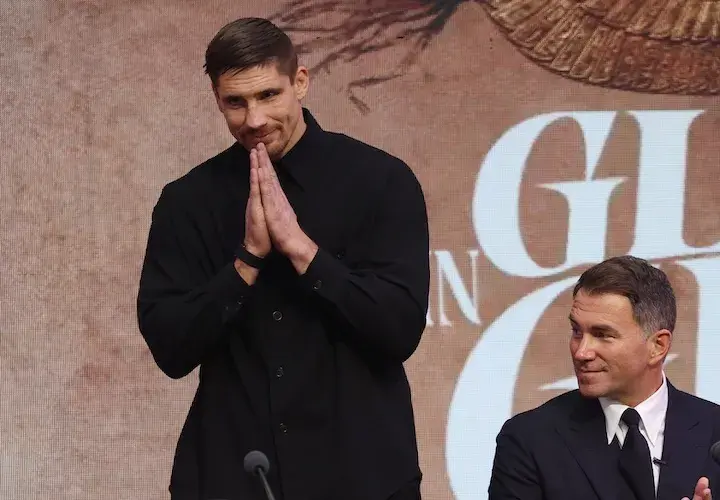
All of which perhaps makes the ability of Tasman Fighters, the promoters of Opetaia-Cinkara, to create the feeling of a fight-week bubble around the build-up to Opetaia’s third fight of 2025 something to be admired. Wednesday’s grand arrivals, by the outdoor swimming pool of the imposing casino The Star, wasn’t unlike, in appearance, a film premiere. Those present not making their own announced arrival either stood, sat on beanbags, or lied on sun loungers surrounded by the relevant fight-week marketing material to watch those who were. Ted Cofie, the British Ghanian retired cruiserweight whose 21-fight professional career mostly unfolded in Australia, is, in 2025, the owner of a consultancy business in Sydney, but he has been recruited by Stan – the influential broadcaster that so recently agreed terms with Tasman to broadcast Opetaia’s fights on its pay-per-view platform – to lead much of its coverage.
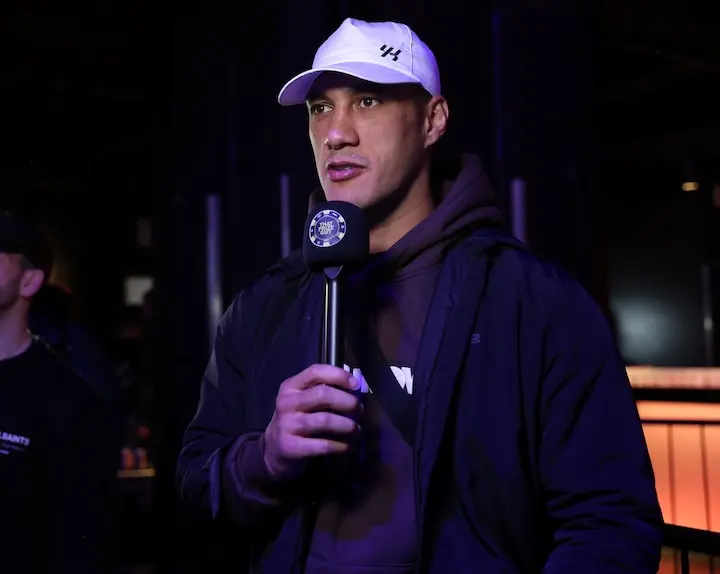
It was regardless difficult to avoid the conclusion that Jason Moloney, entering the first of a three-fight agreement with Tasman Fighters by fighting the Philippines’ Herlan Gomez on Saturday’s undercard, has a future in broadcasting when after his arrival he spoke and, like the experienced professional he is, very deliberately mentioned the platform Stan are providing and thanked Tasman for their hard work. The even more relaxed Teremoana Teremoana made a similar impression, such is the charm of the combination of his near-permanent smile and charisma, even if the 16 other non-heavyweights involved on Saturday evening would happily remind anyone suggesting as much that it is easy to be both happy and charming when not attempting to make weight. The 2024 Olympian is a natural showman but his warmth is, without question, sincere, as his making his way to the translator of his opponent on Saturday, Mexico’s German Garcia Montes, to shake his hand once he was no longer the centre of attention again made clear.
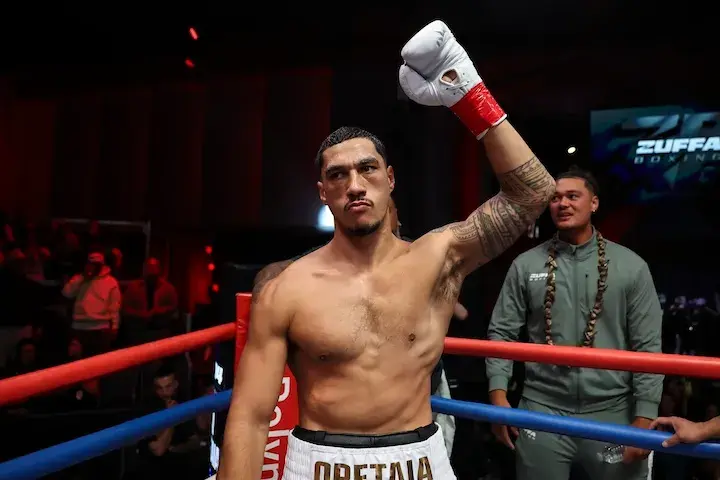
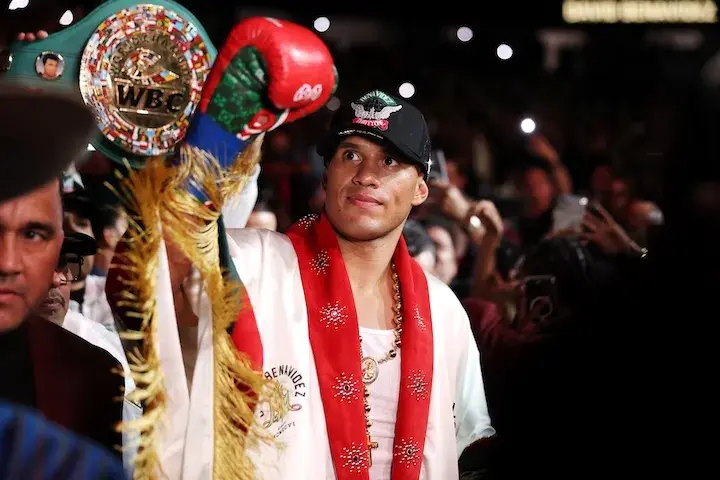
Opetaia, one of those making weight, is capable of being as relaxed as Teremoana when he is not preparing for fight night, but on the eve of doing so he can be particularly intense. He had appeared bemused at the setup unfolding in front of him and towards which he was being asked to contribute, but when for the first time, on stage, he was able to look at Cinkara – an opponent he was first supposed to fight at the start of 2025 – a subtle smile appeared to one corner of his mouth, one belying a fighter unmistakably preparing to take aim.
What followed immediately afterwards, in an ongoing attempt to promote Saturday’s pay-per-view – according to Tasman the tickets for the 6,000-capacity arena have already sold out – was a public Q&A at The Star’s Sports Bar, where Joseph Parker – the heavyweight from New Zealand who reportedly tested positive for cocaine on the day of his fight on October 25 with Fabio Wardley – was among those present, but it was two details unrelated to Saturday’s fight night that particularly attracted BoxingScene’s eye.
The fact that Saturday’s contest is also available, beyond Australia, to watch on UFC Fight Pass is no less significant within the boxing ecosystem, but what stood out was the extent of the progress Tasman are making and also the status quo that they are attempting to unseat. While Tasman’s Mick Francis spoke for the first time about their new agreement with UFC Fight Pass – Saturday’s fight is also his organisation’s first on pay-per-view with Stan – one of the big screens under which the Q&A was unfolding regularly showed adverts from Main Event, the Australian broadcaster that has long been established within the pay-per-view market and long had an agreement with the country’s leading fight promoter, No Limit.
At the very bottom of those big screens also could be seen the Sports Bar calendar of sports events they were promoting as being shown on the same big screens in the coming weeks. Among those, on December 19, is the match-up, for want of a better expression, between Anthony Joshua and the 28-year-old teenager Jake Paul (it perhaps is a good week in the Gold Coast to be advertising such figures). Paul-Joshua was listed as a “heavyweight” fight but could more accurately be described as a “freak show” and, its appearance, in physical form alongside Premier League fixtures and Ashes Tests and beneath a rugby talk show being led by Dan Carter, the New Zealander widely recognised as the finest player of all time – in other words, alongside respectable, high-level sports competitions and sportsmen – was almost surreal.
If Opetaia came to a similar conclusion he again gave very little away. His polite-yet-arguably-laconic manner when answering questions painted the picture of a fighter aware of the threat he is confronting in what deserves to be considered a bona fide fight.
Declan Warrington has been writing about boxing for the British and Irish national newspapers since 2010. He is also a long-term contributor to Boxing News, Boxing News Presents and Talksport, and formerly the boxing correspondent for the Press Association, a pundit for BoxNation and a regular contributor to Boxing Monthly, Sport and The Ring, among other publications. In 2023, he conducted the interviews and wrote the script for the audio documentary “Froch-Groves: The Definitive Story”; he is also a member of the BWAA.