Inoue-Rodriguez, Usyk-Benavidez and boxing’s big bounce-back
 Cris Esquada/Golden Boy Promotions
We are routinely reminded that boxing is that rare sport in which it doesn’t matter how far behind you are — one punch can turn defeat into victory.
As we approach the end of a thoroughly disappointing 2026, it sure feels like boxing is trailing 110-99 on the scorecards and could use a miracle. But, in the words of the late, great Frank Cappuccino: “Fight ain’t over.” And once 2027 gets underway, this mess of a sport has a realistic chance to erase the deficit it finds itself in — not with a single punch, but rather with one picture-perfect two-punch combination.
In 2026, none of the best male boxers competed often enough and only a handful of the fights we clamored for came to fruition. Look at how much ink was spilled this year over Floyd Mayweather’s finances and the fantastical fights that could fix them, or devoted to Eddie Hearn vs. Dana White and related debates over contracts and curfews. In a healthy sport in which prime fighters are delivering for the fans, those stories don’t get much oxygen.
Memories are short, though. And boxing will instantly begin healing if two fights that are being discussed right now — and discussed seriously, there’s no Mayweather-vs.-Ryan-Garcia-style attention-seeking here — get signed.
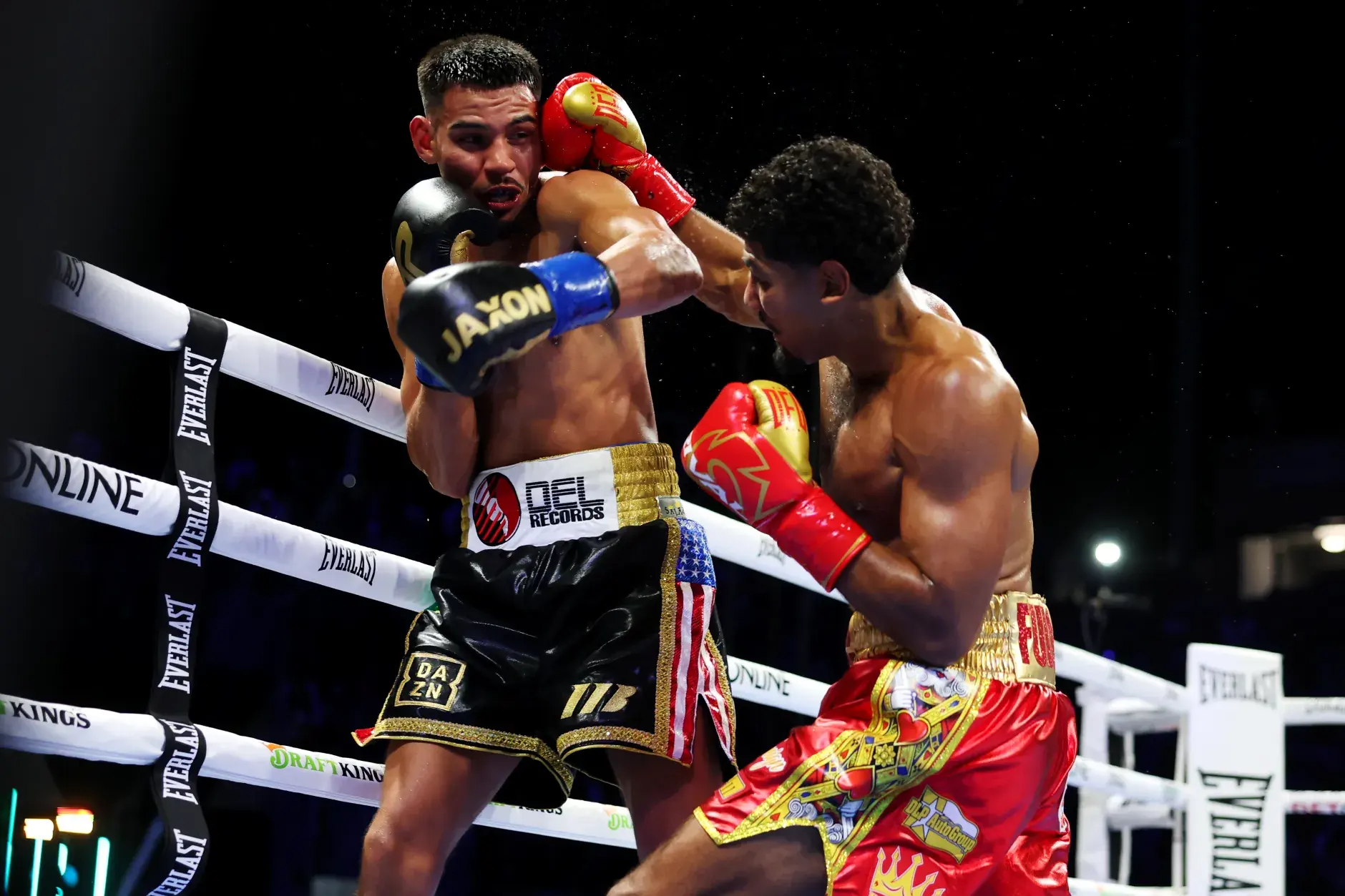
Those fights are Naoya Inoue vs. Jesse “Bam” Rodriguez and Oleksandr Usyk vs. David Benavidez.
Hearn said last week he is “actively negotiating” the former.
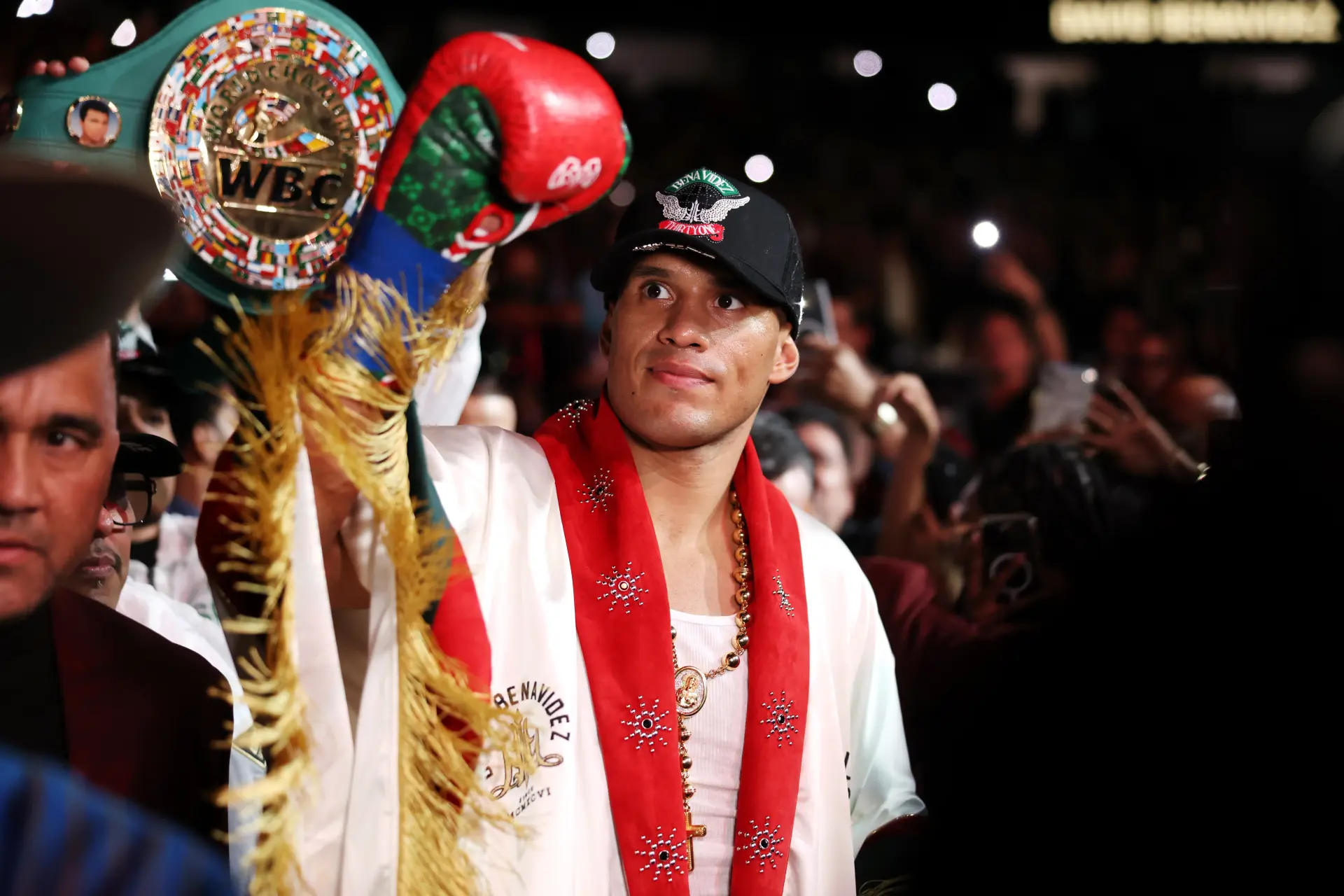
Usyk himself confirmed a couple of weeks ago that he intends to pursue the latter once Benavidez takes care of business in December against Michael Cieslak.
Inoue-Rodriguez would be targeted for February or, more likely, March.
Usyk-Benavidez could be next year’s Cinco de Mayo superfight, or it could wait until the second half of the year if “The Mexican Monster” chooses to unify at cruiserweight against Jai Opetaia first.
So it’s possible that in a span of as little as two months, four of the five best pound-for-pound fighters in the world will be in action against fellow members of that same elite club.
That would not quite be unprecedented, but it is exceedingly rare. And it’s a hell of a two-step plan to make emotionally battered boxing fans forget 2026 ever happened.
In ESPN’s pound-for-pound rankings, Inoue-Rodriguez is No. 1 vs. No. 3, and Usyk-Benavidez is No. 2 vs. No. 4. According to The Ring’s list, it would be No. 1 vs. No. 4 and No. 2 vs. No. 5. The Transnational Boxing Rankings Board mucks it up just a bit by ranking Usyk No. 6 (docking him harshly for a lousy showing against Rico Verhoeven), but TBRB still sees it as No. 5 vs. No. 6, and according to those rankings Inoue-Bam pits No. 1 against No. 2.
So, maybe it’s not quite unanimous, but by consensus, it’s top five vs. top five, times two.
Using The Ring’s pound-for-pound list as a guide (since theirs goes back the furthest), just twice in this century have two fights meeting those criteria happened in the same calendar year.
On March 15, 2008, Pacquiao (No. 2 at the time) faced Juan Manuel Marquez (No. 3) in their second clash, and barely a month later, on April 19, Bernard Hopkins (No. 4) took on Joe Calzaghe (No. 5).
On June 17, 2017, Andre Ward and Sergey Kovalev squared off for the second time, rated No. 1 and No. 2, respectively, after their nip-and-tuck first fight. And six months later, on Dec. 9, Vasiliy Lomachenko (No. 3) went skill-for-skill with Guillermo Rigondeaux (No. 4).
Besides those four fights, there are only seven other occasions from 2000 to present in which, again using Ring’s rankings, top-fivers faced off: the first Oscar De La Hoya-Shane Mosley fight, Mayweather-Mosley, Pacquiao-Marquez III, Mayweather-Pacquiao, Ward-Kovalev I, Terence Crawford-Errol Spence and Bivol’s rematch with Artur Beterbiev.
Use different outlets’ rankings, and some of those bouts might just miss the cut, while others might narrowly slip in. But you get the idea: This doesn’t happen often (11 times in 26 years using these particular rankings).
And there’s a case to be made that never this century have four fighters collectively better than Inoue, Rodriguez, Usyk and Benavidez engaged in pound-for-pound showdowns this close together.
Boxing is not an especially statistics-oriented sport, but here’s a simple stat that says a lot: The four fighters in question have a combined record of 114-0 with 86 KOs.
Multiple somebodies’ Os have got to go.
Of the two mega-fights in the offing, Inoue vs. Rodriguez is the more straight-forward one to explain the appeal of.
It’s an all-time-great four-division titleholder who is currently the lineal, unified champ at 122lbs defending against an all-time-great-in-the-making three-division titleholder who has stopped each of his last six opponents.
It’s possibly Japan’s best fighter ever against possibly America’s best right now.
It’s a meeting of two men who are nearly incapable of taking part in a boring round, never mind a boring fight.
And it’s a crossroads clash, age-wise. Inoue is 33 and, despite reigning as the pound-for-pound king, is probably on the other side of his absolute prime. Rodriguez is 26 and likely hasn’t quite reached his peak yet.
So either Inoue caps an iconic career with quite possibly the victory for which he is ultimately best remembered, or Rodriguez grabs the torch directly and sets off on a journey to becoming the biggest sub-featherweight star American boxing has ever known.
And to top it off, it would be happening with the right amount of marination — which is to say, almost none. Inoue vs. Rodriguez floated in the ether for a year or so as a flicker of a fun idea should Bam progress a little more and find himself within one weight division of Inoue. After an Inoue victory in May and a Rodriguez win in June, it instantly went from flicker to flame. Next February or March, it would be happening exactly when most fights should: at the first logical moment.
Usyk vs. Benavidez is a little more unusual and a little more plausible for fans to feel some skepticism over.
Benavidez was a light heavyweight until six months ago and, as well as he fought obliterating Gilberto “Zurdo” Ramirez in his cruiserweight debut, superficially he looked like a light heavyweight enjoying the freedom to eat whatever he wanted.
Usyk has been a heavyweight for the last seven years. Not a large heavyweight, certainly, but a heavyweight just the same, weighing in the 220s for his most significant fights. Last time out, he was officially 33¼ lbs above the cruiserweight limit.
The Ukrainian is the heavyweight champion of the world and has all the leverage, and yet he’s choosing to shed those 33¼ lbs — very little of which is water weight or cellulite — to meet Benavidez in the less prestigious cruiserweight division.
So two opportunities for weight-related asterisks exist: If Benavidez loses, well, he was a blown-up super middleweight who was just too darned small to beat a heavyweight. And if Usyk loses, well, have we learned nothing from watching the likes of Roy Jones and Chris Byrd deplete themselves coming down from heavyweight?
On top of all that, if Usyk-Benavidez happens before Opetaia-Benavidez, it wouldn’t be for the lineal cruiserweight title. It would be Usyk moving to a second-rate division to face a first-rate opponent for a second-rate version of a championship.
It’s not a traditional set-up for a superfight.
And that just serves to make it all the more fascinating.
Like Inoue-Rodriguez, there’s a crossroads element due to age, with Benavidez hitting his stride at 29 and Usyk perhaps slowing down at 39. It’s anyone’s guess how Usyk will react to facing an opponent with hands faster than his. It’s anyone’s guess how Benavidez will react to a punch from a guy who stopped Daniel Dubois twice and once had 260-lb Tyson Fury wobbling all over the ring.
At the moment, one of boxing’s great debates is whether it’s Usyk or Evander Holyfield that deserves to be recognized as the No. 1 cruiserweight champion of all-time. An Usyk win over Benavidez could put that debate to rest.
And a Benavidez win over Usyk cements the biggest star in North American boxing for the post-Canelo era. With all due respect to a Bam Rodriguez who may have beaten Inoue by then, and with all apologies for invoking the hackneyed “face of boxing” trope, Benavidez becomes that face if he hangs an L on Oleksandr Usyk.
There are other appealing fights in the works for 2027. Jaron “Boots” Ennis vs. Josh Kelly has been announced, Garcia vs. Teofimo Lopez is under discussion, maybe Devin Haney and Shakur Stevenson will take their negotiations off social media. But none of those swing the whole vibe around the sport of boxing.
Inoue-Rodriguez and Usyk-Benavidez do. Individually, either fight helps stop the bleeding. Collectively, if they both happen, faith is restored and 2026 can be made to feel like an outlier.
If they don’t happen, especially after we’ve been teased with the possibility that they will happen, the business of boxing becomes even harder to defend than it already is.
But now is not the time to think that way. Now is the time to believe that 2026 has been our nadir and that better times await.
Now is the time for a 1-2 combination that erases the deficit on the scorecards.
The four fighters who can reverse the sport’s fortunes all seem ready and willing. Boxing’s power brokers just need to get the hell out of their way long enough to let the sport begin to heal itself.
- Juan Manuel Marquez
- Evander Holyfield
- Shane Mosley
- Bernard Hopkins
- Andre Ward
- Joe Calzaghe
- Guillermo Rigondeaux
- Tyson Fury
- Golden Boy Promotions
- Sergey Kovalev
- Terence Crawford
- Vasiliy Lomachenko
- Eddie Hearn
- Artur Beterbiev
- Oleksandr Usyk
- Naoya Inoue
- David Benavidez
- Devin Haney
- Shakur Stevenson
- Josh Kelly
- Teofimo Lopez
- Daniel Dubois
- Jai Opetaia
- Chris Byrd
- Dana White
- Michael Cieslak
- Rico Verhoeven

Eric Raskin is a veteran boxing journalist with nearly 30 years of experience covering the sport for such outlets as BoxingScene, The Good Fight, ESPN, Grantland, Playboy, and The Ring (where he served as managing editor for seven years). He also co-hosted The HBO Boxing Podcast, Showtime Boxing with Raskin & Mulvaney, The Interim Champion Boxing Podcast with Raskin & Mulvaney, and Ring Theory. He has won four first-place writing awards from the BWAA, for his work with The Ring, Grantland, HBO, and BoxingScene. Outside boxing, he is the senior editor of CasinoReports and the author of 2014’s The Moneymaker Effect. He can be reached on X, BlueSky, or LinkedIn, or via email at RaskinBoxing@yahoo.com.