

Danny O'Connor's Driving Force is To Give Back, Help Others

Oct 19, 2016 • 1:52 AM ET

By Thomas Gerbasi
As far as knockouts go, they’re never good, but this one was particularly bad.
In the ring with Gabriel Bracero on October 10, 2015, Danny O’Connor was right where he wanted to be, at home in Massachusetts and on the verge of bigger and better things in the ring should he pick up the win.
Sure, New York’s Bracero had handed O’Connor his first pro loss in 2011, but considering the bizarre decision he dropped to Vivian Harris in 2013, some would say it was his only defeat. So with a record of 26-2 and a loyal following in the New England area, Framingham’s O’Connor was primed and ready to deliver the victory he had waited four years to get.
“After the first Bracero fight, it was horrible,” he said. “I thought my life was over. I had no separation between the sport and life. But coming into the second fight, having a completely different training camp, it couldn’t have gone more perfect walking into that ring. I would have bet everything I had that I was going to win that fight.”
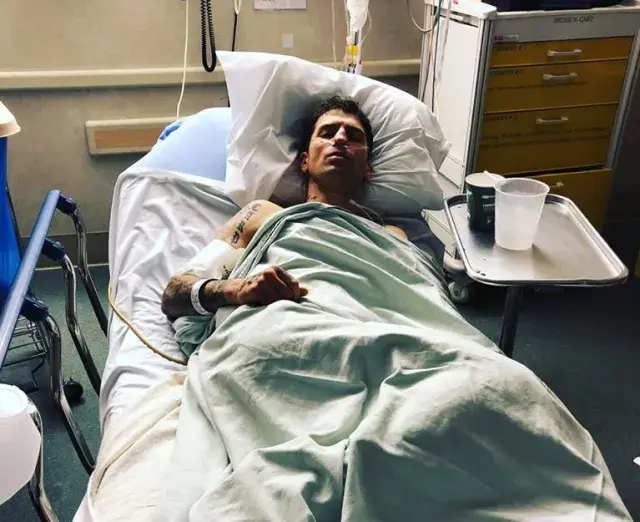
Then Bracero landed the perfect punch, a right hand that knocked O’Connor out before he even hit the deck. Stiffened on the canvas, referee Arthur Mercante Jr. stopped the fight without a count at the 41-second mark of round one.
Danny O’Connor’s boxing career was over.
***
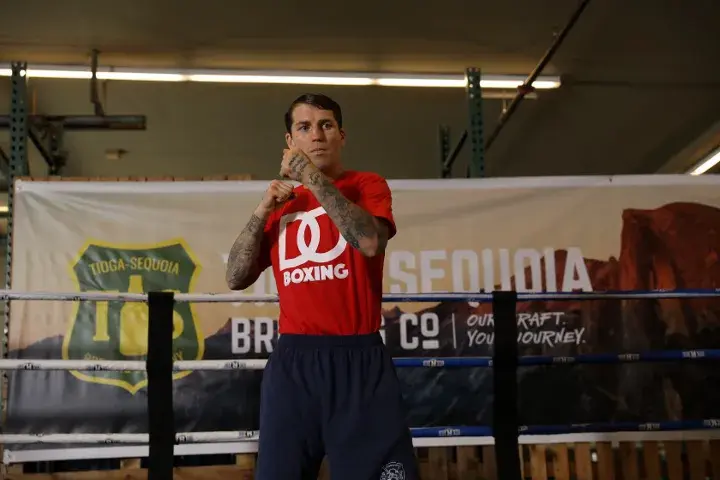
October 17, 2016. A year after the second Bracero fight, Danny O’Connor is a boxer again. Has been since August, when he defeated previously unbeaten Jerry Thomas in Topeka, Kansas. It wasn’t the southpaw’s best performance, but it shook off some demons from his loss and got him back in the win column. Now, he waits.
“I came off that last fight with some momentum and I was trying to get right back in the ring, but this business is hard and it becomes difficult to get a fight,” he said. “But I’m with Murphy’s Boxing as my promoter, and they’re always advocating for me and they’re always good to me and they’re pushing for me and they’re helping.”
He is also on the PBC roster, so a call from them would be welcome too, but in the meantime, O’Connor is going through the hiring process to become a firefighter for the Framingham Fire Department.
“If I ever have the chance to get on and be a firefighter, that’s a really respectable job for my family and being able to help my community,” he said.
Helping the community is the driving force for the welterweight these days, and it’s the reason why he’s lacing the gloves on once more. It’s a sacrifice few, if any, would make, but O’Connor is willing to follow his own path to build his non-profit youth organization, Off The Canvas.
“I think I’ve always fought for kind of selfish reasons, but not in a bad way,” he said. “I love the sport, I wanted to be the best, I wanted to support my family. But this last go about is very, very much a different story. After the last year of starting this and working with the kids, I realized that the more publicity I get, the more famous I am, the more chance I have to help. And when you know what you’re fighting for and it’s for something bigger than yourself, it was an easy decision to make. Right now the positives outweigh the negatives, and it’s time for me to step back in and make one more run at something.”
And it’s all for the kids.
At 31, Danny O’Connor may be in his physical prime, and with a solid 27-3 record, it’s definitely within the realm of possibility that he gets the kind of shot he wants and needs to make a title run or at least a run for a big fight.
That shouldn’t be a surprise, given his stellar amateur career, one that culminated with a spot as an alternate on the 2008 U.S. Olympic team. As a pro, he sold tickets, gained a following, and was on the verge of getting to the next level when Gabriel Bracero entered his life. A 12-1 run followed that first fight before he lost a second time to his rival. And while a yearlong retirement after the Harris fight didn’t stick, he was sure his second retirement would.
“After that Bracero fight, I was done forever,” O’Connor said. “The quality of my life is more important than any sport will ever be. I’m a husband and father first, and that means more to me than anything, so I was done with the sport of boxing.”
It was a decision fully endorsed by his wife Diane, mother to O’Connor’s two boys, and someone who didn’t need to see her husband unconscious in the middle of a boxing ring.
“My wife has been the biggest support system that I’ve ever had,” he said. “She’s been to every one of my fights since I met her and the thing with somebody who’s not involved in the world is that I never had anything like what happened with Bracero happen. So when you see all these fights, and I get a little banged up, some stitches here, a broken nose there, it’s a different story when you’re ringside and you see what happened to me (against Bracero).”
But when O’Connor decided that he still had something left to give to the sport, Diane was the first one who heard about it.
“I sat and talked to her before I made this decision,” he said. “She’s doing the charity with me, and even though she may not agree with the reason, she doesn’t like the brutality, but she’s going to support whatever decisions I make and anything we do as a family, it’s not one of us; it’s all of us.”
***
When Danny O’Connor talks about boxing, he calls it “a stalemate” in his head.
“There’s a part of me who wants to be in the sport because I love boxing,” he said. “I’ve invested my life in this – this is my craft, it’s my passion – and you can find me in the gym for five hours before I walk out and it didn’t feel like five minutes because I love what I do. But then it’s a stalemate because for every part of me that loves it, there’s a part of me that doesn’t want to box anymore, that doesn’t want no part of it. I don’t like the brutality of the sport. I don’t like getting hit and I don’t like hitting other people. But it’s the nature of the sport.”
And just like boxing may have saved his life and it’s almost as if he wants to pay back that debt in the ring, the rational side of him knows the sacrifices made to excel in the toughest of sports. And despite this, he’s still willing to go to those places, just like he always has.
“If you’re not in that small percentage of making money in boxing, you’re fighting for peanuts,” he said. “I never made any money off the sport. If anything, I’ve always been in debt and I kept going because if you want to be at that level, it’s not like you’re going to work a 9 to 5 and then box; you’ve got to dedicate everything. So for a lot of my life, everything came second to the sport of boxing. And as a young fighter, you dedicate your life to something that’s never promised. Maybe that big fight will never come or maybe my chances are up. I had two chances to step into something bigger with Bracero, and both times I failed. So maybe that fight will never come. But I’m going to try.”
Why? O’Connor’s purse for the Thomas fight went to Off The Canvas, and he plans on donating the money he makes in the ring moving forward into the organization. Not to be harsh, but he’s sacrificing his body for strangers, people he may not have even met yet. It’s admirable for sure, but why do it?
“I wish someone made that sacrifice for me,” he answers without hesitation. “I fight so that these kids don’t have to, so that they can have an easier fight on their side of the fence. Me being here right now, I’m lucky that I made it through because not everybody does.”
***
The name Gabriel Bracero will almost always come up when you interview Danny O’Connor. It’s inevitable, and for better or worse, the New Yorker is a part of O’Connor’s story. He doesn’t get upset about it, and he doesn’t make excuses about what happened in either of their two fights. He fought, he lost, it happened, and there’s nothing to be done to change the outcome. But what O’Connor will bristle about is the idea that if you take Bracero out of the equation, his career – and maybe his life - would be different. It’s true, but the Irishman isn’t about to erase the worst two nights of his professional life. He just won’t do it.
“I wouldn’t take away Bracero,” he said. “And it’s not me versus Bracero or me versus Vivian (Harris) or me versus anyone. It’s me versus me and it’s always me versus me. You talk about drug abuse when I was 14 years old, alcohol, PTSD from near-death experiences when I was a kid and not knowing what I was doing; you talk about anxiety and panic attacks, where there was a time in my life when I couldn’t even leave the house for weeks and couldn’t even get out of bed. It’s always me versus me. I am my own worst enemy. And the more I unlock myself and the more I work on myself, the more ability I have to grow as a human, the more consistency I gain.”
He pauses, then continues.
“I don’t wish to ever take Bracero out of my life. Yes, I lost the first fight and then I lost the second fight. So in the sports world, it’s not the best situation. But are you kidding me? Whenever you have a chance as a human being to better yourself and to grow and to overcome some adversity to be that much tougher and that much more experienced in life, you have to take that. How can you not? And a lot of people don’t. They don’t have the ability to face that fear, and that’s fine. Not everybody’s ready.”
O’Connor is ready. He has been for a while now, and everything he’s gone through and survived is a testament that he can give through the kids who are standing where he once did.
“My program is supporting these kids, teenagers and young adults who, because of their circumstances in life, don’t have that support. And who am I to tell these kids to overcome adversity and that no matter how many times you get knocked down, you can get back up, if I can’t do it myself? So I would never take Bracero out of my career because, to be honest, I am the man I am today because of those fights.”
***
Boxers will tell you that the punches in the ring don’t hurt nearly as much as the metaphorical ones they take outside the ropes. Danny O’Connor is no different, and after losing to Bracero in 2015, getting knocked out was the easy part.
“Let me tell you what the hardest fight was,” he said. “It wasn’t getting knocked out and getting out of the hospital. The hardest fight was the week after, having to deal with everything emotionally. That’s what the real fight was.”
He eventually made his peace with that fight, with his career, and with life outside the ring. Off The Canvas would be what filled his days, while time with his wife and kids would fill his nights. Boxing is a hard habit to break though, and O’Connor knows that better than most.
“It’s not easy,” he said. “You see these fighters and you wonder why they keep fighting, why do they need that, and it’s because it’s easier to keep doing what you love, to keep doing what you’re familiar with and to keep fighting. It’s incredibly hard to step away from that and then change everything to try and fit into an everyday life. It’s incredibly challenging.”
O’Connor has found his happy medium these days. He has Off The Canvas, he has the possibility of a firefighting job, and he still has the dream of getting one more shot in the ring. That’s enough to keep anyone motivated.
“There’s no lack of motivation,” he said. “I do what I need to do in the day and at night time I’ll be in the gym, perfecting my craft, working hard and there’s always going to be hope in my heart that I do get a chance, because that’s what I’m looking for. I don’t need to build my record, I don’t need to keep padding stuff, I need a chance. And I’m willing to step up and fight anybody. Yeah, I’m in this to have all the money go to my non-profit and I’m in this to get some notoriety because anytime anyone’s talking about me, I can talk about the non-profit and why I’m doing it. But there’s also a part of me that knows that I have so much more to give and I just need a chance to show it. And I hold hope in my heart that a chance will come, and when it does, I’ll be ready.”
If he gets it, and succeeds, there would be no better lesson for the kids in his program to learn But in O’Connor’s world, it’s not always about the end result. It’s about the effort, the willingness to fight through adversity and give it everything you have on the night your name is called. That’s not just in the ring, but in life. And that’s precisely the point.
“The fact of the matter is if you don’t have somebody teaching you life, it can be extremely difficult to learn it on your own,” he said. “And some people make it and some people don’t. And you never think you’re the ‘don’t’ until it happens to you. And that’s why I connect with these kids, because I lived through it. I’m not looking for the next Floyd Mayweather. I’m looking to teach these kids life skills – overcoming adversity, confidence, being able to take out your emotions like anger in a safe environment. I’m using boxing as the platform to springboard these kids into something greater.”
For more information on Off The Canvas, visit http://dannyoconnorboxing.com/mentorship/
The organization will host a Halloween party at The Sheraton Framingham on October 29. For more information, visit https://www.facebook.com/events/1767253170212865/