Confirmed at last: Anthony Joshua vs. Tyson Fury set for December 11 in Cardiff

Sep 24, 2026 • 8:23 AM ET
 Esther Lin/Most Valuable Promotions
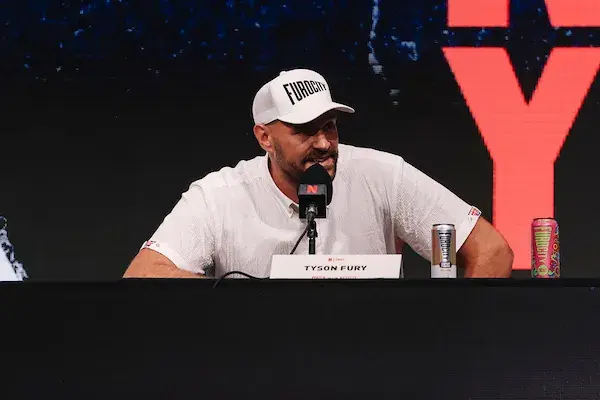
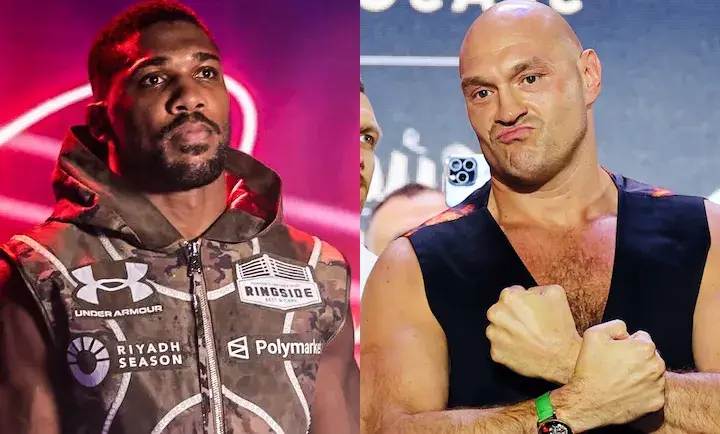
Anthony Joshua and Tyson Fury are at last set to fight on Friday December 11 at the Principality Stadium in Cardiff, Wales. The heavyweight battle is scheduled for 12 rounds.
The stadium, which has a retractable roof and has boasted attendances in the region of 78,000 fans for two Joshua fights in the past (Carlos Takam and Joseph Parker in 2017 and 2018 respectively), came into play when London’s Wembley Stadium proved unworkable and New York’s Madison Square Garden in America was rejected by Team Joshua.
The showdown – almost mythical given how long it’s been anticipated and thus how unlikely its fruition seemed – will mark the culmination of a slow-burning saga which began more than a decade ago when Joshua and Fury established themselves as not only the leading heavyweights in Britain but also the world.
Fury was fresh off victory over Wladimir Klitschko to end the Ukrainian’s long reign atop the division in November 2015 when Joshua obliterated Charles Martin to claim the vacant IBF title six months later. In the aftermath, the fresh-faced Joshua called out Fury for the first time.
Fury’s career, however, would soon hit the skids as failed tests, depression, and substance abuse hampered his progress. Even so, in a titanic 2017 slugfest that breathed new life into the division, Joshua outlasted Klitschko and again called for Fury.
The former champion would of course successfully come back once his backdated suspension had been served. But when a fight between Joshua and Fury would have been at its grandest and most Ali-Frazier-esque, the two holders of all four heavyweight belts fought not each other, but everyone else instead.
Back then, Joshua held the IBF, WBA and WBO titles after regaining them from Andy Ruiz three months before Fury stripped the WBC belt from Deontay Wilder in a brutally one-sided February 2020 rematch. That seven-round shellacking occurred mere weeks before coronavirus forced the world, and the sport, to stand still.
Talk of Joshua and Fury coming together was regular throughout those periods of lockdown with Fury even declaring a two-fight deal, brokered by gangster Daniel Kinahan, had been secured.
Kinahan’s public involvement caused the fighters and promoters to answer some difficult questions and broadcasters to distance themselves from the talks. But it wasn’t the Irishman’s links to murderous drug crimes that put an end to hopes we’d see peak versions of Joshua and Fury collide.
If Klitschko was the man at the heavyweight championship gates when Fury and Joshua entered it would be another Ukrainian who closed the door behind them as they left. In 2021, Oleksandr Usyk came along, somewhat ironically when considering his invitation was only granted after a proposed Fury-Joshua showdown collapsed, to twice beat Joshua before doing the same to Fury in 2024.
Neither man has worn a world belt since. Therefore, say the cynics, the contest now has marinated to the point of decay given they’re closing in on middle age with a combined six defeats between them. After all, the 36-2-1 (25 KOs) Fury is 38 years old and Joshua, 30-4 (27 KOs), will be 37 in October.
However, with the bout taking place in Britain, and each fighter boasting a name every single Briton knows, one can still expect this to be a colossal British affair. Furthermore, that both have slipped from their peaks arguably adds greater unpredictability to proceedings; an emphatic KO for either man is a distinct possibility.
The chaos surrounding a matchup between them intensified this year. Even when we were told contracts had been signed, obstacles kept appearing. Needless fights occurred in the interim, Joshua was almost stopped by Kristian Prenga, and out in Thailand against 46-year-old Mariusz Wach, Fury didn’t exactly convince anyone he was the “Gypsy King” of old.
There was also a tug-of-war over the location. Joshua and his promoter Eddie Hearn were on one end of the rope attempting to keep their footing in the UK while everyone else – led by chief financier Turki Alalshikh, broadcaster Netflix, and promoter Dana White – did their best to pull the contest to America, specifically New York, with promises of greater riches and a vaster audience.
Madison Square Garden was thought to have been agreed for November 20 but the problem with an arena in New York – for Joshua and many fans in the UK – was that it very clearly wasn’t in the UK. Nowhere near, in fact.
Joshua’s contract, you see, stated the fight must take place in the UK; Fury’s did not. Fury would fight anywhere – even on Mars, he screamed – but Joshua, with long-time promoter Hearn by his side, stayed firm on the terms he originally agreed.
Sure, it might have been easier if those writing the contracts had managed to ensure that dates and locations were consistent – ensuring the combatants are in the same place at the same time should surely be the first boxes to tick – but the drawn-out negotiations are unlikely to have hurt the contest’s appeal. Particularly now Joshua vs. Fury is actually happening.
For a while, London’s Wembley Stadium was a potential site but only if the fight could start at daft o’clock to compensate for the American broadcast audience who, according to Netflix, are seemingly unwilling to tune in before 7pm. That late start proved unworkable for an open air London which is full of apartment blocks and known to bottleneck with upwards of 60,000 fans waiting for trains after huge events.
The Principality in the center of Cardiff, with that added advantage of a roof that can to a degree shield from a harsh British winter, has a history of extending its curfew. In 2007 a fight with worldwide appeal between Joe Calzaghe and Mikkel Kessler started in the early hours. Joshua and Fury, though Hearn last week stated it was unlikely to be a “3am fight”, are expected to start their ringwalks after midnight with 1am reported as the time Britain will hear the opening bell..
Perhaps the fight between Joshua and Fury – given the timelines, subplots, egos, contrasting interests, and money involved – was always destined to be late. Better late than never, though? We’ll get our answer on December 11.

Matt Christie, a lifelong fight fan, has worked in boxing for more than 20 years. He left Boxing News in 2024 after 14 years, nine of which were spent as editor-in-chief. Before that, he was the producer of weekly boxing show “KOTV.” Now the co-host of “The Opening Bell” podcast and regularly used in the UK as a pundit, Matt was named as the Specialist Correspondent of the Year at the prestigious Sports Journalism Awards in 2021, which was the seventh SJA Award he accepted during his stint in the hot seat at Boxing News. The following year, he was inducted into the British Boxing Hall of Fame. He is a member of the BWAA and has been honored several times in their annual writing awards.