



By Cliff Rold
Sometimes it is about what it meant as much as what happened.
The biggest, most significant upsets of all time have typically come at Heavyweight. There have been great upsets in the lighter classes. Lloyd Honeyghan-Donald Curry, Randy Turpin-Ray Robinson, and Steve Cruz-Barry McGuigan were all monsters in their respective domains. They don’t lend themselves to mythmaking the way the stories of the big fellas do.
Jim Braddock upset Max Baer in the 1930s and they’re still talking about it. It even got a Ron Howard movie. Buster Douglas’s win over Mike Tyson is the boxing equivalent of the moon landing, fans still asking each other where they were when it happened.
This year’s essential upset wasn’t at quite the magnitude of either of those. Its impact though can’t be ignored. Coming into 2015, the heavyweight division had a ho-hum feeling. It was Wladimir Klitschko and everyone else, Klitschko and a possible chase of Joe Louis’s consecutive defense record. Sure, there was young talent on the rise but nothing that felt like an inevitable end.
Tyson Fury didn’t just upset the sports most dominant division king. He changed the zeitgeist of an entire division.
And not just any division.
Fury made heavyweight feel like a place where the unexpected is possible again. He gave it new life. And for that, the choice was clear.
2015 Upset of the Year: Fury-Klitschko (11/28/2015)
It was surely a surprise that Fury won but Klitschko was only around a 5-1 favorite in some books. That’s hardly something like the 18-1 Lennox Lewis-Hasim Rahman I opened at. Fury, while the underdog, was seen as a legitimate contender. He was arguably the best active contender Klitschko hadn’t faced yet.
The way Fury won and the implications are what stood out. He nearly shut Klitschko out. Using his feet, a long jab, and deft feints, he shut down Klitschko’s most formidable weapon: the clinch. It wasn’t a fight for the ages. It was a testament to preparation, game planning, and execution. Klitschko didn’t look old and didn’t fight much different than he ever has. Fury just used it all against him.
As the year comes to a close, the rising stars of Anthony Joshua and Joseph Parker, steady rise of Deontay Wilder, and emergence of Luis Ortiz all feel more vital. If Klitschko, who ruled the class for nearly a decade, can be felled, anything is possible.
That includes Klitschko regaining the title in a rematch. Fury has his work cut out for him to stay on top of the mountain.
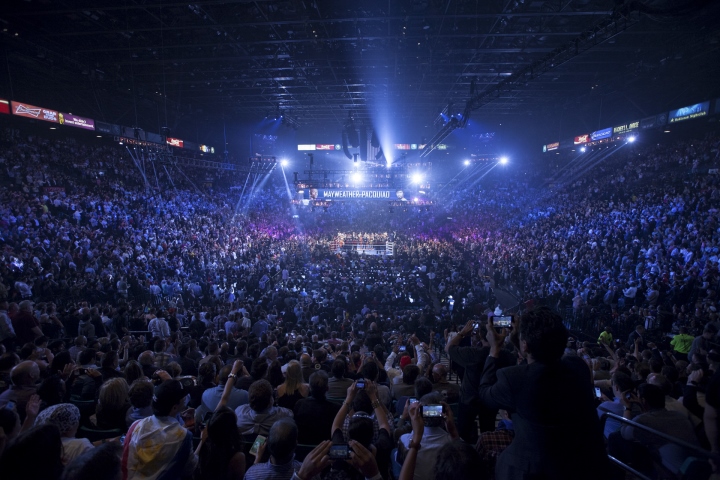
Fury had come running out of his corner at the opening bell. That wasn’t an indication of coming aggression, be it reckless or strategic. Instead, it was Klitschko coming forward and Fury moving away, yet it was Fury who was exploring with jabs and left hooks. Soon he was showboating by putting both hands behind his back against one of the biggest punchers in the sport, then sending out a left hook.
Klitschko was blocking or dodging most of them. Fury was doing the same, however.
Klitschko is listed as 6-foot-6 and Fury as 6-foot-9. They seemed much closer in physical stature than that, and Fury’s first round sent a message that he was seeking to fight on Klitschko’s level as well.
It’s one thing to show that you can hang with the heavyweight champion through one round. Fury kept doing that for round after round.
Klitschko continued to work behind the jab in the early rounds, but the jab wasn’t working. He rarely let out a left hook or right cross. Fury was much more willing to attempt those shots. He wasn’t much more successful. After two rounds, Klitschko had landed just one power punch while Fury had landed four.
Beating Klitschko wasn’t just about power. It was the entire package Fury brought that was giving Klitschko trouble. It was the punches he was throwing and when they came. It was the feinting and the occasional movement and the changes in distance. Klitschko was barely even landing his vaunted jab, and without the jab he wasn’t able to set up the left hook lead — which tends to be disguised as a jab, only to come with crushing power — or follow-up right crosses. He also wasn’t investing in work to the body; he’d only land six to Fury’s midsection on the entire night.
Fury continued to cruise with confidence. He switched to southpaw in the third round. He put his hands down again in the fourth, shaking his head after a couple of minutes in which Klitschko had missed with the few right hands he threw. Klitschko was at last able to land one of them in the fifth, getting the punch in over Fury’s jab.
Soon Klitschko’s left cheek was cut, what the referee ruled the result of an accidental clash of heads. With about 20 seconds left, Fury threw a jab and then followed with a good right hand that looped around Klitschko’s guard.
By the end of the sixth, Fury had slightly outlanded Klitschko, with 31 of 162 punches hitting their target compared to Klitschko’s 23 of 96. Fury wasn’t as accurate, and the statistical advantage was slight, but he was ahead on the cards and halfway toward the win.
Klitschko continued to meet Fury at the center of the ring before the bell to start each round. He was willing to fight, but either not willing or not able to do what it took to win. He finally got to Fury with a solid right hand in the early moments of the ninth. That was the same round in which Fury later landed the very good left hook which wobbled Klitschko — launched after Wladimir had spun around, only to turn back into the shot.
Klitschko must’ve known he was behind, as he began to show the proper urgency with the start of Round 11. It still wasn’t turning the ride. He soon had a cut over his right eye as well. Toward the end of the round, Fury landed a punch behind Klitschko’s head, not his first on the night, and referee Tony Weeks took a point away.
That point wouldn’t make a difference. Klitschko still needed a knockout to win. He didn’t get one in the 12th. The fight went to the scorecards, with one judge seeing it 116-111, nine rounds to three and with the point deducted from Fury, while the other two judges had it closer at 115-112, or eight rounds to four.
Others Receiving Honorable Mention (in date order)
Krzysztof Glowacki KO11 Marco Huck (08/14/2015): Huck was on his way to the history books. The consecutive title defense record of Johnny Nelson was in his sights. He hadn’t lost, officially, at cruiserweight since being stopped by Steve Cunningham in 2007. Glowacki was dropped and badly hurt in the sixth. Huck had him on the brink later in what developed into a classic war.
Then Glowacki lowered the boom.
In the give and take cruiserweight bout, Glowacki came out strong in the early rounds beating Huck with his power and speed on the inside. Huck started to find his rhythm in the middle rounds and out of nowhere put Glowacki on the canvas in the sixth with a punishing left hook to the temple. Glowacki recovered quickly and was able to finish the round.
Both men stayed busy for the remainder of the later rounds with the judges heeding favor to Huck by the end of the 10th. However, Glowacki came out in the 11th and late in the round put Huck on the canvas with a hard left right combination. Huck beat the count only to have Glowacki jump on him immediately, throwing a series of punches that forced the referee to stop the fight at 2:39 in the round. Glowacki shocked the boxing world with a devastating 11th technical knockout of the 8-1 favored Huck in what will surely be a fight considered for upset of the year.
And indeed it was.
Aron Martinez UD10 Devon Alexander (10/14/2015): When initially announced, many scoffed at this match. Alexander was too quick, too experienced, and too good for the limited Martinez. This was bad PBC matchmaking. It didn’t matter than Martinez had beat up Robert Guerrero earlier in the year and lost a decision he shouldn’t have. It didn’t matter that Martinez was once a promising prospect with a good amateur background.
It didn’t matter until it did.
Former two-division world champion Devon Alexander (26-4, 14KOs) returned for the first time since the December decision loss to Amir Khan, and failed to make the type of statement he was looking for by struggling to a ten round unanimous decision loss to 50-1 underdog Aron Martinez (20-4-1, 4KOs). The scores were 96-94, 97-93, 97-93.
Martinez has snapped a two-fight losing streak. He suffered an fifth round injury stoppage against Josesito Lopez last April and then a controversial ten round split decision loss to Robert Guerrero this past June.
Martinez was very aggressive and looking for a big counter at the start. There were a lot of rough tactics from Martinez in the early going to upset the mental state of the former champion. Alexander was staying close, choosing to trade because his hands were a lot faster and his punches were sharper.
In the middleweight rounds, it was an ugly fight with a lot of holding and an overall clash of styles. Martinez would often press against Alexander and push him to the ropes but smother his own punches at the same time. Alexander had the openings right in front of him and failed let his hands go as Martinez continued to press the action.
As the fight entered the late rounds, Alexander did a lot of complaining in his corner and his trainer Kevin Cunningham was pushing him to keep his head in the bout. Martinez was able to take advantage of Alexander's mental lapses and landed some good shots during these moments. Alexander looked sloppy as the fight came to a close and was drawn into Martinez's brawling pace.
Adrian Granados TKO8 Amir Imam (11/28/2015): On the same day as Fury-Klitschko, legendary promoter Don King may finally have seen his well run dry. Jr. welterweight Amir Imam looked like the goods. This was stay busy fight until he could get his mandatory shot at Viktor Postol. Imam has power, range, boxing skill, and physical talent.
What he didn’t have this night was a finishing touch when he needed it. Adrian Granados, a hard luck fighter who had come up just short one time too many, would not be denied.
The outcome was as unlikely from a betting perspective as it was less than two minutes into the contest. Imam - a -1200 favorite among oddsmakers handicapping the fight - produced the first knockdown of the night just over 90 seconds into the contest, courtesy of a sharp right hand. Granados went straight back in hitting the canvas hard, but it was as if something jarred loose and prompted him to run toward the scent of gun fire.
It was a turnaround for which Imam was never prepared. Granados outworked the unbeaten challenger in nearly every subsequent round, punching his way back into the fight and eventually ahead as he was well on his way to a major upset.
A decision win was well within reach but Granados sought a grander finish. Imam was urged by his corner - led by Stacy McKinley, best known as the chief second for Mike Tyson's post-prison career - to turn things around as he began to fall behind. The unbeaten contender from Albany, New York danced as hard as he could, but his lack of defense - an issue in past fights - proved to be his downfall.
Granados had Imam hurt and stunned along the ropes in round eight, not letting up until he pummeled his opponent to the canvas. As Imam collapsed limp to the canvas, referee Alain Villenueve had the sense to immediately halt the contest.
The official time was 2:34 of round eight.
Yu Kimura SD12 Pedro Guevara (11/28/2015): Who was Yu? A largely anonymous contender with nothing in the way of high quality wins, Kimura upset Guevara for the WBC 108 lb. title the same day as, you guessed it, Fury-Klitschko. Something was in the water on November 28.
Guevara’s lone loss had come against John Riel Casimero in his first title shot in 2012. He’d won eight in a row, including a knockout of former lineal flyweight king Akira Yaegashi. Guevara started off well.
…he was having an easier go than was the case last New Year's Eve, when he went tooth and nail with Akira Yaegasghi before delivering the spectacular knockout ending in making the trip from Mexico to Japan.
This time around, he settled for a landslide lead as he was ahead 40-36 (twice) and 39-37 through four rounds. The bout was sanctioned by the World Boxing Council (WBC), which utilizes open scoring everywhere except for most parts of the United States.
Guevara didn't let the early lead resonate, enjoying a huge round five as Kimura - who turned 32 this past Monday - looked every bit the overmatched challenger that appeared to be the case on paper. That changed in a big way in round six, when the local underdog turned around the fight and never looked back.
Body shots proved to take its toll on the defending champ, whose workrate dramatically decreased as the action entered the later rounds. Kimura, meanwhile, found a second wind - or perhaps just finally hit his stride after struggling early. Guevara was still ahead on two cards - 77-75 and 79-73 - while even on a third (76-76) through eight rounds but fading quickly and showing no hopes of turning things around.
Kimura picked up the pace down the stretch, scoring repeatedly with right hands and left hooks upstairs after his early body attack kept Guevara within punching range. The defending champ went for one last rally in the 12th and final round, but wasn't enough to extend his title reign as the damage was already done.
Barry Lindeman had the bout 117-111 for Guevara - a rare off night from the otherwise credible judge from North Carolina who also accurately scored Saturday's main event in favor of Carlos Cuadras over Koki Eto. The upset was not to be denied, however, as judges Jun Bae Lim and Noppharat Sricharoen turned in identical scores of 115-113 in favor of Kimura.
Cliff Rold is the Managing Editor of BoxingScene, a founding member of the Transnational Boxing Rankings Board, and a member the Yahoo Pound for Pound voting panel, and the Boxing Writers Association of America. He can be reached at roldboxing@hotmail.com


