Tyson Fury rules out retirement, might sign '10-fight deal'
•Read more

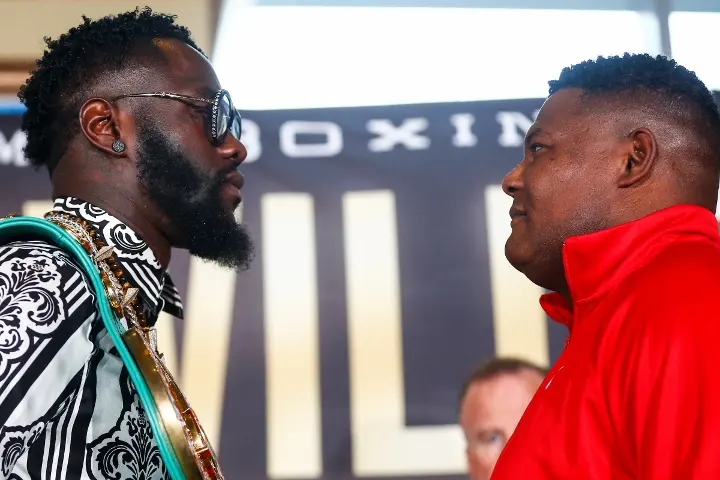
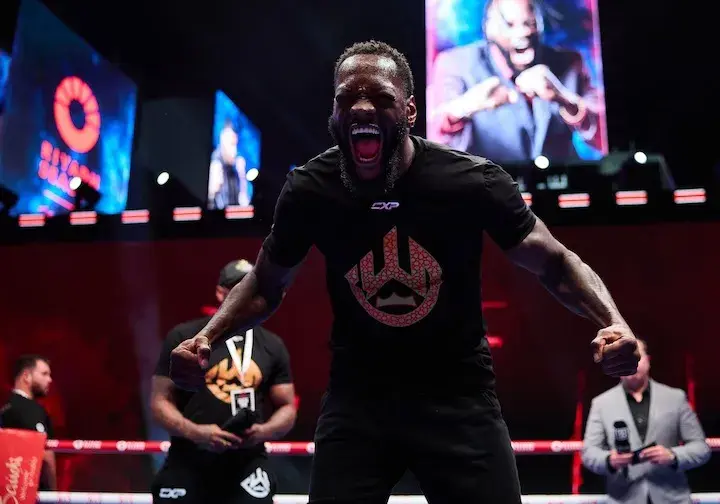
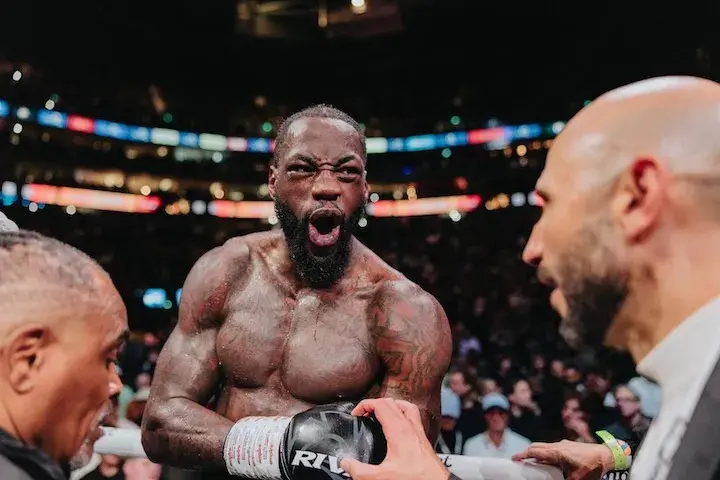
Fans of a certain age in the US are seeing something the newer generation is really getting to experience for the first time. The emergence of Deontay Wilder as more than just a beltholder, as a genuine star, has cast a spotlight on the division that in the US market had been somewhat missing.
There is boxing, and then there are heavyweights.
Those who have been here before know the difference.
This isn’t a point lost on the rest of the world and why should it have been? They were getting to engage in the ride in ways that felt closer to home. While it was just a big day of boxing for a lot of fans in the States, it’s easy for some to forget that Wladimir Klitschko engaged in some of the most watched sporting events in the world in his prime. He and his brother regularly sold out stadiums. Wladimir’s fight with David Haye, as just one example, was one of the most watched global sporting events of the decade.
Wilder was a talent brought along carefully, a project heavyweight whose credibility raced to catch up to his numbers in 2018. While it took awhile, his win over Luis Ortiz last year and near stoppage of Tyson Fury in a fight where he was still lucky to walk away with a draw, turned heads. The ratings for his countdown shows for the Ortiz rematch are evidence of that.
More people are watching these shows than are watching most fights this year.
After a string of great battles this fall from bantamweight to light heavyweight, a string that has seen every major US broadcast platform deliver the goods for viewers at some point, this weekend gives us a chance to catch our breath.
Following the exhale, it’s heavyweight time in a big way.
Anecdotally, this scribe has received more random texts and calls from friends and family asking when Wilder-Ortiz II will be on, and how much it will cost, than any other fight this year. Almost all of them are followed with questions about the rematch between ‘Ruiz and the British guy.’
The answer is simple: over three weeks starting on November 23rd, fight fans the world over will be treated to a pair of interesting, substantial heavyweight rematches after a slew of great action below them. Deontay Wilder-Luis Ortiz II and Andy Ruiz-Anthony Joshua II are dates to circle on the calendar in part because they’re excellently made fights.
And in part because they are heavyweights.
Because, when it’s hot, heavyweight is different.
For those who grew up on Mike Tyson, or before that Ali or Louis, it’s easy to say the current buzz about heavyweight doesn’t compare. School yard debates about Tyson-Holyfield or Holyfield-Foreman were memorably exhaustive. As big as other fights were, as big as Chavez was, there was a different electricity surrounding the heavyweights in the 1990s.
If someone engaging in the sport right now, excited by the personality and power of Wilder, can’t be dissuaded that it was bigger then it’s because for them it isn’t. Fans who fell in love with Ruiz when he upset Joshua, who can’t help thinking about the possibility of a Wilder-Ruiz ‘all the belts’ showdown, will only serve to be infectious.
Wilder may or may not beat Ortiz in the rematch; Ruiz may or may not send Joshua packing again for the second time.
It’s enough to say it’s the most interesting moment for a big cluster of US fight fans relative to the heavyweight division at least in this decade if not since the early 2000s. Ultimately, that is a good thing for all of the division.
Fair or unfair, the best of the heavyweight division, as moneyed as it could still be at times, was stuck under a ceiling for much of a generation. The richest, if not most populous, slice of the boxing pie still resides in the States. The Klitschko’s were two of the biggest money draws in the world and yet their inability to cross over in the US pay-per-view market meant they were dwarfed in terms of revenue by a Floyd Mayweather or Manny Pacquiao who cracked that code.
It’s why Joshua was trying to make the move here despite being a gate attraction whose ticket sales rated with Jack Dempsey. It’s why bantamweight Naoya Inoue is taking his act on the road. Most fighters, even highly successful ones, won’t ever get close to even the lower end of Mayweather numbers at his peak.
This is still the place where they think they can try.
It’s not that every major event has to happen here. Ruiz-Joshua II is headed to Saudi Arabia, another sign of the current health of the heavyweight picture. When Tyson was hot, they wanted him in Japan (once more than was good for “Iron” Mike) and Don King dreamed openly about opening China to the show. Ali went to Zaire and Manila along with ample trips to the UK and Europe.
In those cases, the US was in a sense exporting. In this case, it’s almost a case of reintegration into what was already a solid global market. It’s genuine global engagement.
It’s fun as hell to see even a piece of the old buzz returning.
For now, all the major alphabet belts reside in the US. History’s crown still sits with Tyson Fury on the throne. If Wilder gets past Ortiz again, the Fury rematch awaits next year.
That’s still an if. There are other if’s to ponder. What if Ortiz wins? It’s not impossible though it feels less likely the second time around. Do we get an instant rubber match with Wilder? What if Joshua avenges his loss to Ruiz? Does he also turn to a rubber match, head home for a stadium pay day or two, and wait to see how the dust settles?
We’ll need results before better speculation can take place.
2019 has had its hit or miss moments but few can argue with the better parts of the last third of this year. It feels right that, while there are still interesting dates remaining after Ruiz-Joshua II, the year will crescendo at the zenith of the sport.
Enjoy the breath this weekend. Enjoy the conversations and debates and anticipation. 2019 is getting ready to get even better.
Cliff Rold is the Managing Editor of BoxingScene, a founding member of the Transnational Boxing Rankings Board, and a member of the Boxing Writers Association of America. He can be reached at roldboxing@hotmail.com
 HOT0:08Emilio Garcia Uppercut From Another Angle1.2K views
 HOT0:12Dubiel Sánchez Round 1 Knockout Of Oliver Quintana19K views
 HOT1:09Would you like to see Pacquiao make his UK debut against Cordina? #Boxing5.9K views
 HOT1:07Does Vergil need to stop Thurman faster than Fundora did to make a statement? #boxing4.4K views
 HOT1:22Should Canelo-Mbilli go ahead as planned, or should the event be postponed? #boxing5.8K views
 HOT1:17Should the event proceed under the current circumstances? 👇 #boxing3K views
 HOT0:59Is Shakur justified in demanding more, or has he priced himself out of a major fight? #boxing8.3K views
 HOT1:12Kevin Anton Defeats Freudis Rojas Jr And Retains WBC Title5.5K views
 HOT0:30Kevin Anton Unloads On Freudis Rojas Jr In Round 105.7K views
 TRENDING0:48Is O’Shaquie Foster the best super featherweight in the world? #boxing2.5K views
 TRENDING1:50Did Garcia make the right call in putting his fighter’s safety and preparation first? #boxing4.2K views
 NEW0:49Ruben Aguilar Power Highlights112 views