Advice: Follow Lead of Garcia, Mares, Usyk, Warrington, Fury

Dec 29, 2018 • 1:43 AM ET
By Michael Rosenthal
The value of challenging oneself seems so obvious to me.
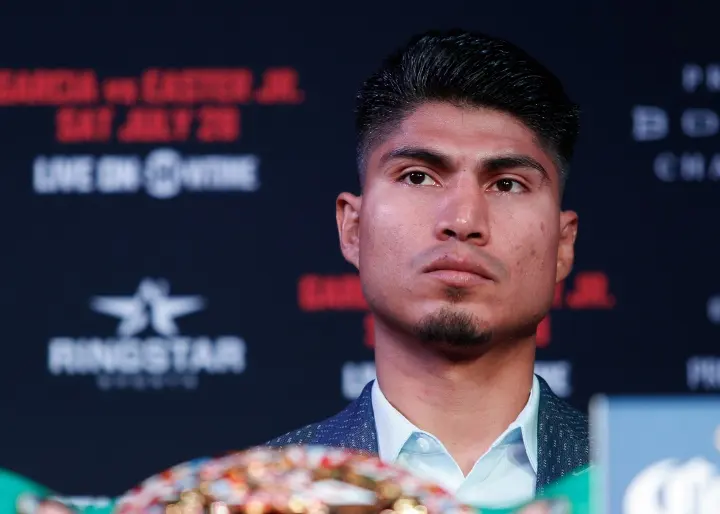
Take Mikey Garcia and Abner Mares, who are in different stages of their careers but are taking similar risks in their next fights: Both are moving up in weight to face monsters. Garcia is scheduled to fight gifted Errol Spence on March 16 and Mares faces powerhouse Gervonta Davis on February 9.
One could argue that both are foolhardy, stepping into a cauldron of heat that will burn them beyond recognition. In Garcia’s case, one pound-for-pounder can’t be expected to beat a bigger, stronger pound-for-pounder. And not only is Mares 33, he’s climbing into the ring with one of biggest punchers in the sport.
I believe they’re both in no-lose situations. If they come up short in their fights, they can say they did what fighters are supposed do: They bypassed relatively easy paydays for profound challenges, which will be the ultimate tests of their mettle and surely will have earned the admiration of fans.
Garcia probably would bounce back quickly at his natural weight and retain his popularity. That might not be as easy for a fighter of Mares’ age but he will always know he didn’t cheat himself or his fans one iota; he took a big risk in order to receive a big return. No regrets.
And the payoff would be enormous if they somehow win. Garcia would stake a claim as the No. 1 fighter in the world while Mares would climb to higher heights than he reached in his prime.
Take Oleksandr Usyk.
The cruiserweight champion from Ukraine knew he would have to survive a gauntlet of the best 200-pounders yet accepted the challenge of the World Boxing Super Series. The gamble paid off.
Usyk beat in succession Marco Huck, Mairis Briedis and Murat Gassiev over a 10-month period to win the tournament and both pound-for-pound and Fighter of the Year recognition. He then jumped immediately into a bout with capable veteran Tony Bellew and won that fight by knockout.
Think it was worth the risk?
Andre Ward set the tournament standard in the Super Six World Boxing Classic of 2009-2011. He entered the competition as a highly regarded prospect but emerged as a veritable star after beating in succession Mikkel Kessler, Allan Green, Sakio Bika (outside the tournament), Arthur Abraham and Carl Froch. The next stop for Ward is the International Boxing Hall of Fame.
Again, think it was worth the risk?
Callum Smith didn’t face quite the same caliber opposition as Usyk to win the super middleweight version of the WBSS – beating Erik Skoglund, Nieky Holzken and George Groves – but he enjoyed a similar benefit.
Smith’s willingness to accept a significant challenge has raised his profile in a way that a typical fighter – taking one tough fight followed by two or three easy ones – generally wouldn’t.
Take Josh Warrington.
Warrington upset talented Lee Selby by a split decision in May to take Selby’s IBF featherweight title. He could’ve given himself a well-deserved break by making his first defense against a relative nobody for a good payday.
Instead, Warrington jumped directly into a risky fight with former titleholder Carl Frampton and emerged with an impressive unanimous-decision victory. And now he’s talking about taking an immediate title-unification bout with WBO beltholder Oscar Valdez.
Warrington spoke of momentum after the Frampton fight. That’s the idea. An easy fight stops or least slows momentum. Warrington built upon his victory over Selby by beating Frampton. A victory over Valdez will build upon that. And so on.
That’s the model top fighters should adopt.
Take Tyson Fury.
The former heavyweight champion, making a comeback after more than two years away from the sport, arguably would’ve been wise to ease his way back into the heavyweight title picture by taking four or five progressively more difficult fights until he was ready for the best big men.
Instead, after two “fights” that amounted to light workouts, he took advantage of the opportunity to face the biggest puncher in the division, Deontay Wilder, for a major title on December 1.
Fury had to settle for a controversial draw but his strong performance – including his ability to rise from a brutal knockdown in the final round – left no doubt that he belongs among the big three (Fury, Wilder and Anthony Joshua) and all the lucrative possibilities that presents.
One last time, think it was worth the risk?
We all understand the desire of boxers to take “easy” fights between the difficult ones.
Most boxers seem to be born with only so many taxing battles in their bodies. One could argue that it makes sense to spread them out over a long career to preserve their health and forestall the inevitable decline.
Promoters also would suggest that low-risk matchups can serve promotional purposes. Example: Two future opponents fighting pushovers on the same card can build interest in their upcoming showdown.
And, of course, no one can be too critical of an established star who wants to earn as much money as possible while he’s on top, especially when he HAS taken on major challenges. Example: Canelo Alvarez fought pushover Rocky Fielding after consecutive wars with Gennady Golovkin. This IS prizefighting, after all.
The point here is that risks can and often do pay off. And we don’t see them enough.
Many fighters seem to shy away from major challenges for whatever reason. Or they go long periods without facing one. The result is that they often miss opportunities to realize their potentials and fade from our consciousness, which is the last thing a fighter wants.
My humble advice to talented boxers: If you believe in yourself and you have the backing to take part in real fights – not glorified training sessions – take them, take as many as you possibly can.
I don’t imagine many fighters look back on their careers and think: “Damn, I wish I would’ve taken fewer risks.”
Michael Rosenthal is the most recent winner of the Boxing Writers Association of America’s Nat Fleischer Award for excellence in boxing journalism. He has covered boxing in Los Angeles and beyond for almost three decades.