Tyson Fury rules out retirement, might sign '10-fight deal'
•Read more

By Jake Donovan
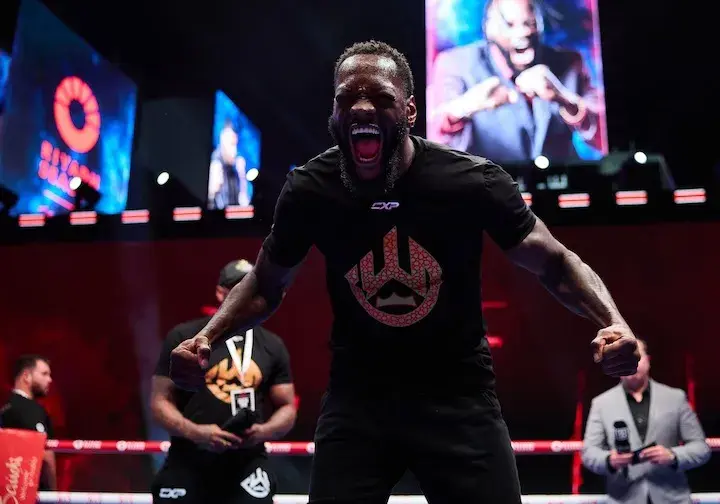
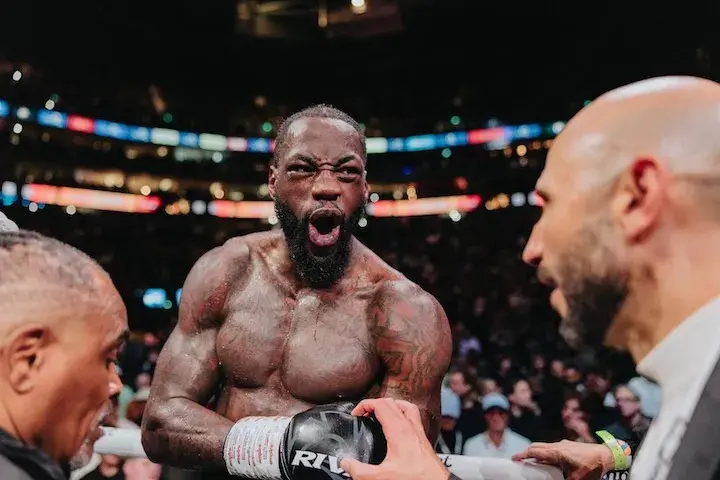
From the moment he first laced up a pair of boxing gloves as a teenager, Deontay Wilder always knew that his boxing career would stand for something.
His time spent these days been leading the charge for those in pursuit of a clean(er) sport. Discussion of performance enhancing drugs (PEDs). in boxing has always been a touchy subject for Wilder (36-0, 35KOs). The charismatic yet gentle giant from Tuscaloosa, Alabama has always spoken out against the harm that PEDs cause, not just to the sport but physically to the athletes who use and abuse them.
While it didn’t cost him a loss, the use of a banned substance did cost Wilder a career-high payday as well as the opportunity to do what no other American heavyweight has done before – defend a piece of the divisional title in Moscow, Russia.
That piece of history was to occur on May 21 in a dangerous mandatory title defense versus Alexander Povetkin, a 2004 Olympic Gold medalist who in some circles was favored to end Wilder’s reign. We may never know what will come of that matchup, as the bout was canceled one week prior to fight night when traces of the recently banned substance Meldonium was discovered in Povetkin’s system through pre-fight random drug testing.
Whether or not the fight eventually gets rescheduled is a matter for the World Boxing Council (WBC) and the courts to sort out and decide. The subject has become the focal point of two legal battles, as each camp has opted to sue, claiming the other caused significant damage in the role they played in canceling said event.
It’s not how Wilder wanted this to end.
“I’d rather have fought and earned my money rather than having to do it this way,” Wilder recently admitted to BoxingScene.com while reflecting on the ordeal that left him in a state of depression upon returning home to Alabama without a fight to show for it. “We’re just letting the attorneys handle it. They’re doing a great job right now.
“The crazy thing about it, (World of Boxing head Andrey) Ryabinsky and them, they was in the same situation a few years ago as we are today.
The incident to which Wilder refers involved World of Boxing, Povetkin’s promoter in a pair of scheduled fights between its boxer Denis Lebedev and disgraced former cruiserweight champ Guillermo Jones. The two managed just one official fight, which Jones prevailed by come-from-behind 11th round knockout in their fantastic May ’13 slugfest.
It was later discovered that Jones tested positive for furosemide, which is designed to treat fluid build-up to prevent heart failure, but in sports has been used as a masking agent to disguise other banned substances being used and not flushed out of an athlete’s system. As much occurred prior to their scheduled May ’14 rematch, this time with the discovery made the day of the eventually canceled fight while both boxers were in their dressing room warming up for their title bout.
World of Boxing filed a lawsuit versus Jones and his Hall of Fame promoter Don King, with the matter settled and landing in favor of the Russian promotional outfit.
“Their guy (cruiserweight titlist Denis Lebedev) fought a Don King fighter (Guillermo Jones). Afterward, (Jones) got tested positive for PEDs and again before the rematch which was canceled because of it,” Wilder says of the irony in play. “They won their case, so why would they feel this situation is any different, that he would get a pass?
“Unfortunately, it’s part of the game. Some guys want a level playing field. Other guys, they just want to cheat.”
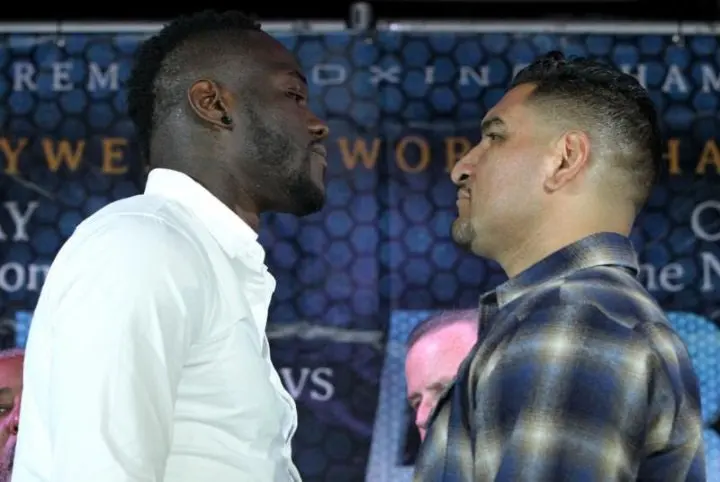
As random drug testing has already become a regular occurrence through the WBC’s recently adopted Clean Boxing Program, Wilder was already prepared to go that route for all future title fights. It will be in play for his upcoming showdown versus Chris Arreola, which is set for July 16 in Birmingham, Alabama, with Fox to air live in primetime.
Basically, Wilder has gone from planning to fight on the other side of the world to making his third trip to Birmingham, roughly an hour from his Tuscaloosa hometown. The bout will mark his fourth overall title defense, the lone “road” trip coming in a savage one-punch 9th round knockout of Artur Szpilka this past January at Barclays Center in Brooklyn, New York.
Event handlers have confirmed that Wilder and Arreola have enrolled in the program laid out by the Voluntary Anti-Doping Agency (VADA), the testing company of choice for the WBC as well as for many major title fights held on American cable giant HBO these days.
The defending heavyweight titlist is prepared to take it a major step further in his continued efforts to lead by example.
“Every fight, random drug testing is supplied and we finna’ go even beyond that and do it all year-round,” Wilder informed BoxingScene.com. “I wouldn’t want it any other way. Eventually, they gonna have it where all fighters are being drug tested throughout the year which honestly is the way it should be.”
The irony in the selection of Arreola (36-4-1, 31KOs) – a faded but still hard-hitting heavyweight contender from California – is that he too is coming off of a recent suspension due to having failed a recent drug test. A hotly contested 12-round split decision win over Travis Kauffman last December was changed to a No Contest when the colorful Mexican-American slugger was popped for marijuana in his system, which was also met with a 90-day suspension.
There doesn’t seem to be much concern of history repeating itself and Wilder once again left standing alone at the altar. That said, there doesn’t seem to be much concern over Arreola’s previously preferred drug of choice.
“A lot of people be smoking,” Wilder laughs off. “I mean, me personally, I don’t put no drugs in my body. But as far Chris doing that (before the Kauffman fight) – I mean, that can’t do nothing for you. Smoking weed can’t enhance nothing, it can’t do nothing. It’s a natural herb and I ain’t really worried about that.
“As long as it ain’t stuff that making you like the Energizer Bunny or making you recover faster than you naturally supposed to, that’s the stuff that we as fighters look for.”
It’s the stuff that was found within the system of his last opponent – however potent or miniscule the findings were – and enough to raise concern of how far a heavyweight can go once entering the ring with more than pure talent and clean training.
“I tell people all the time, just imagine me on any kind of substance, especially Meldonium which is the stuff that (Povetkin) was found to have taken,” the 6’7” heavyweight explains. “I’m already knocking fools out cold as it is. Since I became the heavyweight champion of the world, everyone I’ve fought, I’ve sent to the hospital just on my natural power.
“Now just imagine, I’m doing some performance enhancer. Now body reacting to it, and doing things it wasn’t supposed to be doing. Now I’m gonna kill a man. It’s certain things like that which need to be addressed. I’m hoping to handle that in the future.”
Wilder continues to do his part, but just hates that the stakes were raised only in the aftermath.
“The thing that hurts me is… I’m in love with this sport. They took that away from me when I didn’t get to enjoy this fight.”
If nothing else, Wilder will get to enjoy a cleaner sport – and from it, a level playing field – from this day forward. If so, he can one day look back on his career and take pride in knowing the role he played in order to help make that happen.
Jake Donovan is the managing editor of BoxingScene.com. Follow his shiny new Twitter account: @JakeNDaBox_v2
Jake Donovan is an award-winning journalist who served as senior writer for BoxingScene from 2007-2024, and news editor for the final nine years of his first tour. He was also the lead writer for The Ring before his decision to return home.
 HOT0:08Emilio Garcia Uppercut From Another Angle1.2K views
 HOT0:12Dubiel Sánchez Round 1 Knockout Of Oliver Quintana18K views
 HOT1:09Would you like to see Pacquiao make his UK debut against Cordina? #Boxing6K views
 HOT1:07Does Vergil need to stop Thurman faster than Fundora did to make a statement? #boxing4.3K views
 HOT1:22Should Canelo-Mbilli go ahead as planned, or should the event be postponed? #boxing5.8K views
 HOT0:59Is Shakur justified in demanding more, or has he priced himself out of a major fight? #boxing8.3K views
 HOT1:12Kevin Anton Defeats Freudis Rojas Jr And Retains WBC Title5.5K views
 HOT0:30Kevin Anton Unloads On Freudis Rojas Jr In Round 105.7K views
 NEW0:49Ruben Aguilar Power Highlights254 views
 NEW0:49Is it time for Gonzalez to get his world title opportunity? #boxing493 views
 NEW2:22Bryan Flores vs Jonathan Navarro Highlights461 views
 NEW0:54Can Lomachenko still compete with the best at 130lbs, or has Father Time caught up with him? #Boxing2.7K views